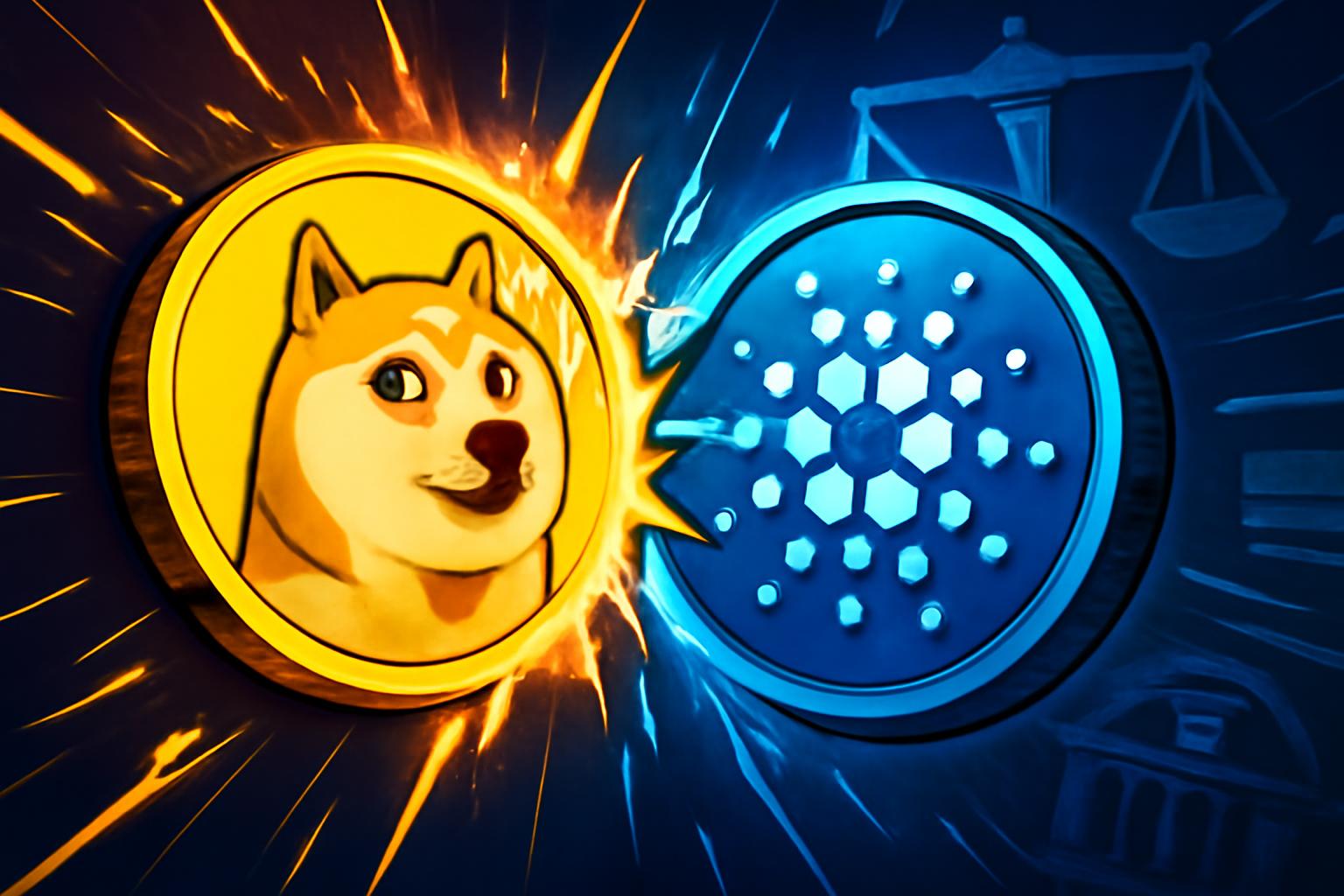

Dogecoin and Cardano have evolved as two of the most debated altcoins, with both having fallen more than half in value this year while attracting distinct investor narratives. Dogecoin’s appeal has long rested on its meme-driven momentum and the perception that its design encourages spending rather than hoarding, but its infinite supply makes it difficult to value based on scarcity alone. By contrast, Cardano touts a capped supply and a robust near-term catalyst set, driven by a staking-centric model and a commitment to formal peer reviews for on-chain projects, which many investors see as building a sturdier long-term moat. In market terms, the broader crypto space has shifted toward more conservative assets as rates rose, with Bitcoin and Ether also pulling investment away from smaller, speculative tokens.
Yet Cardano’s faster transaction speeds—about 250 TPS on Layer 1 and up to 1,000 TPS with Layer 2 Hydra—combined with a large stake-inside supply (over 70% already staked) contribute to its relative attractiveness versus Dogecoin’s lack of native smart-contract capabilities granted by its PoW design. The regulatory environment could further tilt the landscape: Cardano ETFs could arrive following similar approvals for XRP and Dogecoin, reflecting ongoing appetite for regulated access to crypto exposure. On the other hand, Dogecoin remains a pointed case study in valuation challenges for meme-linked coins, where strategic themes like Dogechain and celebrity-backed attention (Musk, Cuban, Snoop Dogg) can spur short-term price moves but do not inherently fix structural value questions tied to real-world utility. The near-term debate thus centers on whether Cardano’s combination of capped supply, staking-driven economics, and technical scalability offers a more durable investment thesis than Dogecoin’s continued meme-driven volatility and promotional momentum.
Dogecoin and Cardano have both shed more than half of their value this year, underscoring a broader shift toward conservative assets as rates rise. Dogecoin’s meme-driven appeal and unlimited supply complicate valuation based on scarcity, while Cardano’s capped supply and staking-centric model offer a distinct long-term thesis. Dogecoin relies on PoW, lacks native smart contracts, and has an unlimited circulating supply of 168 billion tokens. Its price has been swayed by celebrity endorsements and stories around Dogechain, but these factors don’t fix fundamental value.
The potential for ETF-based inflows and new Layer 2 support could attract investors seeking hedge-like exposure. Cardano, created by Ethereum co-founder Charles Hoskinson, is a PoS blockchain with a fixed max supply of 45 billion and more than 70% already staked. Its faster Layer 1 and off-chain Hydra Layer 2 can push transaction speeds higher, strengthening its moat against rivals. The SEC has not yet approved Cardano ETFs, but recent ETF approvals for XRP and Dogecoin suggest that Cardano ETFs may follow, offering another regulated exposure channel for investors.








Leave a Reply