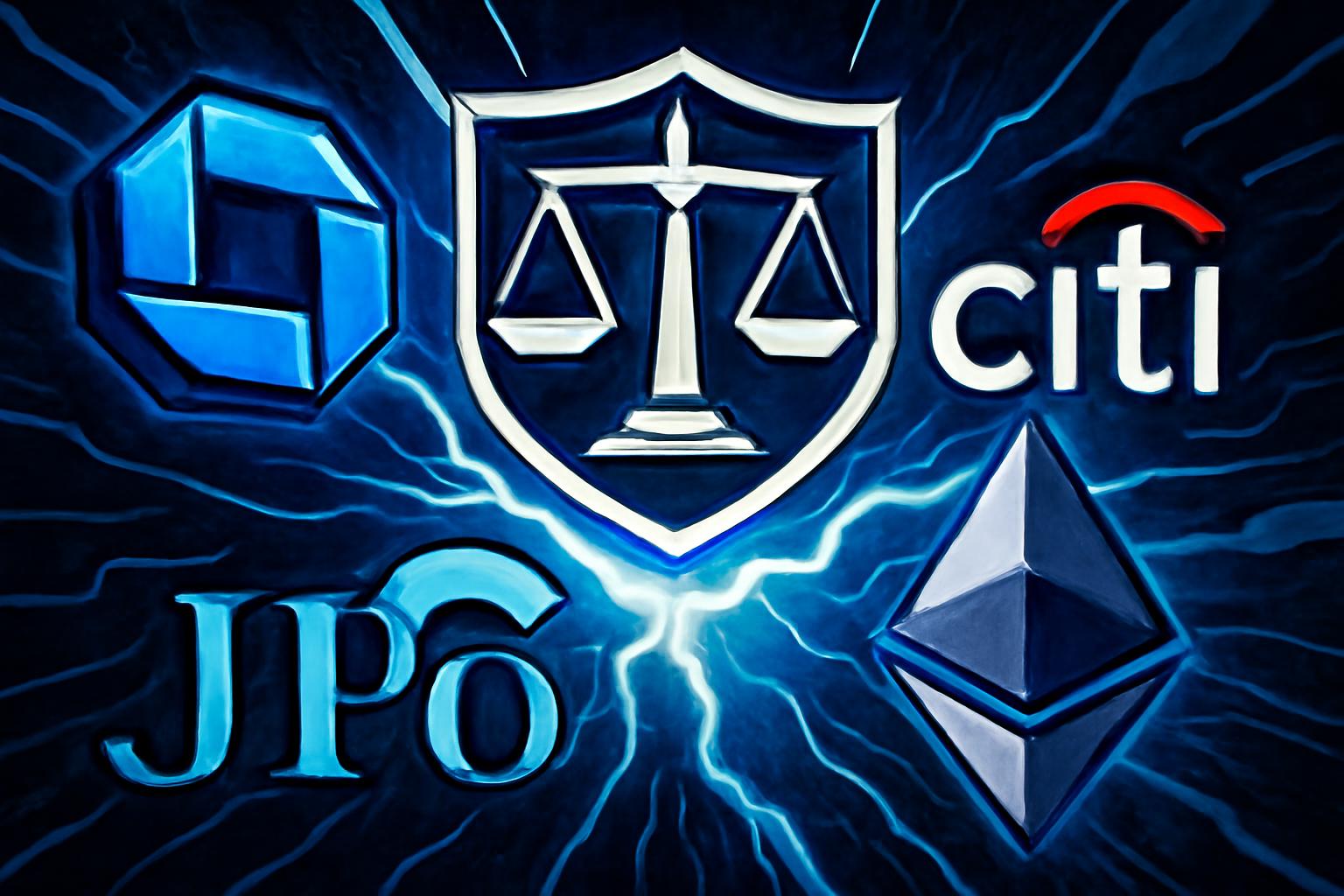

US banks are prioritizing tokenized versions of deposits, funds and custody over launching new crypto-native assets. Most on-chain bank activity is taking place in wholesale payments, settlement and infrastructure, largely out of public view. Regulators are increasingly allowing crypto-related banking activities, but only within tightly supervised and risk-managed frameworks. Public blockchains such as Ethereum are being tested by major banks through controlled and compliant product structures.
Tokenization represents traditional financial claims—such as deposits or fund shares—as digital tokens on a ledger, designed to move with embedded rules, automated settlement, real-time reconciliation and reduced counterparty risk within regulatory boundaries. A clear signal is the rise of tokenized deposits, described as ‘deposit tokens,’ digital representations of regulated bank deposits issued and redeemed by banks rather than nonbank-issued stablecoins. JPMorgan has been among the earliest movers with JPM Coin for institutional clients, positioned as a deposit token enabling real-time, 24/7 transfers on blockchain rails; in 2024 it rebranded its blockchain unit as Kinexys as a platform for payments, tokenized assets and programmable liquidity rather than a standalone crypto initiative. Citi has pursued a similar path with Citi Token Services, embedding tokenized deposits and smart contracts into institutional cash management and trade finance, and by 2024 its tokenized cash service had moved from pilot to production, processing multimillion-dollar transactions.
These initiatives are complemented by regulated test environments. The New York Fed’s New York Innovation Center has outlined a regulated Liability Network concept, involving banks and Mastercard, simulating interbank payments with tokenized deposits alongside a wholesale CBDC representation within a controlled setting. Beyond cash and funds, major banks are exploring tokenization of real-world assets such as private credit and commercial real estate to unlock on-chain liquidity and fractional ownership under traditional regulatory oversight. Custody and safekeeping remain central, with institutions building governance standards for scale.
BNY Mellon’s Digital Asset Custody platform went live in 2022, allowing select institutional clients to hold BTC and ETH, positioning custody as an extension of traditional safekeeping adapted for digital assets. Regulators have clarified permissibility, including OCC Interpretive Letter 1170 permitting cryptocurrency custody services, and the Fed’s 2025 paper outlining risk management and resilience expectations. Tokenized funds and collateral are moving onto public blockchains, with JPMorgan Asset Management launching MONY in 2025 as a tokenized money market fund on Ethereum, illustrating how traditional asset managers are linking tokenized cash and yields within established regulatory frameworks. Regulatory evolution continues, with OCC clarifications in 2025 and ongoing oversight guiding how tokenization and related activities will integrate into mainstream banking.








Leave a Reply