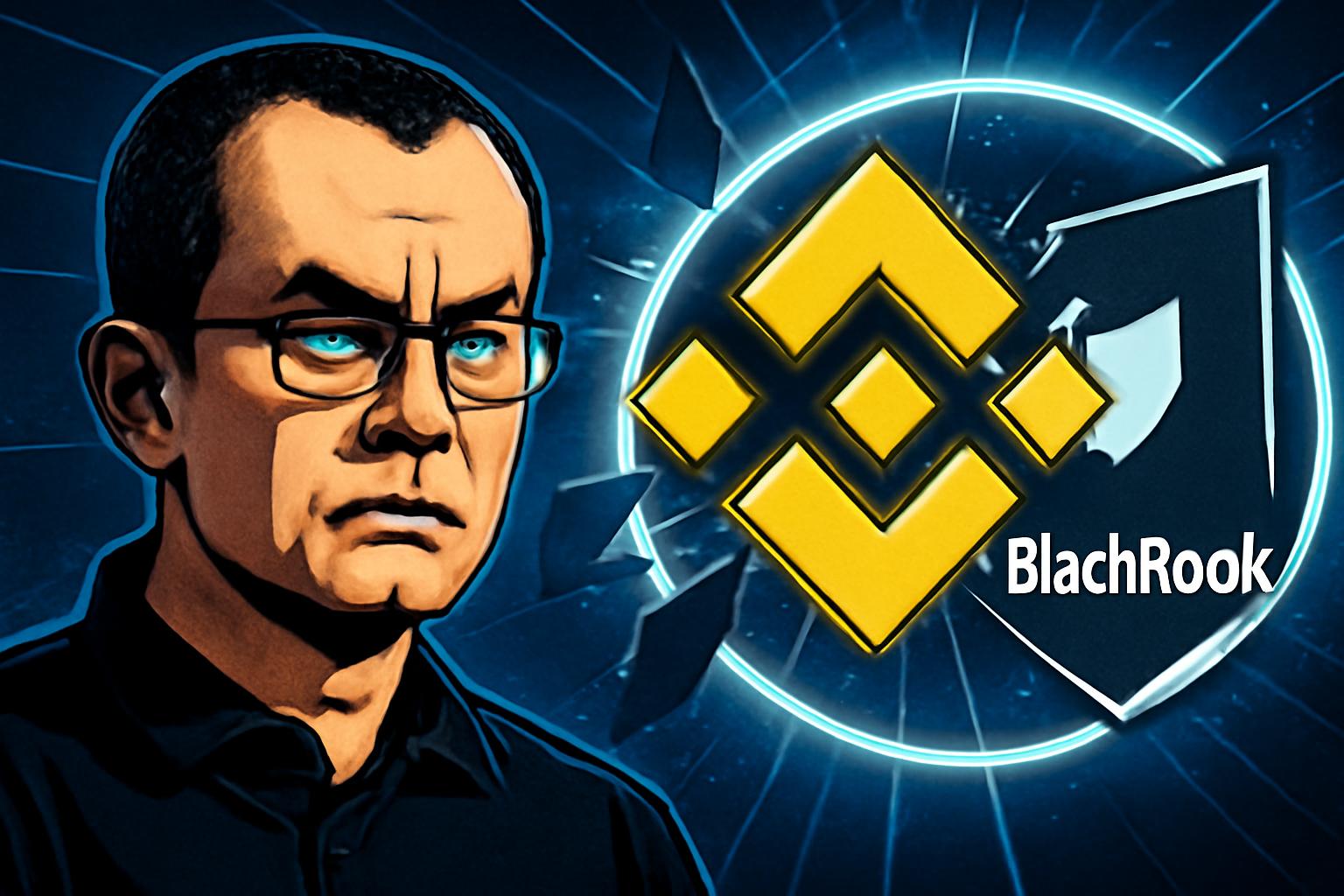

Changpeng Zhao has unfinished business. The billionaire co-founder of Binance has stepped back into the spotlight, praising President Donald Trump’s crypto stance at every turn, and signalling enthusiasm for the US market where the firm he helped create is now weighing a comeback. Binance co-founder Changpeng Zhao was pardoned by Trump in October after serving prison time for failing to stop criminals from using the platform to move money connected to child sex abuse, drug trafficking and terrorism. Recently pardoned by Trump, Zhao holds no official role at the crypto exchange any longer, but remains an influential voice.
Zhao has cast the US as central to the industry’s future – and therefore, implicitly, to Binance’s. The firm has been exploring ways to reboot its American affiliate, Binance.US, including a potential recapitalisation that could reduce Zhao’s majority stake, according to people familiar with the matter. His role as a controlling investor has been a major hurdle for expanding in key states, they said. “It is my full intention to help make America the capital of crypto,” Zhao said at Binance Blockchain Week earlier this month, calling it “an emerging land for us”.
Binance recently announced that Yi He – another co-founder, who is Zhao’s domestic partner and the mother of three of his children – was promoted to co-CEO alongside Richard Teng. During her appearance at the Binance event, she said Zhao had “retired,” though he was front and centre for much of it. Ramping up meaningfully in the US would mean navigating dozens of state licensing regimes or betting on a still-hypothetical federal framework. The plea agreement Zhao reached in 2023 for failing to maintain an effective anti-money laundering program at Binance bars him from formal or informal involvement in the company’s operations.
Binance’s global entity also pleaded guilty to federal charges and agreed to pay billions in fines. Whether, or to what extent, Zhao’s October pardon affects the restrictions laid out in the plea deal has not been definitively resolved, though the political backdrop in Washington has shifted. “We cannot comment on hypothetical storylines,” a Binance spokesperson said. “None of these speculative scenarios reflect accurate facts.” Zhao, He and Teng didn’t return requests for comment.
There is some urgency for Binance to make decisions. Separately, Binance has been pursuing a closer relationship with the world’s largest asset manager, BlackRock, according to sources. It’s another sign that the crypto firm wants to deepen relationships with established US financial players. BlackRock has a tokenised money-market fund that institutions can use to back trades on Binance.
The two have discussed deepening their financial ties, including additional products and potential revenue-sharing arrangements, according to people familiar with the matter. Binance wants to deepen relationships with established US financial players. Binance has also been getting closer to World Liberty Financial, a crypto venture co-founded by Trump family members. Some of those moves preceded Zhao’s pardon and emphasise how Binance is repositioning itself in a more welcoming political landscape.
Yi He’s elevation has also raised questions among some observers about the balance of power between her and Teng. A longtime former regulator, Teng was instrumental to Binance’s outreach to governments since his appointment to the CEO role two years ago, when the company was reeling from criminal charges and Zhao’s departure. Now that crisis has largely ended. When Binance revs up its US push, many believe it will be aggressive.
The company has historically won market share by charging zero or much lower fees than competitors. Rivals like Coinbase have reason to worry the strategy could reappear. At the moment, Binance.US is not allowed to operate in more than a dozen states and US territories, according to its website, including some crucial ones, like New York. “It would be a big challenge for them to get money-transmitter licences, especially in Democratic states,” said Lee Reiners, a lecturing fellow at Duke University who specialises in financial law and policy.










Leave a Reply