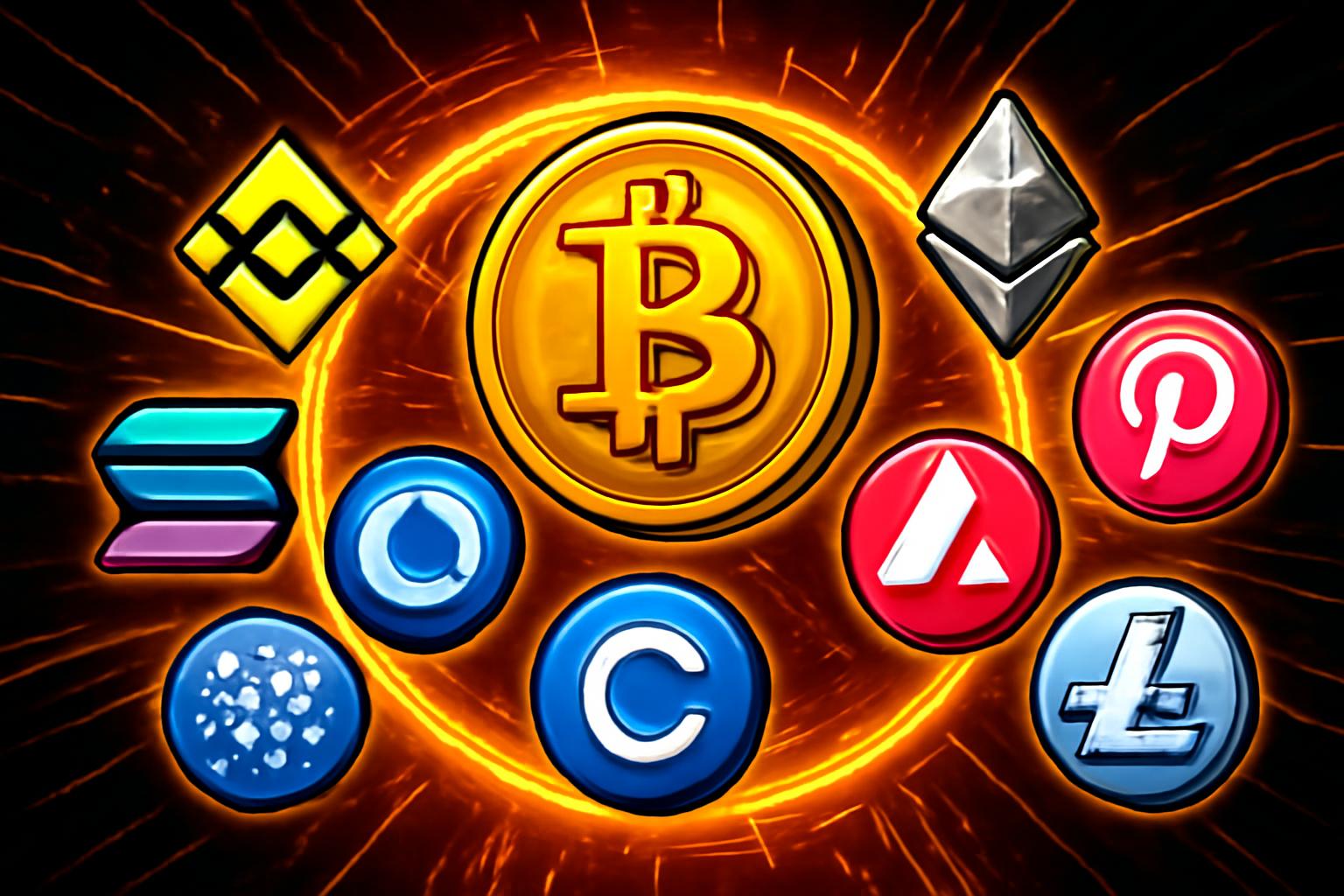

The best long-term cryptos to buy now include Bitcoin (BTC), Ethereum (ETH), Binance Coin (BNB), Solana (SOL), Polkadot (DOT), Cardano (ADA), Chainlink (LINK), Avalanche (AVAX), XRP (XRP), and Litecoin (LTC). These projects have real use cases, strong networks, active development, and the ability to survive market cycles, positioning them for multi‑year growth as adoption increases. Bitcoin remains the largest and most recognized digital asset, with a fixed supply of 21 million coins and halving events roughly every four years that cut new issuance. Ethereum is a massive global computer that runs thousands of decentralized platforms or apps and has transitioned to proof‑of‑stake, introducing staking rewards and reducing energy usage.
Binance Coin actually started as a simple discount token for the Binance exchange, but today it powers the entire BNB Chain. Key features include exchange utility for fee discounts on Binance, participation in token launches, and a deflationary supply with auto‑burning and gas‑fee burning mechanisms that reduce supply over time. Pros include low transaction fees and fast block times, with strong support from the world’s largest crypto exchange; cons note that the coin is more centralized than Bitcoin or Ethereum and its price is heavily tied to the success of one company.
Solana is famous for being incredibly fast, often handling 65,000 transactions per second. It combines proof‑of‑history with proof‑of‑stake to deliver speed and low fees. Past outages and concerns about validator centralization, plus large investors’ holdings, are noted drawbacks.
Polkadot focuses on connecting different blockchains, and its main chain, called the relay chain, lets parachains communicate. Key features include interoperability, elastic scaling, and EVM compatibility via new REVM technology, with reduced inflation as supply growth slows significantly in 2026. Pros include solving the “silo” problem by connecting different networks and a strong team led by one of Ethereum’s co‑founders, plus attractive staking rewards for long‑term holders; cons include inflation risk if tokens aren’t staked and marketing not as loud as competitors like Solana.
Cardano is another established crypto project best for long-term investing. Key features include energy efficiency via proof‑of‑stake, Hydra scaling for near‑instant transfers, and formal verification to improve security for smart contracts. Pros note Cardano as one of the most decentralized networks with real‑world partnerships; cons cite slower development and a DeFi ecosystem still smaller than Ethereum’s.
Chainlink is best for those wanting infrastructure rather than a payment coin. It provides decentralized oracles delivering trustworthy off‑chain data and holds a leading market share among oracle providers. Key features include cross‑chain messaging with CCIP, and data streams to 24 blockchains. Pros include critical infrastructure status and strong partnerships with names like SWIFT and Google; cons include potential whale influence and centralization concerns, and it can be complex for retail users to run nodes or stake.
Avalanche offers a modular platform with a multi‑chain architecture, enabling different chains for different tasks. It features high throughput and subnets with EVM compatibility, letting developers port Ethereum contracts easily. Subnets provide scalability for enterprise use, but it faces competition from Solana and Ethereum Layer 2s, and ecosystem growth has slowed with subnet adoption still in early stages.
XRP focuses on fast, low‑cost cross‑border payments for institutions, backed by a fixed supply escrow arrangement and partnerships with financial institutions. It provides fast settlement, with payments confirmed within seconds at low cost, and acts as a bridge currency to move money across currencies. It is more centralized than many crypto fans prefer, and Ripple (the company) holds a large amount of XRP in escrow, facing competition from CBDCs.
Litecoin offers quick confirmations and low fees as a reliable daily transfer option, with a long track record of uptime. Litecoin is often called the “silver” to Bitcoin’s “gold” and was an early adopter of SegWit and the Lightning Network. It lacks the “smart contract” hype of Ethereum or Solana, and LTC’s price often follows Bitcoin with comparatively quieter marketing.
In the long run, these assets have real‑world utility and developer activity, offering multi‑year potential. Bitcoin and Ethereum anchor many portfolios, while other major networks—BNB, Solana, Polkadot, Cardano, Chainlink, Avalanche, XRP, and Litecoin—each bring unique strengths to a diversified, multi‑year strategy.




Leave a Reply