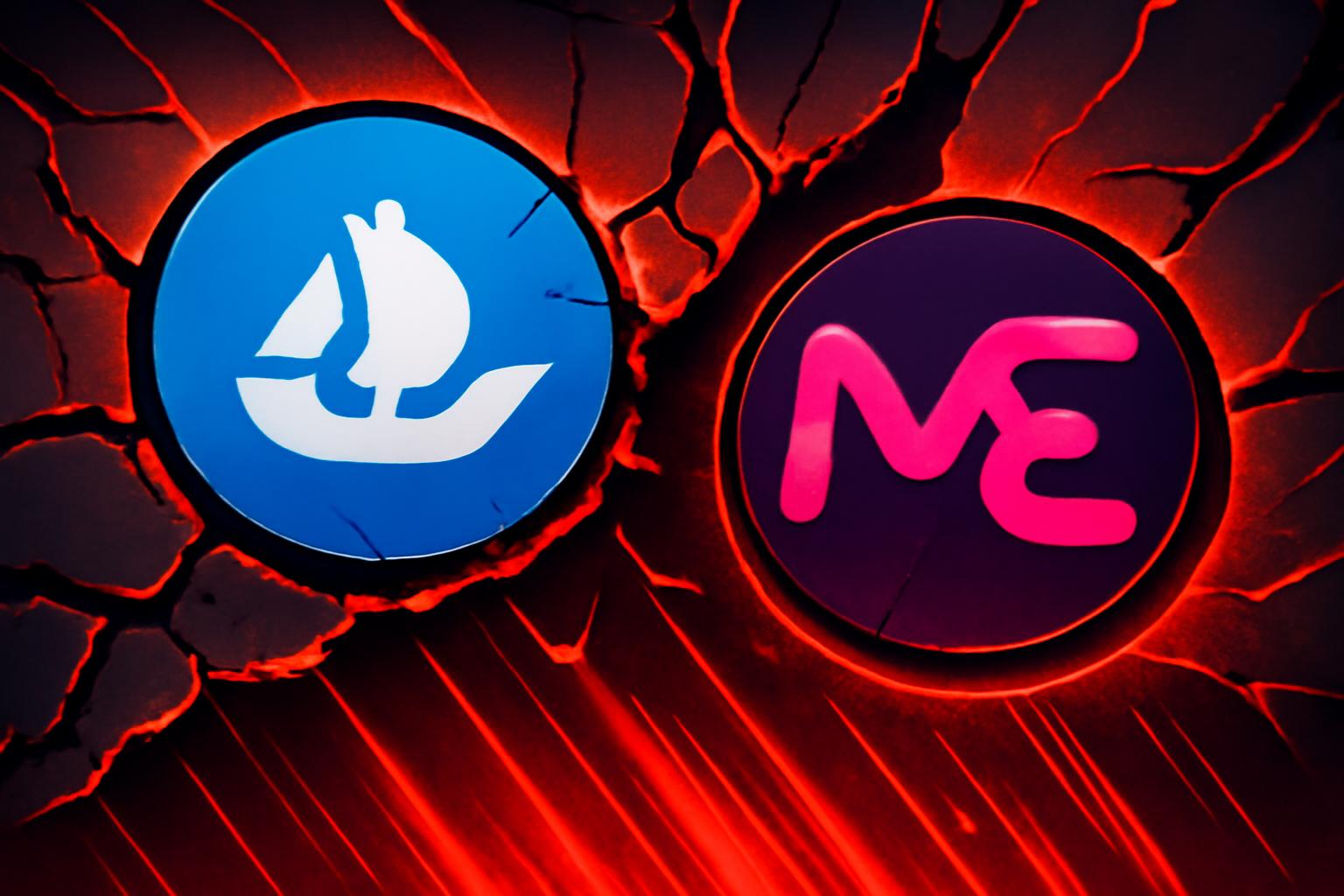

NFT market capitalization collapsed ~99%, forcing major platforms to diversify. OpenSea rebuilt its platform to integrate token trading across 19 blockchains. The once-booming NFT sector has entered a period of quiet restructuring.
After the hype of 2021 and 2022, when Beeple’s digital art sold for $69.3 million and CryptoPunks traded for tens of millions, market capitalization has fallen nearly 99%, according to CoinMarketCap, from $184 billion in 2023 to just $487 million. Faced with this collapse, leading marketplaces such as OpenSea and Magic Eden have expanded their operations to include fungible token trading. OpenSea took the most aggressive step by launching OS2, a rebuilt platform that integrates token trading across 19 blockchains through its own decentralized exchange.
The update introduced a Voyages rewards system, which analysts believe is tied to a future SEA token launch. Adam Hollander, CMO at OpenSea, explained that the change was not simply a reaction to declining NFT demand but part of a long-term evolution. “Tokens, digital collectibles, tokenized real-world assets, perps, prediction markets—whatever people are valuing online, we want them to be able to trade it all on OpenSea,” he said.
In October 2025, OpenSea reported a DEX trading volume of $2.41 billion, its highest on record. However, by November, activity fell 75% to $581.48 million, according to DefiLlama. Despite this decline, the addition of token trading helped stabilize the company’s broader metrics.
James Butterfill, head of research at CoinShares, noted that integrating fungible tokens has allowed platforms like OpenSea and Magic Eden to “defend relevance in a maturing digital asset market” and offset the slowdown in traditional NFT activity. The adaptations have worked, he said. But the long-term question remains whether marketplaces can merge NFT and token rails in ways that users cannot easily replicate elsewhere. Butterfill observed that Magic Eden has been more proactive than OpenSea in integrating token trading, particularly within the Solana and Web3 gaming sectors.
He described the platform as moving toward an “application layer for digital culture”, rather than a simple marketplace. According to Butterfill, both OpenSea and Magic Eden have managed to stabilize engagement levels and diversify fee income during a year when NFT trading volumes remained subdued. NFT platforms are no longer about speculative collections but about survival through diversification. The race is now about who can redefine digital asset trading—not just in art, but across the full spectrum of blockchain-based value.








Leave a Reply