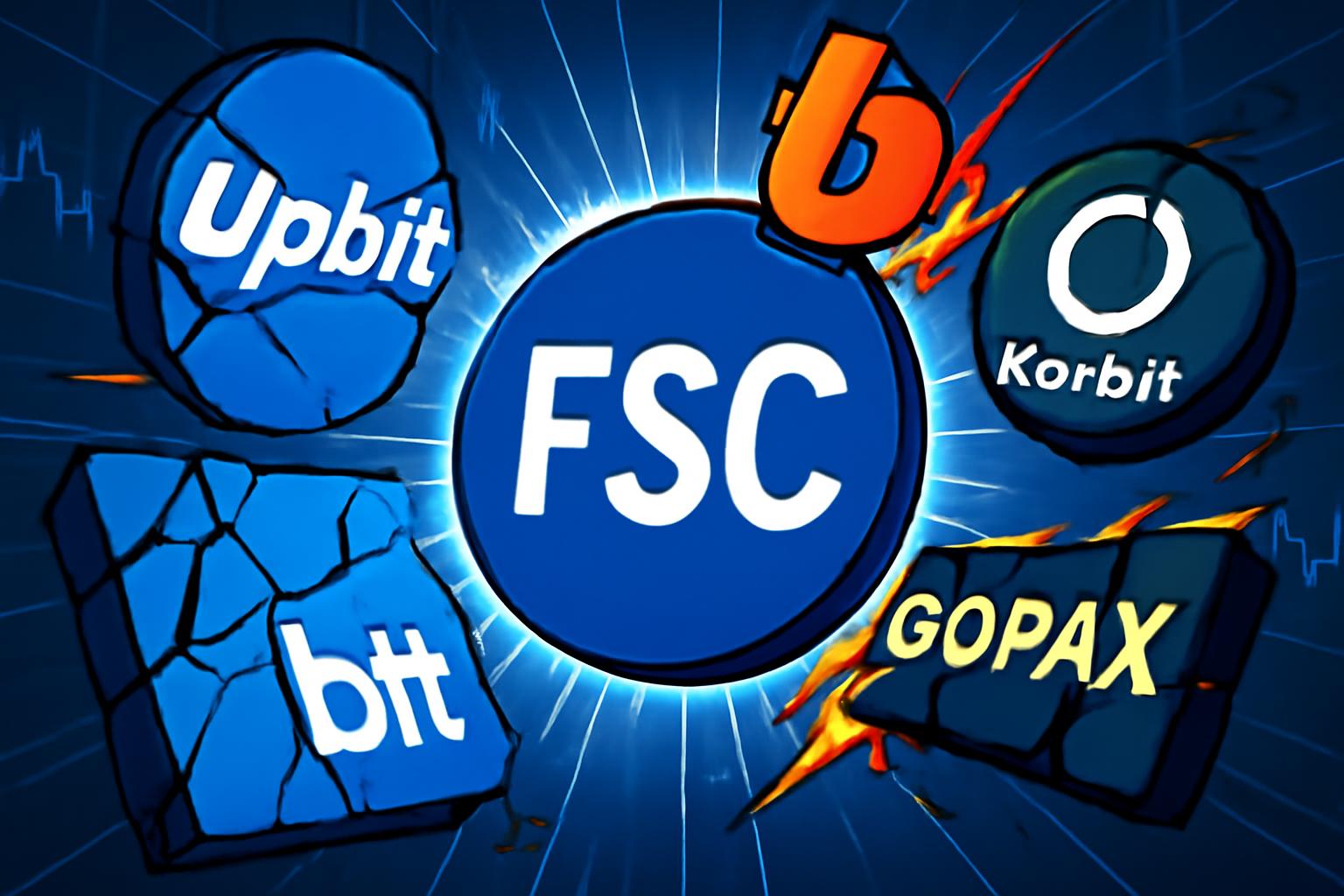

At the end of December 2025, the Financial Services Commission unveiled a bold proposal to limit ownership stakes in major crypto exchanges as part of the upcoming Digital Asset Basic Act. The plan would classify exchanges with more than 11 million users as core digital asset infrastructure and shift governance away from founder-led models toward a more dispersed, regulated regime. The FSC’s cap would set voting rights limits at 15 to 20 percent, citing concerns about excessive control, profit concentration, and weak accountability. Internal documents indicate that Upbit (Dunamu) would require divestment up to 10% as founder Song Chi-hyung holds 25.52%.
Bithumb Holdings, with a 73.56% stake, would see more than 53% sold. Coinone, Korbit, and GOPAX would trigger divestments of about 33-38%, 40-45%, and 47-52% respectively. The policy would also shift exchanges from a simple registration process to a full licensing regime, including “fit and proper” shareholder reviews similar to those used for banks and securities firms. Two major corporate transactions are now hanging in the balance: Naver Financial’s merger with Dunamu, expected to create a fintech giant worth over 20 trillion won ($14 billion), is incompatible with the new cap since Naver would hold 100% of Dunamu post-merger.
Likewise, Mirae Asset’s planned acquisition of Korbit, based on a memorandum of understanding with current stakeholders NXC and SK Planet, could unravel. Without management control, insiders say the strategic appeal of the deal diminishes, especially given the more than 100 billion won likely investment. The FSC, however, may ease long-standing restrictions to allow banks and financial firms to invest in exchanges, signaling a potential increase in institutional involvement and security token offerings. Industry insiders are raising concerns over property rights, strategic uncertainty, and market instability tied to the forced divestment plan.
Crypto industry leaders are pushing back, calling the ownership cap an overreach that infringes on property rights. There’s also concern about liquidity shocks if large blocks of shares flood the market at once. Political scrutiny is also rising. Democratic Party floor leader Kim Byung-ki is under fire for allegedly directing attacks against Upbit while his son interned at rival exchange Bithumb, intensifying the spotlight on crypto’s regulatory future in South Korea.







Leave a Reply