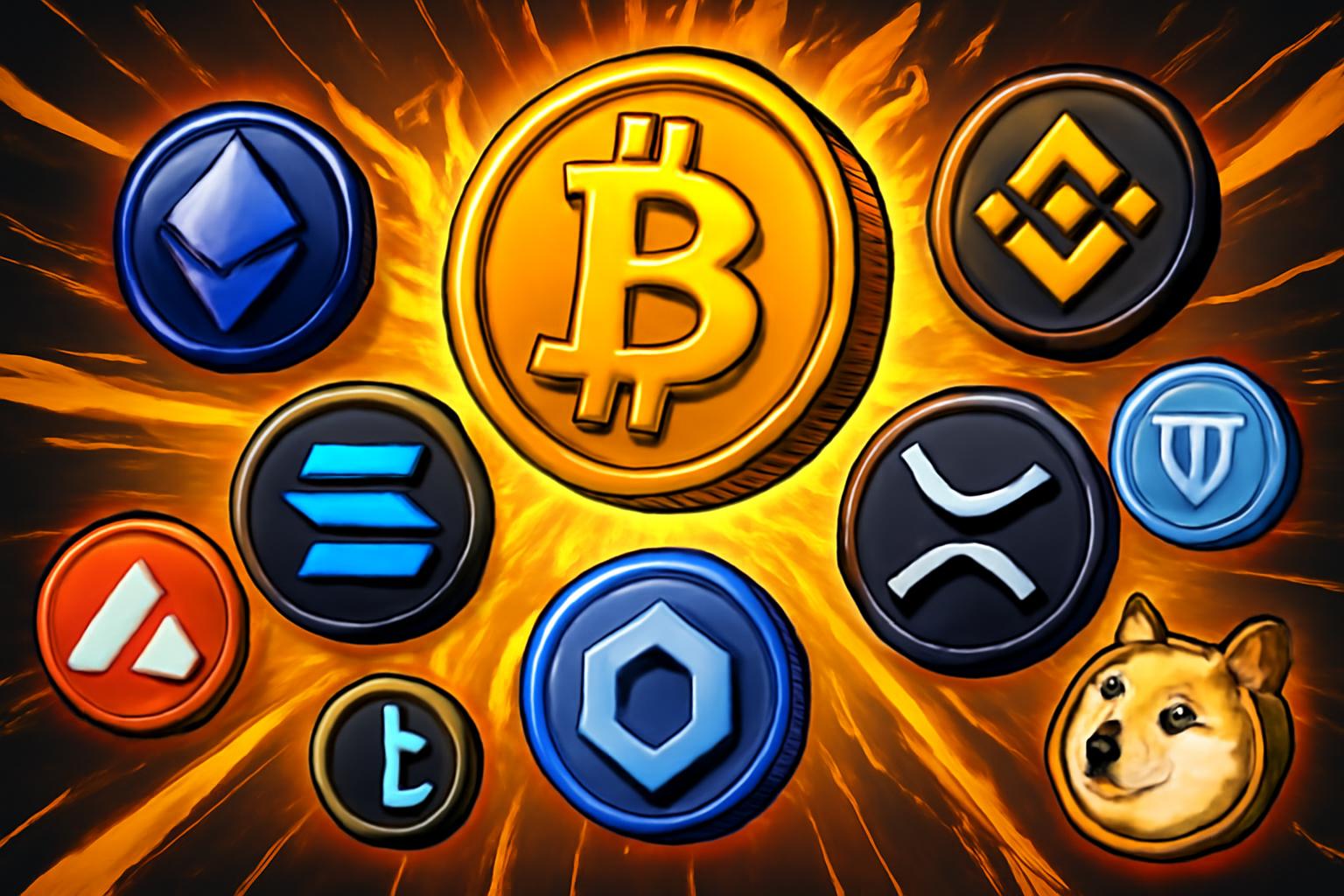

Bitcoin (BTC) is described as the Digital Gold and, since its 2009 launch, has weathered multiple market cycles, making it a common starting point for long-term investors. Ethereum (ETH) is the Smart Contract Pioneer, focused on building and running applications on the blockchain, with smart contracts powering DApps, NFTs, DeFi, and broader ecosystem growth. Binance Coin (BNB) is the native token of Binance Exchange, powering the Binance Smart Chain and enabling low-cost transactions across a wide range of DeFi and application uses. Solana (SOL) is a fast and scalable Layer-1 network designed to handle large transaction volumes with minimal fees.
Cardano (ADA) emphasizes sustainability and scalable smart contracts, built on an evidence-based framework to support long-term growth. Avalanche (AVAX) offers a multi-chain interoperability framework intended to support faster cross-chain interactions while maintaining efficiency and low costs. Chainlink (LINK) acts as the oracle backbone of DeFi, providing secure data feeds that connect real-world information to smart contracts. Polygon (POL) serves as Ethereum’s Layer-2 scaling solution, delivering faster processing and lower fees while preserving Ethereum’s security.
XRP (Ripple) focuses on cross-border payments, offering fast transfers and low costs for international transactions. Toncoin (TON) powers a Telegram-linked ecosystem, aiming to enable fast and secure transactions within a broad user base. Dogecoin (DOGE), initially a meme coin, now combines community-driven momentum with real-world utility and accessible transaction features. Arbitrum (ARB) stands as a leading Layer-2 solution, designed to improve Ethereum’s scalability through off-chain processing and cost-efficient transactions.
The piece notes that these selections reflect a mix of established assets with broad adoption and fast-growing networks that address real-use cases across payments, DeFi, and decentralized applications. It also highlights that investors should consider factors like market capitalization, liquidity, security, and use case when evaluating crypto investments for 2026. For readers seeking practical guidance, the article outlines a typical approach to investing in crypto—from selecting a reliable platform and verifying an account to funding, choosing assets with clear use cases, and securing investments in a wallet for long-term holdings.






Leave a Reply