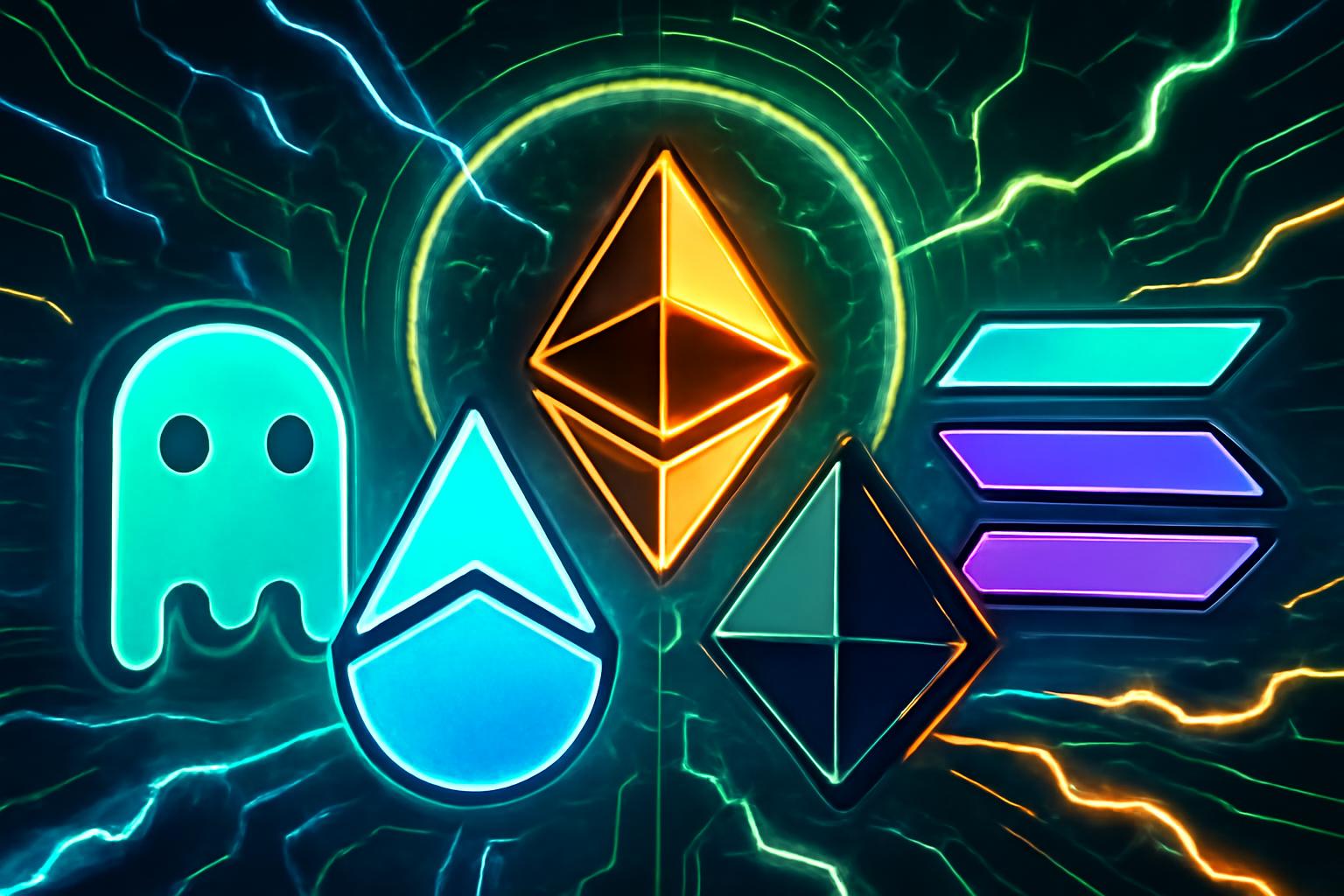

The Decentralised Major DeFi protocols will see big changes in 2026. That included new iterations of Aave and Lido. Ethereum and Solana are expected to undergo major upgrades as well. As my colleague Tim recently explained, 2026 will likely see centralised exchanges cede market share to their decentralised competitors, as well as the emergence of new privacy features and unified stablecoin layers.
Here’s one more big-picture trend we can expect this year: as the US takes a hands-off approach to crypto regulation, I think we’ll see DeFi protocols drop the decentralisation theatre and act more like traditional software companies. The line between DAOs, labs, and foundations was never clear. I expect it will get blurrier still. See, for example, Uniswap’s recent decision to dissolve its US-based foundation.
Even as these broader trends shape the market, developers are set to make major changes to top DeFi protocols and blockchains. Originally expected to launch at the end of 2025, the latest iteration of the Aave protocol, v4, is now expected to launch early this year. Aave Labs has already launched a codebase and public test network for v4. Remaining work is focused on security, as the company addresses the results of its multiple audits.
Aave Labs has called it “the most significant architectural evolution of the Aave Protocol since V1.” Broadly speaking, the new protocol will enable customizable lending markets that do not fragment liquidity, something made possible by what Labs calls “a new Hub and Spoke architecture.” But there’s already been some disagreement between Labs and the Aave DAO as to how much support v4 should receive upon launch. Aave founder Stani Kulechov has called it the future of the Aave brand.
But more cautious players within the DAO are wary of boosting new tech at the expense of v3, a protocol with more than $34 billion in user deposits as of Tuesday morning. Meanwhile, Lido Labs is on the cusp of launching the latest iteration of its liquid staking protocol. The new protocol, Lido v3, will let users create tailor-made yield-bearing strategies powered by Ethereum staking. But it’s just one part of Lido Labs’ attempt to recapture the market share it has lost since 2023.
Labs wants to move into new asset classes, integrate with additional exchange-traded fund issuers, expand beyond liquid staking, and explore more “real-business DeFi.” Lido Labs cited regulatory clarity and the tokenisation of real-world assets as reasons for its newfound ambition. “These shifts are transforming DeFi from an experimental playground into a real financial layer,” the company wrote in a proposal outlining its plan for the new year. “The next growth wave will be driven by practical use cases such as treasury management, credit, and investment, where reliability, product flexibility, and capital efficiency become prerequisites for adoption.”
Sky, formerly known as Maker, has several improvements in the pipeline. Perhaps most interesting, however, is the planned launch of artificial intelligence agents that will, among other things, assist delegates in running the DAO. The two major DeFi ecosystems will also see major changes this year.
Ethereum developers are currently finalizing the scope of the forthcoming Glamsterdam upgrade, while Solana approaches the rollout of its hyped Alpenglow upgrade, which promises to reduce Solana’s latency—from just under 13 seconds to as little as a tenth of a second.
2026 is shaping up to be a pivotal year for DeFi, with major protocol upgrades on the horizon. Aave is targeting the v4 rollout, and Lido is advancing to v3, promising architectural shifts and liquidity benefits. These upgrades emphasize customizable, non-fragmented lending markets enabled by hub-and-spoke designs, according to project teams.
Beyond protocol upgrades, Ethereum and Solana are slated for significant network improvements, reinforcing DeFi infrastructure. The evolving landscape could push DeFi projects toward software-company-like governance, blurring lines among DAOs, labs, and foundations, as seen with Uniswap dissolving its US-based foundation. Aave v4 is described as the most significant architectural evolution since V1, while Lido v3 aims to deliver tailor-made yield strategies and expand into new asset classes and real-world DeFi use cases.
Developers are also pursuing broader shifts in governance and architecture, as DAOs, labs, and foundations blur into new forms. The Hub-and-Spoke design aims to preserve liquidity across markets, reflecting the drive for more flexible and resilient DeFi infrastructure. Ethereum’s Glamsterdam and Solana’s Alpenglow upgrades are expected to cut latency and boost throughput, enabling more reliable DeFi services, alongside efforts to tokenize real-world assets and expand into treasury management, credit, and investment use cases.









Leave a Reply