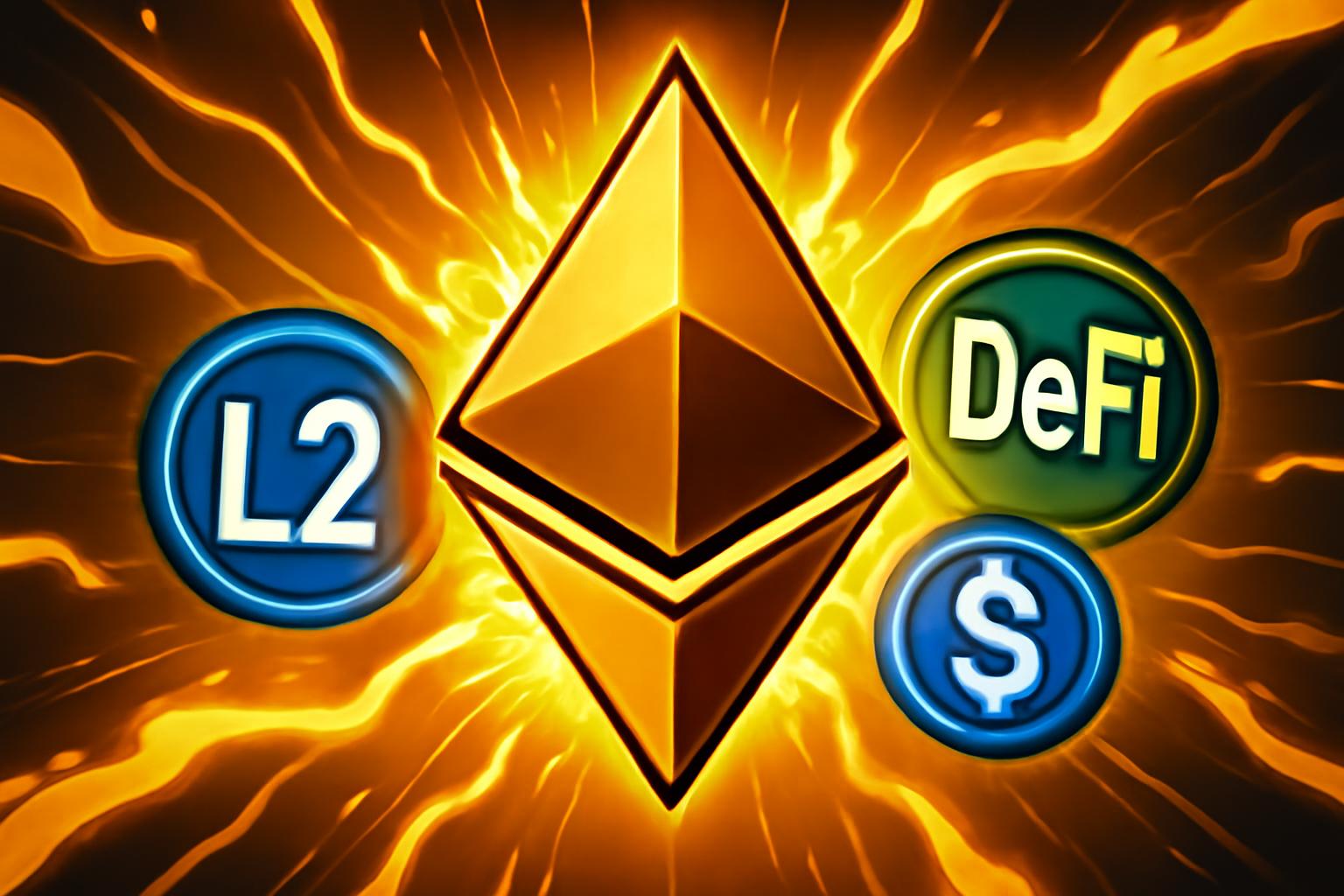

Ethereum reported strong growth across decentralized finance (DeFi) and stablecoin activity in 2025, aided by lower transaction costs and expanding infrastructure. DefiLlama data show over $99 billion in total value locked, placing Ethereum’s DeFi TVL at more than nine times that of the next-largest Layer 1. Stablecoin usage also remained high throughout the year, with $18.8 trillion settled on the network. Fees on Ethereum Layer 1 fell to five-year lows, while Layer 2 networks recorded transaction costs below $0.01, lowering expenses for payments, remittances, and savings-related activity.
Expanded paymaster infrastructure enabled applications to cover the fees for users, often removing the need to hold ETH for gas. Robinhood, Gemini, and Kraken all launched tokenized stocks on the chain using Layer 1 and Layer 2 networks, therefore providing extended access to United States equities beyond standard market hours. Robinhood also announced plans to build its own Layer 2 network using Arbitrum’s Orbit technology. Meanwhile, regulatory clarity supported the launch of new crypto-focused neobanks, which introduced payment cards and rewards programs while reporting millions of dollars in daily spending volume.
Beyond DeFi and stablecoins, Ethereum’s ecosystem continued to expand across institutional and technical fronts. Institutional participation increased through the expansion of ETH digital asset treasuries, with more than $35 billion worth of ETH held in exchange-traded funds and strategic reserves. More institutions used Ethereum smart contracts to manage capital on-chain, access DeFi-based yield strategies, and distribute over $12 billion in real-world assets. The network’s rollup-focused roadmap progressed during the year, with Layer 2 throughput averaging 5,600 transactions per second, and the Fusaka upgrade deployed in December increasing blob capacity and reducing Layer 2 costs. The Layer 1 gas limit was raised to 60 million, expanding settlement capacity by approximately 33%.
Ethereum celebrated 10 years of being live in July 2025, which was marked by a record of more than 88 million smart contracts deployed, while daily transactions reached a new high of 1.74 million. Developer activity also remained elevated, with 32,000 active developers across the ecosystem and over 16,000 new ones joining between January and September.









Leave a Reply