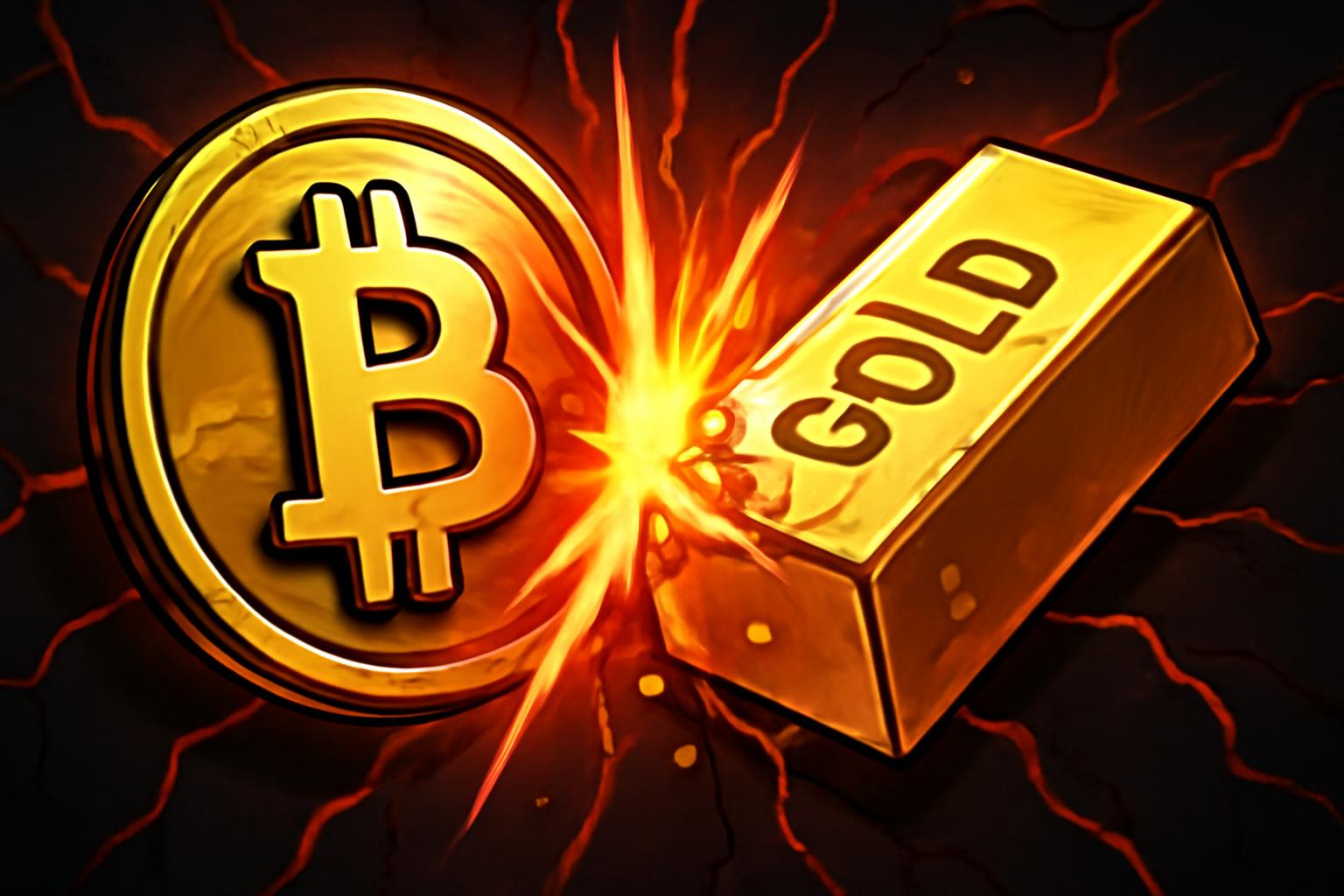

The Bitcoin thesis as digital gold originated as a store of value rather than a payments system, diverging from the whitepaper’s early emphasis on peer-to-peer digital cash. Many now view bitcoin as an apolitical base money for the digital age, with a monetary policy that seemed “set in stone” when the network launched in 2009. Not everyone agrees, as Nakamoto’s earliest writings argued for removing the trust required in central banks to avoid currency debasement.
Bitcoin’s price has shown vulnerability to macro shocks, including a major drop during the onset of the COVID-19 pandemic. In the most recent period, it has fallen about 10% over a week amid tensions between the United States and Europe over Greenland and a selloff in the Japanese bond market. Earlier in October, a broader crypto crash accompanied roughly $16 billion in liquidations on leveraged bets amid U.S.-China trade tensions. Gold, by contrast, has gained roughly 5% over the past week.
Institutional adoption of bitcoin has grown, but central banks—China in particular—still show a preference for physical gold over its digital alternative. Despite this, bitcoin has displayed some digital-gold utility, with episodes like a flight from crypto exchanges in Iran toward the base Bitcoin network. There is extensive reporting on Iran and Venezuela using crypto to evade sanctions, though stablecoins remain a competing mechanism. Central banks’ preference for real gold underscores the ongoing debate about bitcoin’s role as a monetary anchor.
From its COVID-era peak near $125,000 to a retreat toward the $90,000 area, bitcoin has moved in patterns reminiscent of tech equities during crises. Whether the four-year cycle will hold remains unclear, given market maturity and macro dynamics. If bitcoin is to endure as a digital monetary standard, it will eventually need to function more like the digital-gold narrative it is marketed as. The price trajectory—rising to new highs and then retreating—suggests early-stage development rather than a settled monetary regime.








Leave a Reply