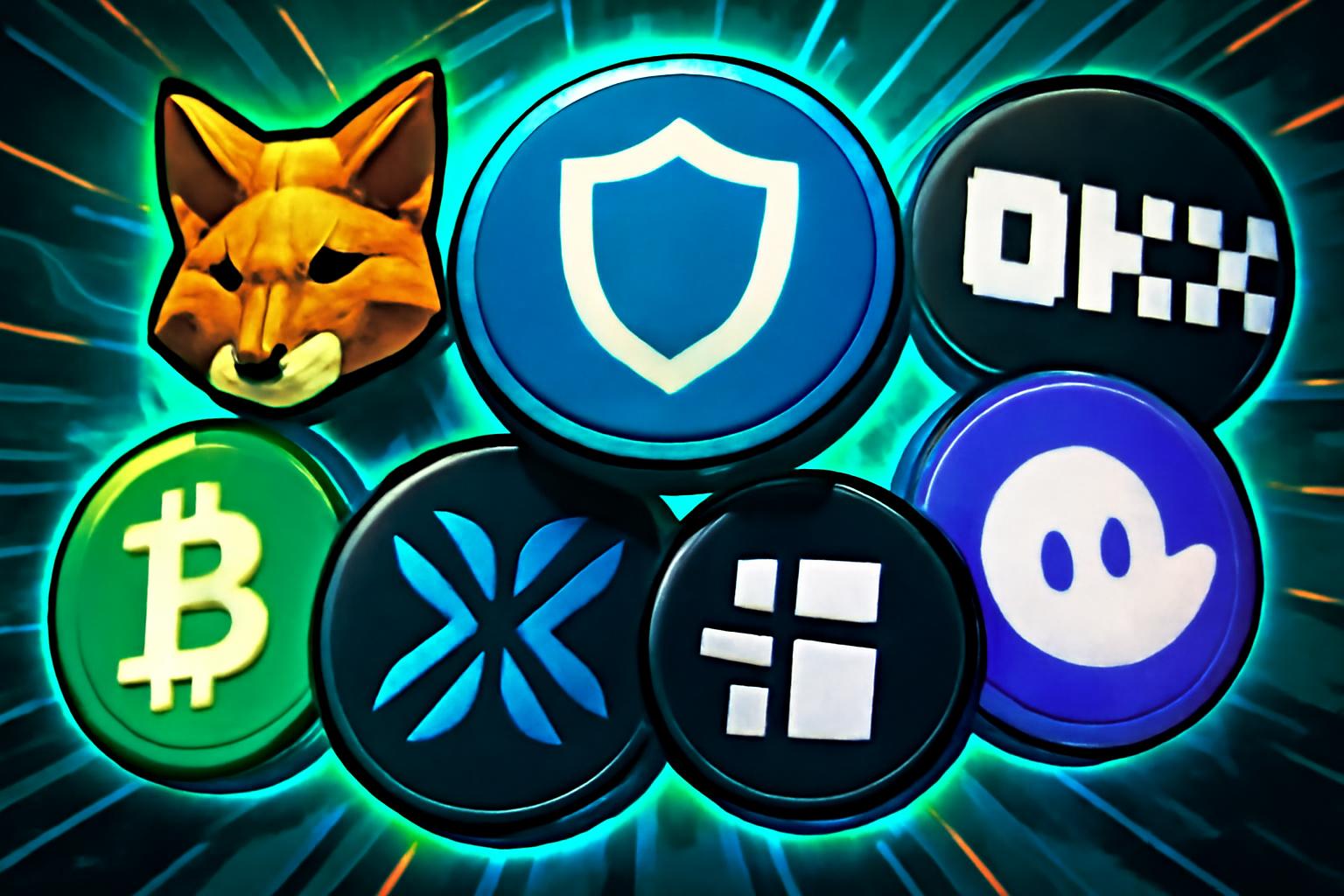

IN THIS GUIDE, WE HIGHLIGHT TOP CRYPTO WALLETS WORTH ADDING TO YOUR STACK AS A WEB3 USER OR CRYPTO ENTHUSIAST.
Nigeria is one of the largest crypto hubs in Africa.
With millions of people actively trading crypto and exploring Web3, choosing the right wallet is more important than ever.
Crypto wallets are your gateway to the blockchain.
They let you securely store digital assets, sign on-chain transactions, swap tokens, and interact with DeFi platforms and dApps.
Today, wallets do more than just hold crypto.
Some offer crypto cards for everyday payments, allowing users to spend directly from their balances, while others support easy on-ramps and off-ramps, making it simple to convert crypto to naira and withdraw to a Nigerian bank account.
Hot wallets are connected to the internet.
They are easy to use and ideal for everyday transactions like trading, swapping tokens, or interacting with dApps.
Most mobile and browser wallets fall into this category.
If you trade frequently, interact with DeFi, use dApps, or make regular crypto transactions, a hot wallet is the most practical option.
Cold wallets are offline wallets, often hardware devices.
If your priority is security and long-term holding, a cold wallet is the better choice.
Custodial wallets: With custodial wallets, a third party manages your private keys on your behalf.
This setup offers convenience and ease of use but means you don’t have full control over your funds.
Centralized exchanges and crypto apps commonly offer custodial wallets, and one key advantage is account recovery.
If you forget your password or lose your phone or laptop, you can usually regain access through the platform since no backup keys are required from the user.
Non-custodial wallets: Non-custodial wallets give you full ownership of your private keys and assets.
These wallets can be hot or cold, allowing users to maintain control of their crypto and digital assets.
Breet is a dedicated crypto off-ramping platform built to help Nigerians receive and convert crypto to naira.
This simply means users can sell supported cryptocurrencies such as Bitcoin, Solana, USDT, and more, then withdraw directly to their Nigerian bank accounts without the delays or risks of P2P trading.
Beyond cashing out, Breet allows users to pay everyday bills, including airtime, data, and electricity, using their crypto balance.
For users who are not in a rush to sell, Breet also supports holding crypto in USD and converting to naira later.
Whether you’re a freelancer or business receiving crypto payments, a trader taking profits, or receiving crypto from friends or family in Nigeria, Breet offers one of the safest and fastest ways to cash out to naira, without the stress of P2P.
Trust Wallet is a popular multi-chain wallet that supports over 100 blockchains and thousands of tokens.
It allows users to store, swap, and stake crypto, while also providing direct access to DeFi platforms and dApps through its built-in dApp browser.
Recently, Trust Wallet added prediction markets, expanding its growing set of Web3 features.
MetaMask is one of the most widely used non-custodial Web3 wallets, best known for its strong support of Ethereum and EVM-compatible blockchains such as BNB Chain, Base, and Arbitrum.
It allows users to interact directly on-chain, swapping tokens, bridging assets, exploring DeFi protocols, and accessing dApps.
MetaMask also supports virtual crypto cards for instant spending where Mastercard is accepted, and offers in-app access to prediction markets like Polymarket.
This makes it a powerful tool for users deeply involved in DeFi and on-chain activities.
Ledger Nano X is a hardware (cold) wallet designed to store crypto assets securely offline.
It supports over 5,000 cryptocurrencies and tokens and works across desktop and mobile devices, including Android and iOS, using USB-C and Bluetooth connectivity.
Users can manage their assets through the Ledger Live app, which also allows them to connect to dApps and interact on-chain.
For broader DeFi access, Ledger Nano X can be connected to hot wallets like MetaMask, combining high security with full Web3 functionality.
Exodus Wallet is a non-custodial crypto wallet with a clean interface and support for thousands of assets across multiple blockchains, allowing users to store, manage, and swap crypto seamlessly within the app.
While Exodus does not focus heavily on advanced DeFi activities, it excels as a daily-use wallet for storing assets, making quick swaps, and managing a diversified crypto portfolio across supported blockchains.
OKX Wallet is a self-custodial, multi-chain Web3 wallet that supports 150+ blockchains.
It allows users to store, swap, trade, and stake crypto, while also providing direct access to dApps and DeFi protocols across supported networks.
The wallet is designed for on-chain activity, making it suitable for users who actively interact with DeFi, NFTs, and Web3 applications.
Phantom Wallet started as a Solana-native wallet but has expanded to support multiple blockchains.
Users can now manage assets across Solana, Ethereum, Base, Polygon, Sui, Monad, Bitcoin, and HyperEVM from a single wallet.
The wallet allows users to store, swap, stake, and manage tokens, while providing direct access to DeFi protocols and dApps through its in-app browser.
Phantom is fully self-custodial, meaning users retain full control of their private keys.
It also supports prediction markets through a partnership with Kalshi.
Phantom has recently announced plans to launch a Visa crypto card.
Before choosing a crypto wallet in Nigeria, consider what you plan to use it for.
Some wallets are better for withdrawing to naira, while others are built for on-chain activity, DeFi, or NFTs.
Decide whether you want a custodial wallet for convenience or a non-custodial wallet where you control your funds entirely.
Non-custodial wallets give you full ownership but require more responsibility.
Hot wallets are suitable for daily transactions and on-chain activities, while cold wallets offer better protection for long-term holdings.
Many users combine both for balance.
The wallet should support the blockchains and tokens you actually use.
Multi-chain support is important for users interacting with DeFi, NFTs, and multiple ecosystems.
For users in Nigeria, wallets that support crypto-to-naira conversion and direct bank withdrawals offer a major advantage over wallets that require P2P trading.
A clean interface and simple navigation matter, especially for beginners.
Keeping your crypto safe starts with protecting your private keys and recovery phrases.
Never share them with anyone and it’s best to keep them offline.
Use strong passwords, enable biometric or two-factor authentication where available, and keep your applications up to date.
For large balances, consider using a hardware wallet or combining one with a hot wallet for safer on-chain interactions.
Double-check wallet addresses before sending funds.
Avoid clicking unknown links or connecting to untrusted dApps.
Use separate wallets for daily transactions and long-term storage.
There is no single best crypto wallet for everyone in Nigeria.
Best for selling crypto and withdrawing to naira: Breet Wallet.
Best for multi-chain access: Trust Wallet.
Best for Ethereum and EVM-compatible chains: MetaMask.
Best for Solana and Solana-based ecosystems: Phantom Wallet.
For most users, the ideal setup is often a combination of wallets, one for local cash-outs and another for on-chain activity.
Choose a wallet stack that fits your needs and helps you navigate Web3 with confidence.







Leave a Reply