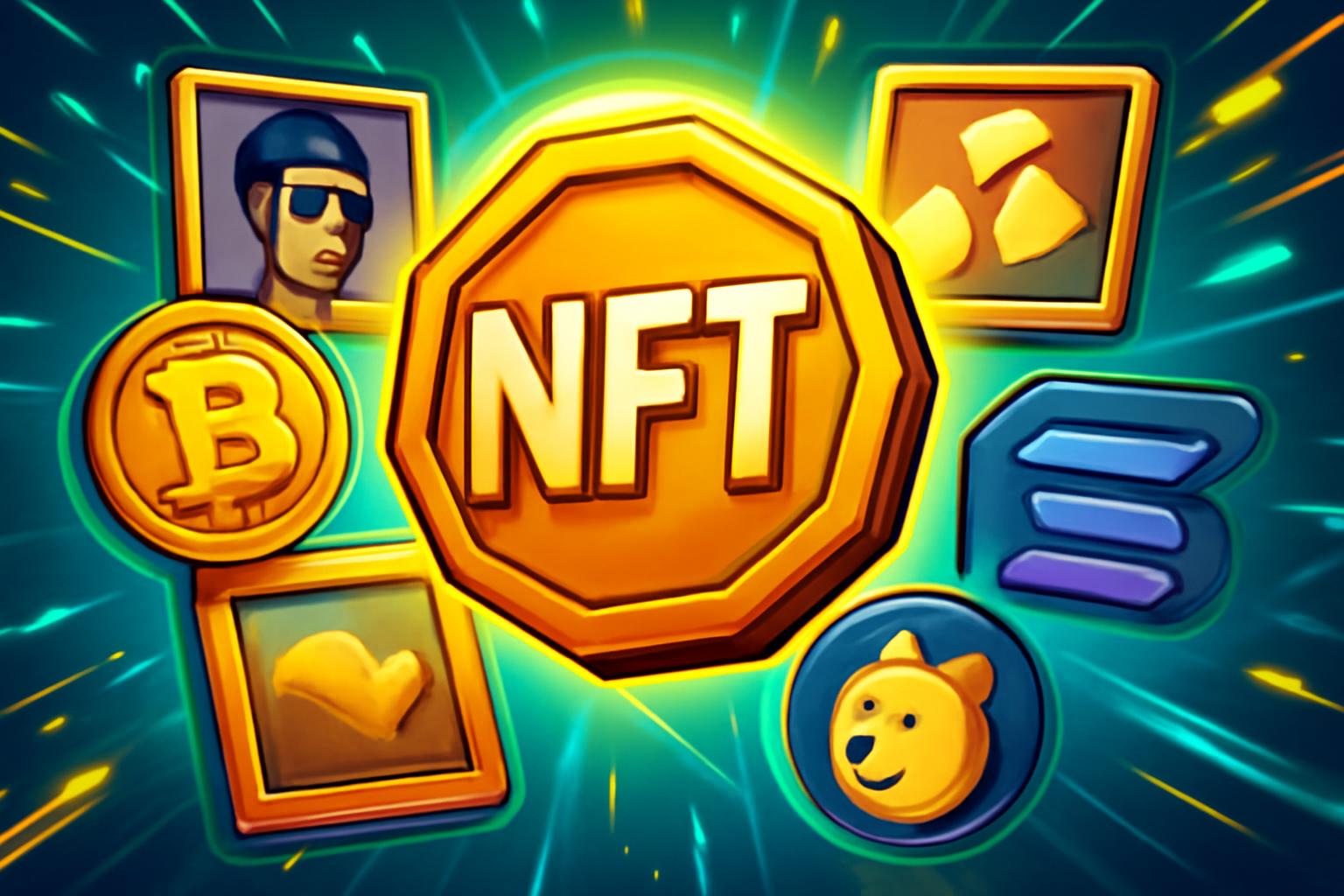

After a short-lived blip in the NFT art market, the sector is seeing a resurgence again. This is not only due to a wave of artists, but largely due to the evolution of collectors. This is evident in the fact that some of the most reputed and expensive art pieces are still dated in the early 2020s. Now, they have more takers, and are stirring the interests of digital art enthusiasts once again.
Along with the re-emergence of cryptocurrency as a viable investment, leaving behind the phase of public uncertainty it experienced – the NFT art market too has been similarly revived. Digital images, which could once exist only in the form of shareable, downloadable JPEG and IMG files, are now entering the market in the form of collectible, trade-worthy items with unique verifiable identities, being sold to the highest bidders. To simplify, these digital NFT tokens serve as verifiable proof of origin and ownership of a particular digital asset, and can be embedded in a variety of assets including video games, videos, music, photographs and visual artworks. As is with all art, with NFTs it takes a truly unique digital asset to make it a collector’s piece.
The NFT art market, as per an analysis published by Market Data Forecast in 2025, is projected to grow from $3.30 billion in 2024 to $45.97 billion in 2033. The increase in the popularity of NFT art has been linked with the increasing relevance of the Web 3.0 sector or industry in the current day, which refers to the evolving internet economy dealing in blockchain technology and token based transactions — an effort to move data ownership from corporate to individuals or users. In this digital world where content is easily plagiarised and shared without consent, NFTs are a sure way of proving ownership, making these assets valuable. NFTs empower artists to attach their identity, intent, and signature to every piece, forming a verifiable link between the creator and their work, no matter how many times it changes hands.
Platforms like OpenSea and SuperRare have served as launchpads for some of the world’s leading NFT artists, including Beeple and Pak, who currently hold the positions for the artists with the most expensive NFT art pieces in the world, with Beeple’s Everydays: The First 5000 Days, and Pak’s The Merge, at $69.3 million and $284 million respectively, among others. India too has her fair share of burgeoning NFT artists, with Amrit Pal Singh being the most reputed of the lot. Having started his work in 2021, he started simply by making personalised digital ‘toy faces’, his signature style merging nostalgia and pop culture, during the pandemic. Noting the booming demand, he decided to take a step into the NFT art market. He stands as India’s top selling NFT artist as of now. Along with him in this sector are artists such as Prasad Bhat, Karan Kalra, Khyati Trehan, as well as 13-year-old Laya Mathikshara, whose creations display a blend of pop culture, nature elements and abstract art.
NFT art has also found favour amongst celebrities, with some investing heavily in or launching their own NFT art collections. Among them are Snoop Dogg, Paris Hilton, Eminem and others, with American DJ and record producer Steve Aoki even producing an NFT musical track. In India, Amitabh Bachchan had launched his own NFT platform called BeyondLife.club, where the very first auction included a collection of poems by Harivanch Rai Bachchan called the Madhushala Collection, including vintage autographed posters and other collectibles, which sold for nearly Rs 7.18 crore. Others who have invested in NFT art in India are actors Salman Khan, Kamal Haasan and cricketer Dinesh Karthik, among others.
As of 2025, following the dip in interest and awareness prior, there were 100 NFT marketplaces globally, with some of them operating in India as well, with OpenSea that started in 2017, one of the biggest among them as well, found a report. Other popular NFT marketplaces include Magic Eden (founded in 2021) which is the top choice for Solana NFTs; Solonart, Solana’s dedicated NFT art marketplace launched in 2021; Rarible (2020) a multichain marketplace supporting Etherium, Flo and Tezos currencies; Nifty Gateway (2020) which specialises in high-quality art, music, and branded drops with fiat currency support as well; and Zora, launched officially in 2021, with their Etherium based platform launched in 2023, among many others.








Leave a Reply