
Paragraph 1
Tokenomics is the economic framework that defines how a crypto token functions within a blockchain ecosystem. It blends token mechanics with economic incentives to govern creation, distribution, utility, incentives, long-term sustainability, and even removal from a network. A well-designed tokenomics model aligns incentives across users, developers, and long-term holders to support durable value. Flaws in tokenomics have caused the collapse of several projects, underscoring the importance of alignment in a network’s incentives.
Paragraph 2
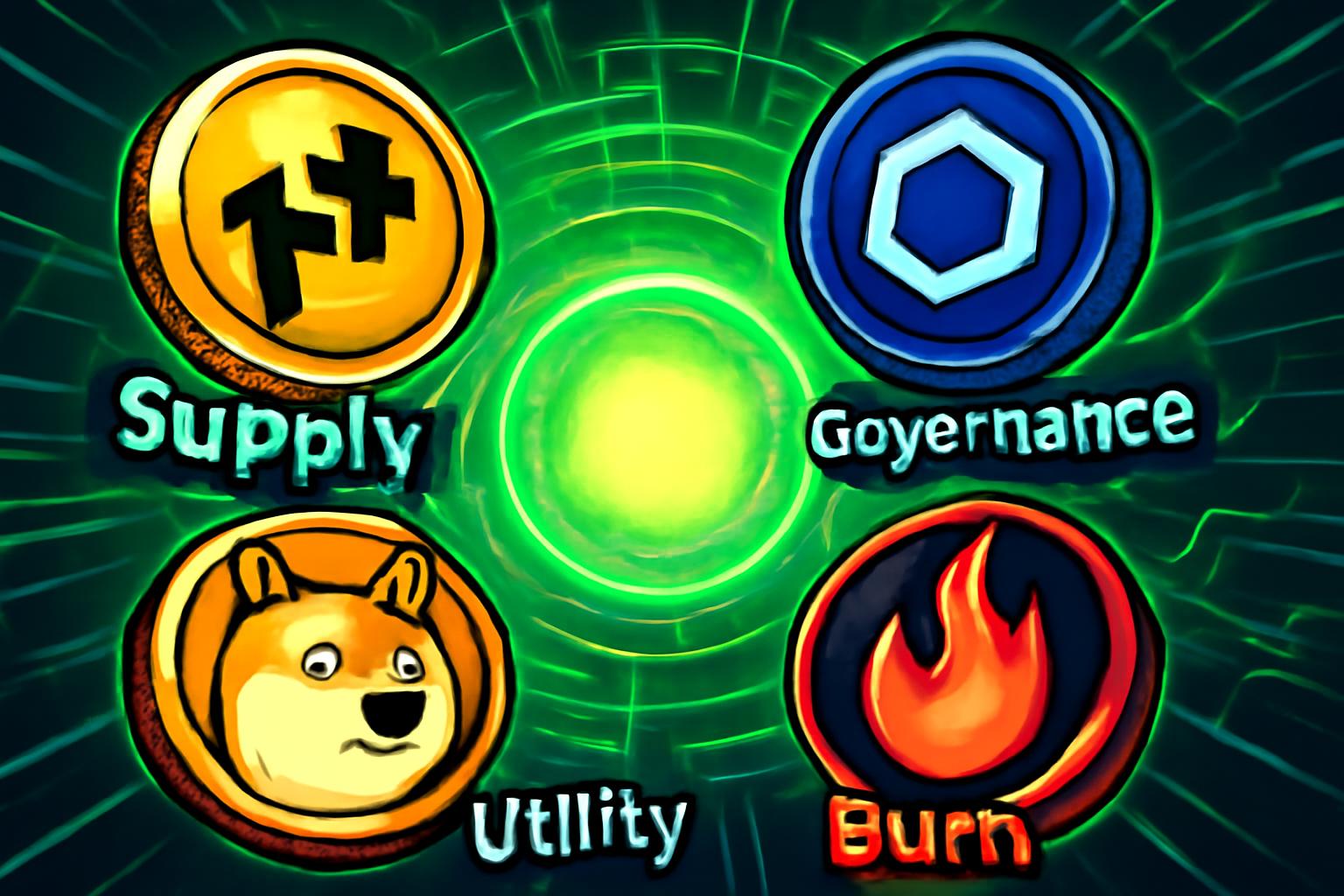
Token supply defines the total tokens in existence, how many will ever exist, and how many are currently available to the market, including maximum supply, total supply, and circulating supply, shaping scarcity, inflation, and long-term value. Maximum supply introduces scarcity by design, while total supply accounts for minted tokens including those locked or reserved; circulating supply reflects tokens actively available on the market and has the most immediate impact on price and liquidity. Token distribution explains who receives tokens, when they receive them, and under what conditions, with vesting schedules and lock-up periods preventing early stakeholders from dumping tokens after launch. Token utility defines how the token is used within the ecosystem, including paying transaction fees, accessing platform features, staking to secure the network, providing collateral in DeFi protocols, unlocking premium services, or enabling innovations.
Paragraph 3
Demand and incentives describe why users would want to acquire and hold the token, and what motivates them to participate in the network. Incentives may come in the form of staking rewards, yield farming, governance rights, airdrops, fee discounts, or access to exclusive features. Burn mechanisms permanently remove digital assets from circulation, reducing supply over time, often in response to transaction fees, protocol revenue, buybacks, or specific user actions. Governance determines how decisions are made within a protocol and how much influence token holders have over its future, with holders voting on proposals, upgrades, and treasury usage.
Paragraph 4
Emerging trends in tokenomics include the integration of real-world assets (RWAs) into tokenized systems, bringing illiquid assets such as real estate and commodities onto blockchain ecosystems. Tokens backed by real-world assets often derive value from yield generation, revenue sharing, or rights to underlying digital tokens rather than pure speculation. GameFi and dual-token economies separate in-game utility from long-term value and governance, with one token supporting gameplay and the other governing or capturing value. Decentralized Physical Infrastructure Networks extend tokenomics to real-world infrastructure, requiring incentive design that reflects actual utility like uptime and data quality.
Paragraph 5
Tokenomics faces significant limitations and challenges, including regulatory uncertainty and security risks. Market manipulation and volatility, along with scalability and interoperability constraints and cross-chain compatibility issues, further test robust designs. When evaluating a project’s tokenomics before investing, consider the token supply structure beyond the max, focusing on how tokens enter circulation and the potential dilution from vesting and emissions. Also review distribution and ownership concentration, check for real utility and sustainable incentives, and assess governance transparency and safeguards against whale dominance.







Leave a Reply