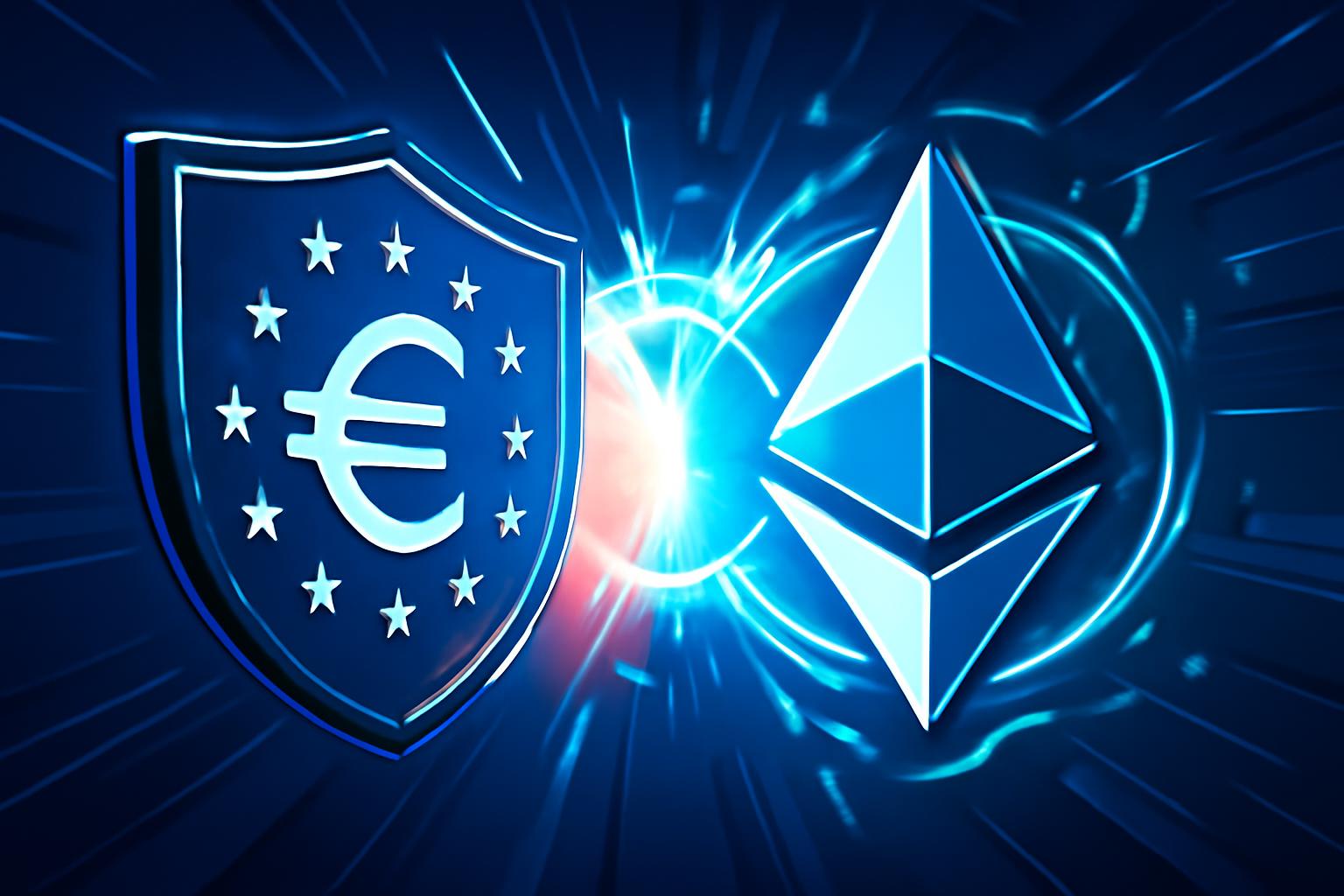

By 2025, the distance between traditional finance and on-chain finance narrowed faster than expected, as shared infrastructure, regulatory clarity, and the growth of bank-supported digital currencies accelerated overlap between the two ecosystems. What was once seen as parallel systems is increasingly overlapping, with digital assets becoming part of the core financial apparatus rather than a separate perimeter. Global institutions now view stablecoins and tokenization as tools for settlement, liquidity, and treasury operations rather than speculative experiments.
Europe has been at the forefront, with MiCA embedding regulated stablecoins into market infrastructure and banks issuing euro-based digital currencies, while the digital euro project advances. In the United States, the GENIUS Act provides a clearer framework for stablecoins, signaling a regulatory environment that supports integrated on-chain finance. By 2026, analysts anticipate euro-based digital currency models deployed by major banks, enabling on-chain settlement and broader on-chain integration with traditional finance.
Societe Generale-FORGE (SG-FORGE) has played a pivotal role by issuing EUR CoinVertible and USD CoinVertible under MiCA, backed by custody with trusted institutions, positioning itself as a bridge between capital markets and digital assets. Strategic partnerships, such as with Deutsche Börse to embed CoinVertible stablecoins into Clearstream, and with SWIFT to settle tokenized bonds on blockchains in fiat, demonstrate practical interoperability. SG-FORGE’s approach maintains regulatory rigor while expanding tokenized asset use cases, from issuance to delivery-versus-payment settlements and coupon payments.









Leave a Reply