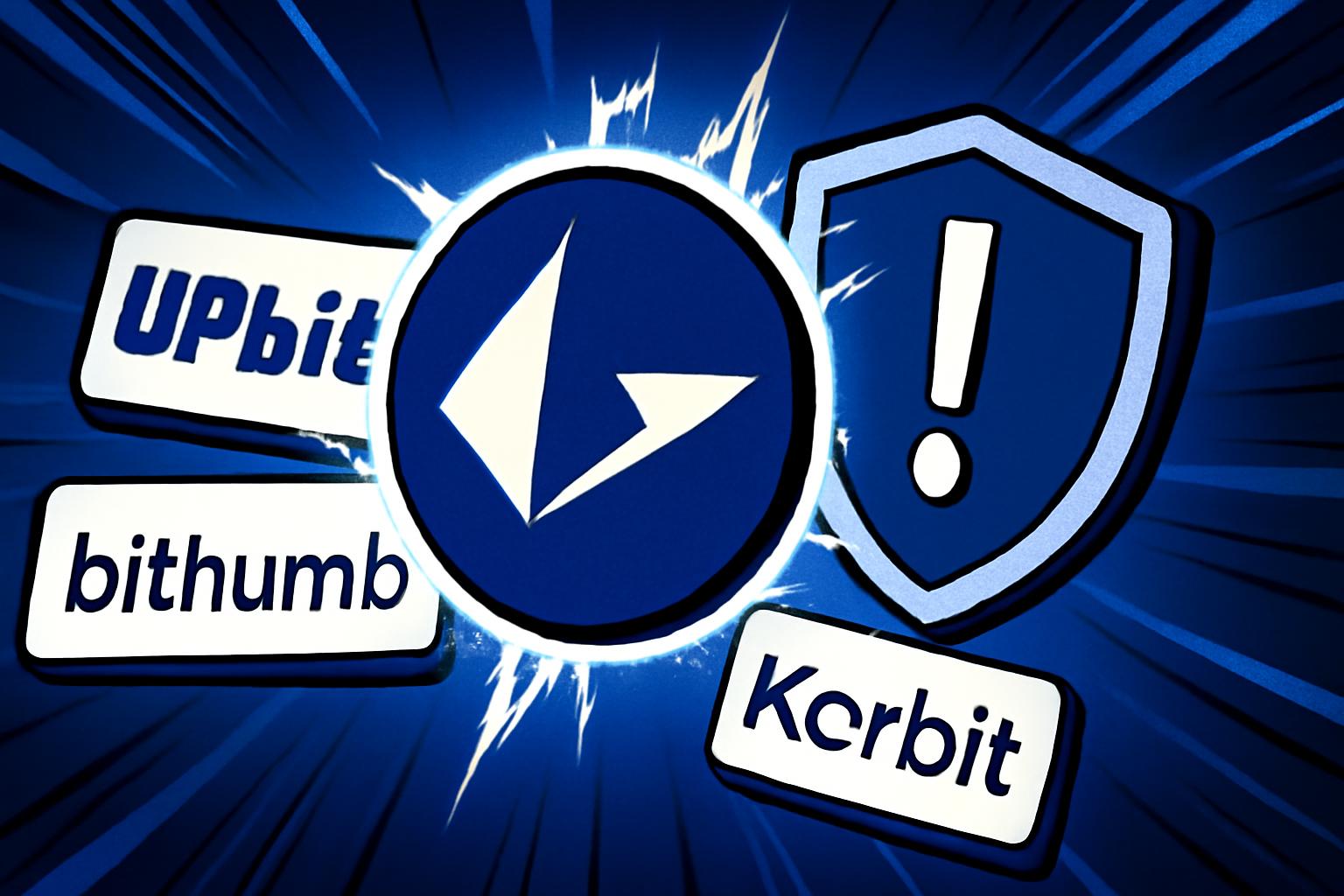

Loopring LRC token faces potential delisting from Upbit, Bithumb, and Korbit exchanges. In March 2025, three of South Korea’s largest cryptocurrency exchanges—Upbit, Bithumb, and Korbit—have simultaneously placed the Loopring (LRC) token on a delisting watchlist. This decisive action follows a comprehensive review that identified insufficient disclosure of material information and concerns regarding the project’s business progress. Consequently, this development sends a stark warning to the broader crypto market about the stringent compliance standards now enforced in one of the world’s most active digital asset jurisdictions.
The coordinated announcement from Upbit, Bithumb, and Korbit represents a major event for the Loopring ecosystem. According to official statements, the exchanges conducted a periodic project review, a standard procedure under South Korea’s strict digital asset framework. The review specifically flagged two critical issues. First, the project allegedly failed to provide adequate disclosure of information that could materially affect the token’s value.
Second, assessors identified shortcomings during an evaluation of the project’s business milestones and developmental progress. These findings triggered the watchlist placement, initiating a monitoring period during which the project team must address the cited concerns to avoid a full delisting. This action underscores the exchanges’ commitment to investor protection principles mandated by South Korean regulators. The watchlisting of Loopring demonstrates the practical application of these rules.
Financial technology experts point to this event as a maturation signal for the South Korean market. The synchronized action by the Big Three exchanges is not a coincidence, according to a Seoul-based fintech analyst who requested anonymity. For a project to be flagged by all three simultaneously suggests the identified issues are substantial and consensus-driven, not a minor technicality. The immediate market impact typically involves several phases.
Initially, automated trading bots and risk-averse investors often trigger sell-offs, leading to price depreciation and increased volatility. Subsequently, trading volume may migrate to decentralized exchanges (DEXs) or overseas platforms, though this presents access hurdles for Korean investors bound by local regulations. Finally, the project team’s response becomes paramount. A swift, transparent, and substantive action plan addressing the exchanges’ concerns can sometimes mitigate the situation, though removal from a watchlist is historically less common than escalation to full delisting.
Loopring, as a layer-2 scaling protocol for Ethereum focusing on zkRollup technology, now faces a critical juncture. The project must engage directly with the exchange compliance teams to clarify the specific “insufficient disclosure” and “business progress” issues. Potential response actions could include publishing detailed, regular development reports that meet Korean exchange standards for material disclosure. Roadmap reassessment would involve publicly revisiting and updating project milestones with verifiable progress metrics. Governance communication would focus on improving transparency around team decisions, treasury management, and long-term strategy.
A successful resolution could reinforce confidence in proactive project governance. Conversely, a delisting would significantly reduce LRC’s accessibility to a major retail market, potentially impacting its liquidity and global standing. The placement of Loopring (LRC) on the delisting watchlist highlights the evolving and strict nature of South Korea’s cryptocurrency regulatory framework. This action, driven by concerns over material disclosure and business progress, serves as a clear reminder of the high compliance standards demanded in this key market. The situation now hinges on the Loopring project’s ability to address these concerns transparently and effectively.
Q1: What does being on a ‘delisting watchlist’ mean for Loopring (LRC)? A1: It means the exchanges (Upbit, Bithumb, Korbit) have identified compliance issues and are giving the project a monitored period to address them. Failure to adequately resolve the concerns will likely lead to the token’s permanent removal from trading on those platforms.
Q2: Can I still trade LRC on Upbit, Bithumb, or Korbit right now? Yes, trading typically continues during the watchlist period. However, the exchanges may impose warnings on the trading page, and investors should be aware of high volatility and the risk of future trading suspension if delisting occurs.
Q3: What are the main reasons cited for the watchlist action? The exchanges cited two primary reasons: 1) Insufficient disclosure of information that could materially affect the token’s value, and 2) Shortcomings identified in an assessment of the project’s business progress and development milestones.
Q4: How does this affect LRC holders outside of South Korea? The direct trading impact is confined to these three exchanges. However, the news can affect global market sentiment, potentially influencing LRC’s price on international exchanges due to perceived regulatory risk and reduced liquidity from the Korean market.
Q5: Has this happened to other cryptocurrencies before? Yes, South Korean exchanges periodically review and delist tokens. In recent years, dozens of tokens have been removed for similar reasons, including failure to meet disclosure requirements, low trading volume, security issues, or lack of project development, making this a standard, though serious, regulatory procedure.
To resolve the watchlist, Loopring could publish detailed development reports, reassess its roadmap with verifiable progress metrics, and improve governance transparency. A swift, transparent response may mitigate the impact and help avoid a full delisting.





Leave a Reply