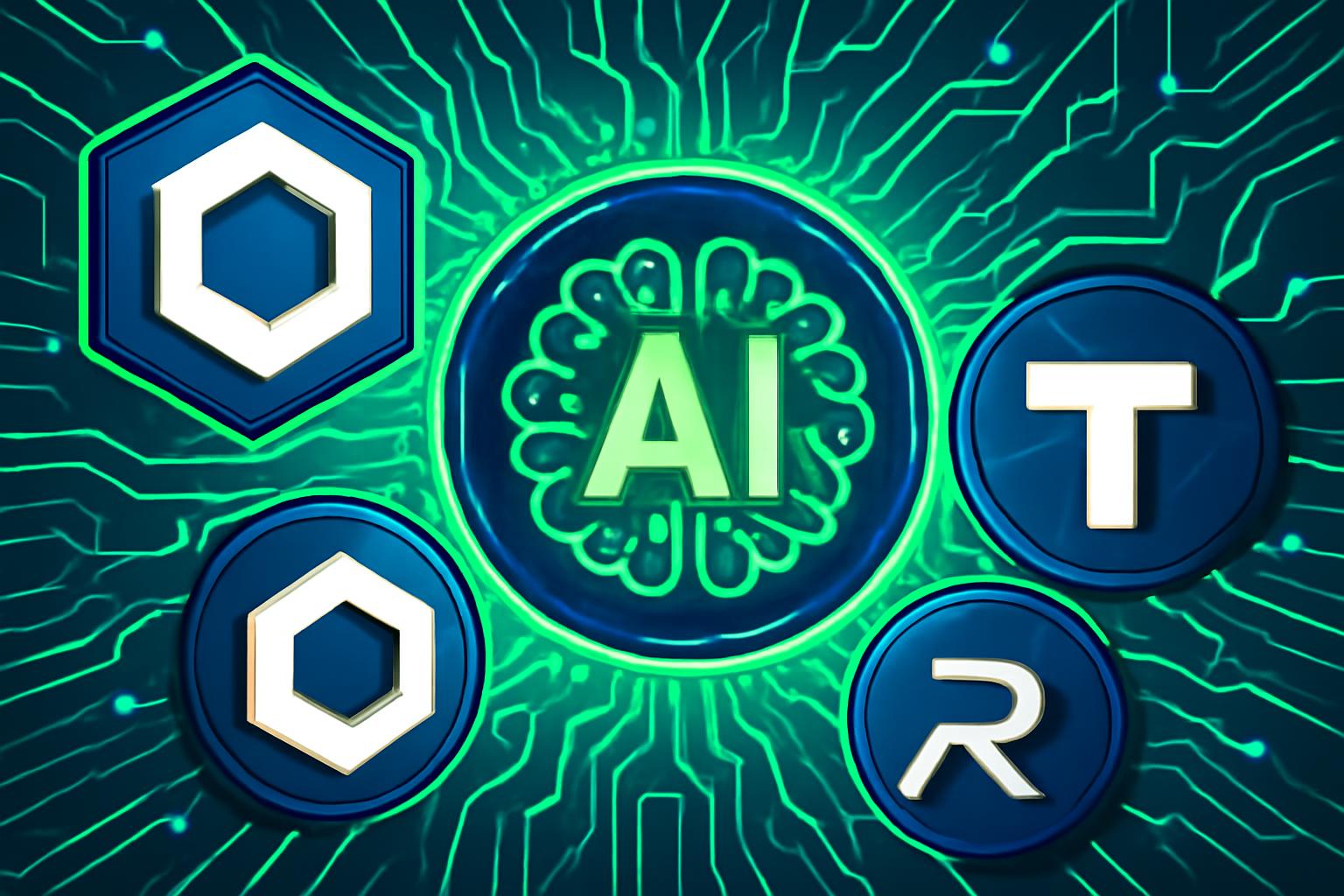

AI cryptocurrencies fuse blockchain with artificial intelligence to power decentralized machine learning networks, GPU computing, and AI agent platforms. The AI crypto market has grown to over $26 billion in market capitalization as of January 2026. BMIC AI is a new AI cryptocurrency building infrastructure for AI-powered blockchain applications and machine learning integration, with a token distribution emphasizing 50% for presale, 12% for rewards and staking, and 10% for liquidity and exchanges, offering early-adopter opportunities for investors willing to take on additional risk.
Chainlink dominates the AI crypto space as the largest AI cryptocurrency by market capitalization, and its Cross-Chain Interoperability Protocol enables AI applications to access data across multiple blockchains. Bittensor powers a decentralized machine learning network where models train collaboratively and earn rewards in TAO based on the informational value they provide. Recent developments include expanding subnet capacity to 256 in Q1 2026 and doubling the number of specialized AI services that can run on the network. Internet Computer is a decentralized cloud blockchain designed to host applications, websites, and enterprise systems fully on-chain, with a self-writing cloud vision that lets AI tools generate applications through natural-language instructions.
NEAR Protocol is positioning itself as the blockchain for AI, creating the infrastructure AI needs to transact, operate, and interact across Web2 and Web3, while Render Network provides a decentralized GPU compute platform for AI workloads. Buying AI crypto isn’t complicated, but you need the right exchange and wallet setup to do it safely; Chainlink (LINK) is available on all major exchanges, Bittensor (TAO) is listed on Coinbase, Binance, Kraken, and Bybit, Render (RENDER) is listed on Coinbase, Binance, Kraken (migrated from RNDR to RENDER), NEAR Protocol (NEAR) is available on all major exchanges, and Internet Computer (ICP) is listed on Binance, Coinbase, and Kraken. For long-term holdings, use hardware wallets like Ledger or Trezor, and follow best practices to safeguard private keys, enable 2FA, and verify token contracts before swaps.





Leave a Reply