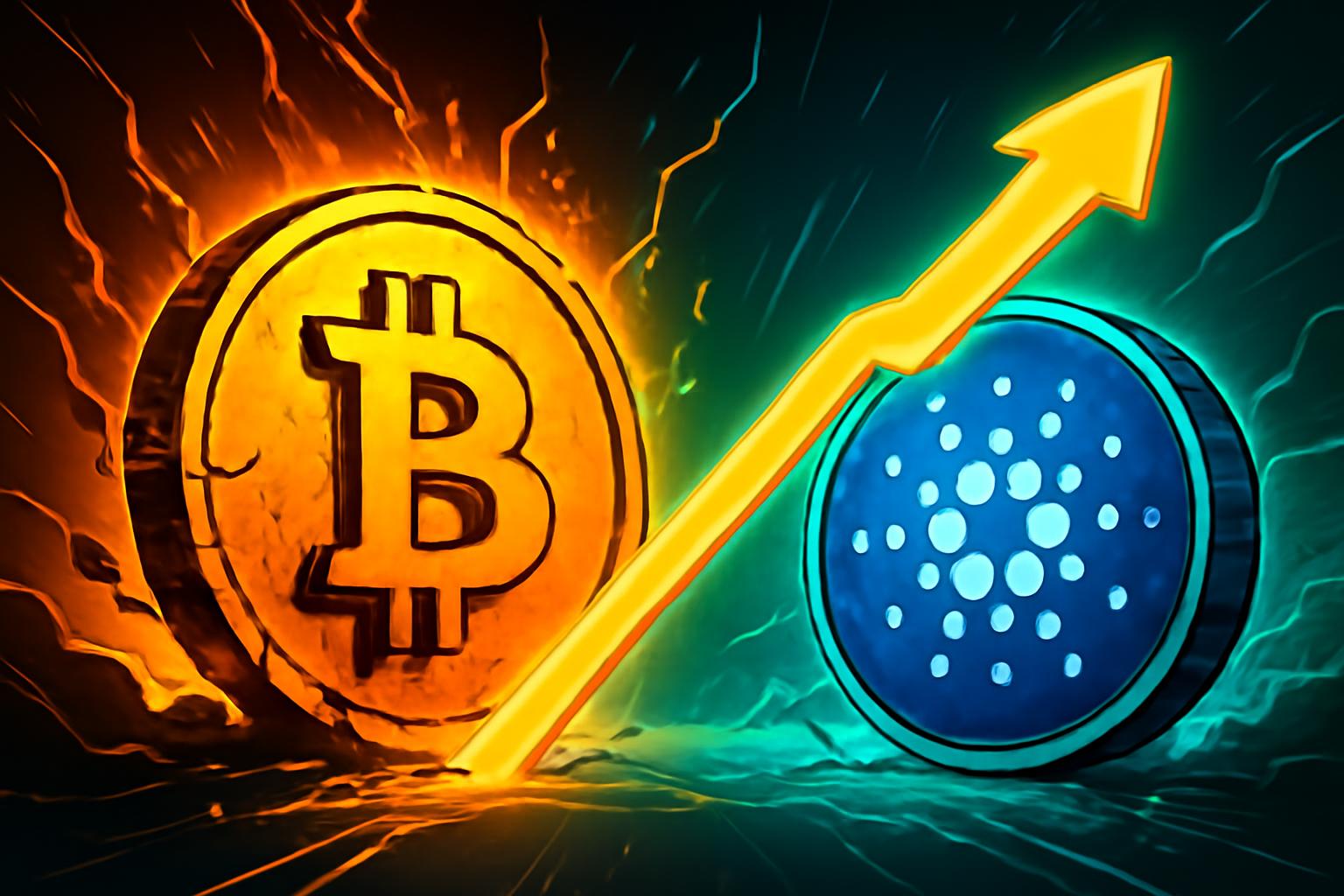

Neither Bitcoin nor Cardano has performed well during the past year, with Bitcoin down about 35% and Cardano down about 66% as of February 5. The question for investors is which cryptocurrency offers more upside from here through 2030.
Bitcoin is now widely held by investors with long time horizons. Today Bitcoin has a market cap of roughly $1.3 trillion, and there will only ever be 21 million coins, with new issuance halving roughly every four years. Those two factors underpin its long-run return prospects, as scarcity can support compounding even if the giant market cap limits explosive gains. Bitcoin exchange-traded funds collectively hold nearly 1.5 million bitcoins, and many managers intend to accumulate more over the long run, rather than sell during pullbacks.
Cardano has a lot of different capabilities, but none are sought after right now. Compared to Bitcoin, Cardano’s market cap is about $9 billion, and it doesn’t aspire only to be a store of value. That smaller value base is why Cardano can plausibly deliver bigger returns than Bitcoin if both attract the same absolute dollars of new demand, but it needs more usage to drive demand.
If Cardano becomes a preferred settlement layer for transactions, for tokenized real-world assets or for decentralized finance, it might gain very quickly — but that hasn’t happened so far, and there isn’t much reason to suspect that it’s about to. It only has $136 million in total value locked (TVL) on its chain, which is pretty minimal. And that’s the main problem with Cardano; there simply isn’t any group of investors, users, or app developers that is willing to engage with its ecosystem in a way that would encourage scaling it up in response to demand. Therefore, if you want the better bet for getting some upside through 2030, Bitcoin is the better choice.







Leave a Reply