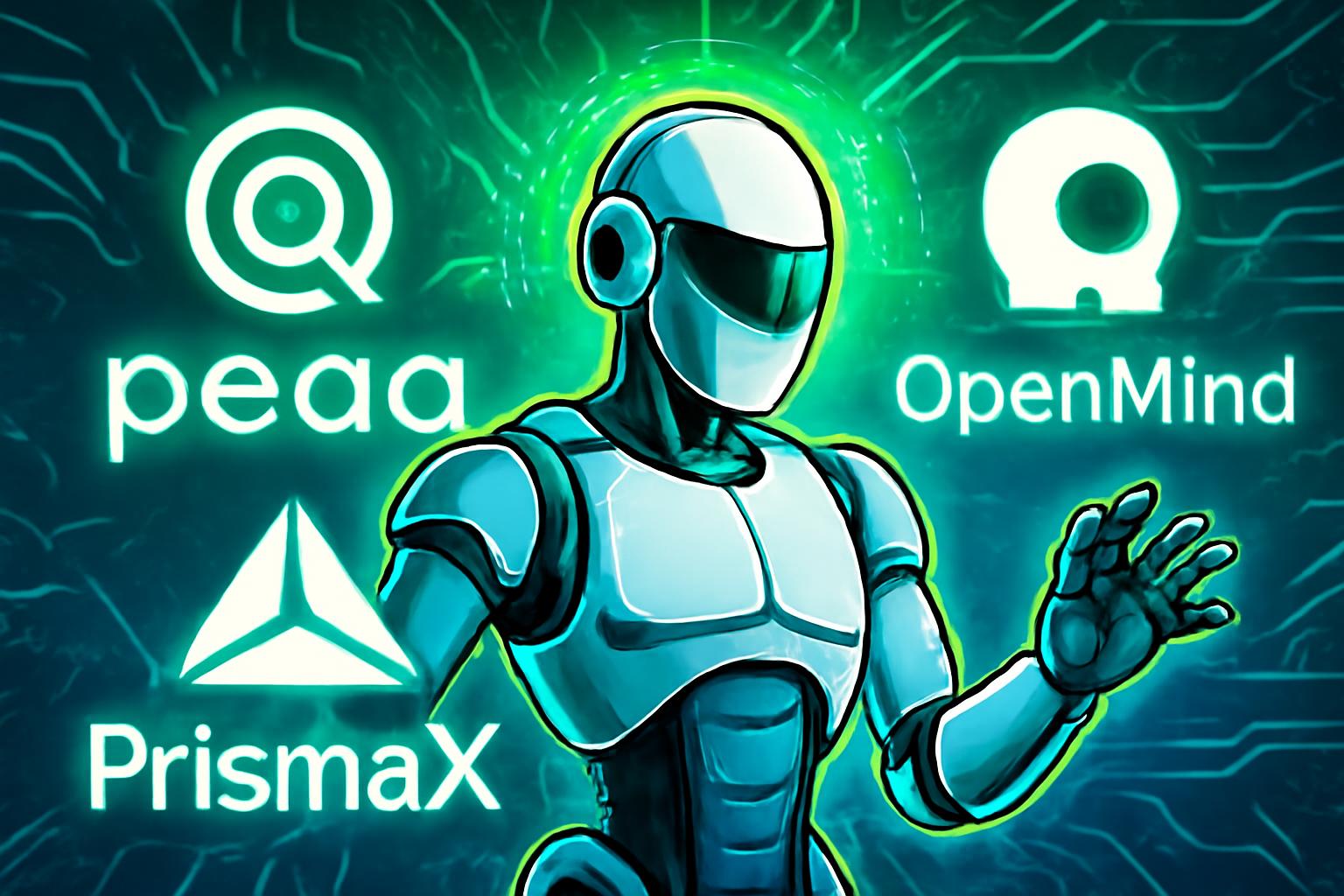

Three projects—peaq, PrismaX, and OpenMind—represent distinct niches within the robotics economy. Peaq positions as a Layer-1 blockchain purpose-built for the Machine Economy, with machines as economic agents capable of holding wallets, signing transactions, and generating income.
At the end of 2025, a project in Hong Kong launched the world’s first tokenized robot farm on the peaq ecosystem, using automated robots to grow hydroponic vegetables. Its operational logic is refreshingly straightforward: users purchase NFTs representing fractional ownership of the farm; farm robots work autonomously to cultivate and sell vegetables; revenue from sales (real-world fiat income) is converted into stablecoins; earnings are distributed directly on-chain to NFT holders. According to on-chain data and community feedback, the farm completed its first earnings distribution at the end of January 2026, with a distribution amount of ~$3,820 USDT and an estimated APY of ~18%.
This “earn money by selling lettuce—not inflating tokens” model delivers a powerful confidence boost for today’s crypto investors, who increasingly prioritize stability and low risk. Real-world asset (RWA) use cases like this are precisely what the market needs.
PrismaX is the data layer built on human-robot collaboration (RLHF). It enables everyday users to remotely control real robotic arms to complete tasks, generating high-quality training data while rewarding participants. PrismaX has built a platform for teleoperation via a web browser, where users perform actions and the system records full operation logs; recorded data is sold to robotics companies for AI training. Users earn Points, redeemable for tokens post-launch, with a seed round of $11M led by a16z and Virtuals Protocol supporting the initiative. More than 500 remote operators globally have completed teleoperation tasks, and two full robotic arm systems have been deployed.
The platform notes risks from a surge of “points-farming studios” that could threaten data quality, potentially impacting the value of Points and the quality of deployed models.
OpenMind aims to be the Android for robots, offering a universal operating system and app store for embodied AI devices. OpenMind has launched its Robot App Store with five live applications focused on Autonomous Mobility, Social Interaction, Privacy Protection, and Education & Skills Training, and has secured partnerships with 10 hardware manufacturers, including Unitree, Fourier Intelligence, UBTECH, and Deep Robotics. The ecosystem reports more than five apps live in the App Store, over 10 hardware partners globally, and more than 1,000 developers in the community.









Leave a Reply