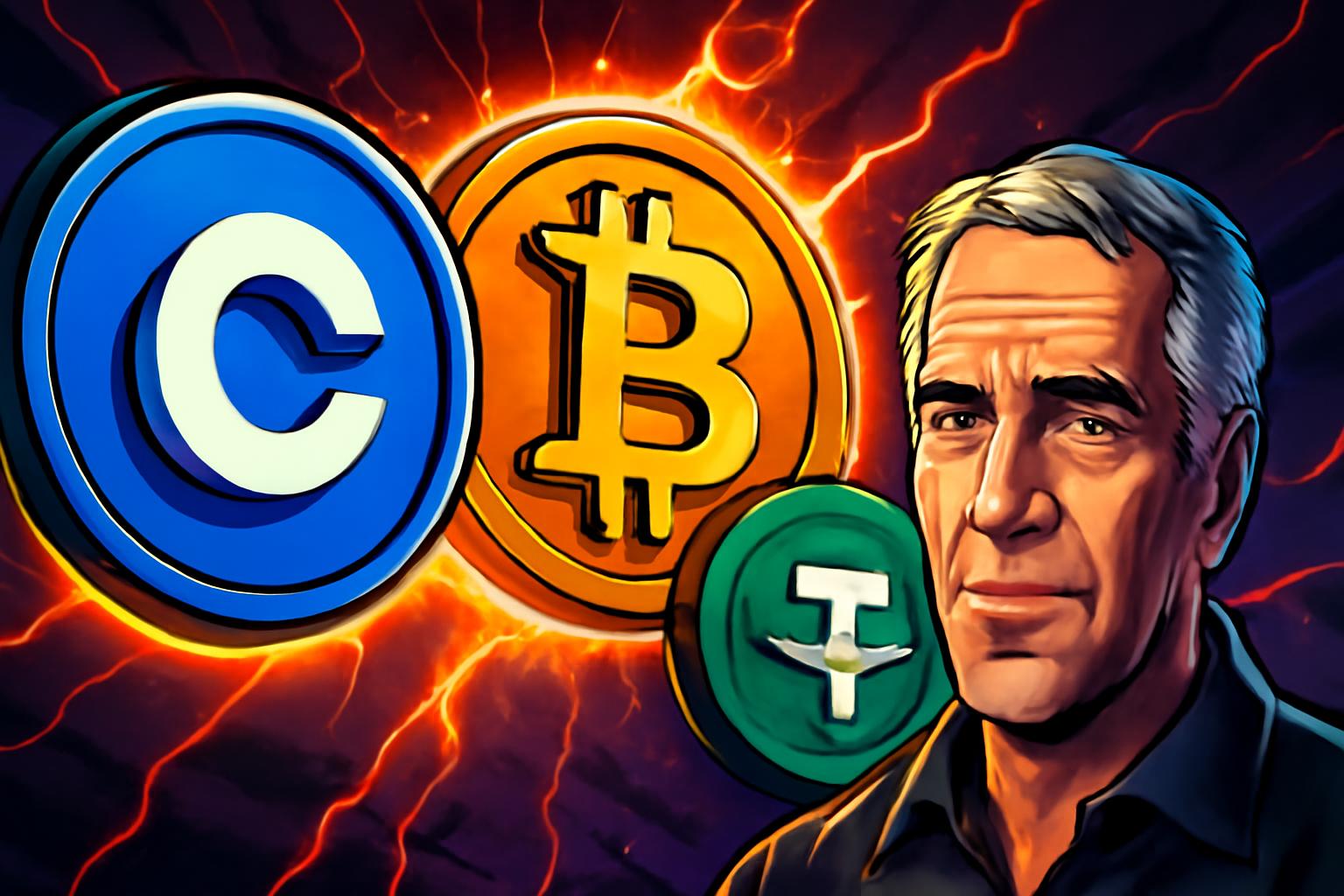

Between 2011 and 2019, Epstein invested in major crypto exchanges and software development firms. He grew close with one of the most influential yet troubling figures in the field, Brock Pierce. Epstein even forged ties with Bitcoin’s core development team and mused about changing the technology of Bitcoin itself. Epstein met him at the Mindshift Conference held on Epstein’s private island, Little St. James in 2011.
Pierce is a cofounder of Tether, a so-called “stablecoin” that uses blockchain tokens to track US dollars. Epstein met him at the Mindshift Conference held on Epstein’s private island, Little St. James in 2011. In May of 2013, Pierce emailed Epstein about his efforts to buy the Japan-based Bitcoin exchange Mt. Gox. The same year, Epstein enrolled in a general “Introduction to Cryptography” course offered online by Stanford.
In May of 2013, Epstein emailed a third party about a possible new cryptocurrency in connection with Pierce, which Epstein describes as “Bit coin without the seediness.” The MIT Media Lab’s funding of Bitcoin developers is particularly eyebrow-raising because of Brock Pierce’s indirect role in that takeover. The Bitcoin Foundation had funded Bitcoin core developers until Pierce was elected director of the foundation in May of 2014. This collapse, triggered by an Epstein friend, enabled the Media Lab, using Epstein’s funds, to “take control” of Bitcoin core developers.
Bitcoin is an open-source protocol similar to email, not a single software package sold by a company, so changes can’t be unilaterally imposed by any single entity — even the “core” development team. The new emails show Epstein did have substantial discussions about the direction of Bitcoin and cryptocurrency development with Vincenzo Iozzo, who is believed to have been the “personal hacker” described as working for Epstein by an FBI informant. One of Epstein’s hobby horses was the creation of “Sharia compliant” digital currencies for use in the Middle East. In fact, Bitcoin is pseudonymous: while real names aren’t attached, the network keeps a public record of all accounts and transactions, making it fairly easy for professional analysts — including those at major US government contractors like Chainalysis — to triangulate the real-world identities of active users.
Epstein’s conversations with Iozzo circa 2014 partly revolve around the desire to “remove anonymity” from Bitcoin. Whatever Epstein’s agenda, he would have found directly manipulating Bitcoin’s code difficult. Mt. Gox collapsed before Pierce and Epstein could invest in that exchange, but in 2014, Pierce facilitated Epstein’s $3 million early investment by Epstein into Coinbase, now the largest crypto exchange in the United States. At its current value of $51 billion, Epstein’s $3 million Coinbase stake would be worth more than $380 million.
Coinbase spearheaded the formation of the Stand With Crypto activist front and the Fairshake political action committee. Bitcoin is intended, among other features, to thrive when states — and with them, democracy — begin to fail. This dark worldview may have appealed to Epstein and his compatriots as much as any technological innovation.
This has all too much in common with the paranoid narratives of decline that suffuse Bitcoin culture — and the accompanying anti-democratic politics, fraud, and deception that seem designed to make those grim visions a reality. Fairshake and two other closely linked cryptocurrency PACs spent a reported $131.5 million in 2024 races, with $85.1 million going to support Republicans and just $48.3 million going to Democrats.










Leave a Reply