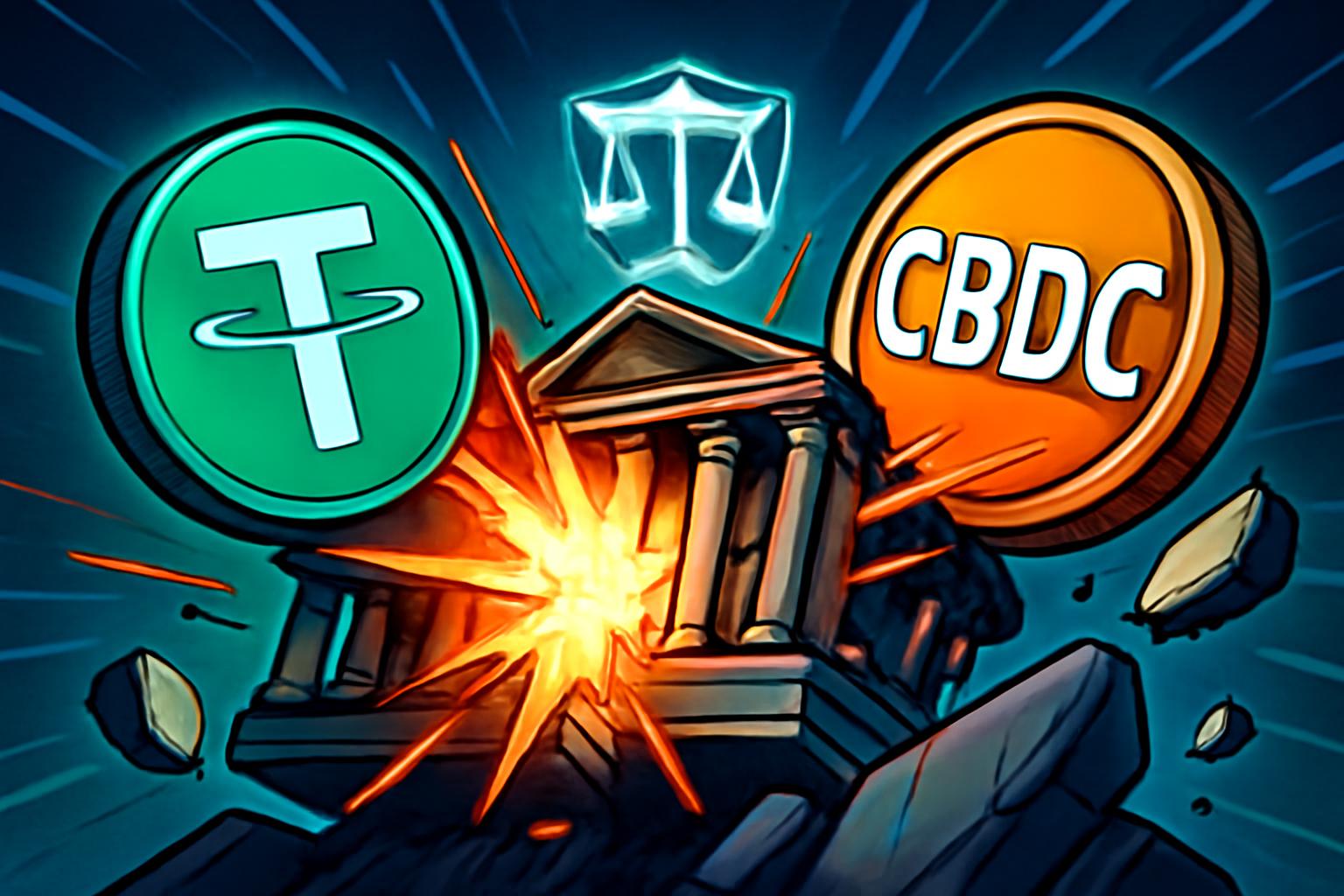

Governments have increasingly embraced stablecoins and central bank digital currencies (CBDCs) as tools to generate demand for debt and embed controls that postpone fiscal pain while avoiding market discipline. While proponents say these technologies improve payments and broaden financial inclusion, a closer look suggests their primary function may be to create artificial demand for government liabilities and to manage—rather than resolve—the debt crisis. Stablecoins initially emerged to reduce volatility and bridge fiat money and digital assets, with genuine demand, particularly where reliable banking is limited.
Stablecoin market capitalization surpassed $300 billion in 2025, with Tether and USDC accounting for about 90 percent of the market. As of December 31, 2025, Tether alone held over $122 billion in U.S. government debt securities, placing it among the top 20 global holders. Overall, stablecoin issuers hold hundreds of billions of dollars in U.S. government debt, absorbing a significant share of new T-bill issuance. As long as stablecoins remain popular, inflows into government debt will continue, almost entirely insulated from price signals or macroeconomic and geopolitical concerns.
CBDC proponents also often argue that just because dystopian features can be built in, it does not mean that they will be, and that benevolent governments can design them to instead preserve privacy and prioritize neutrality. Technically, that may be true, but realistically, once the infrastructure is there, the temptation (and even the practical necessity) to use it to its full potential will be compelling, especially in times of fiscal stress. CBDCs can allow financial repression to be implemented with surgical precision. From the perspective of a heavily indebted government, this is clearly irresistible.












Leave a Reply