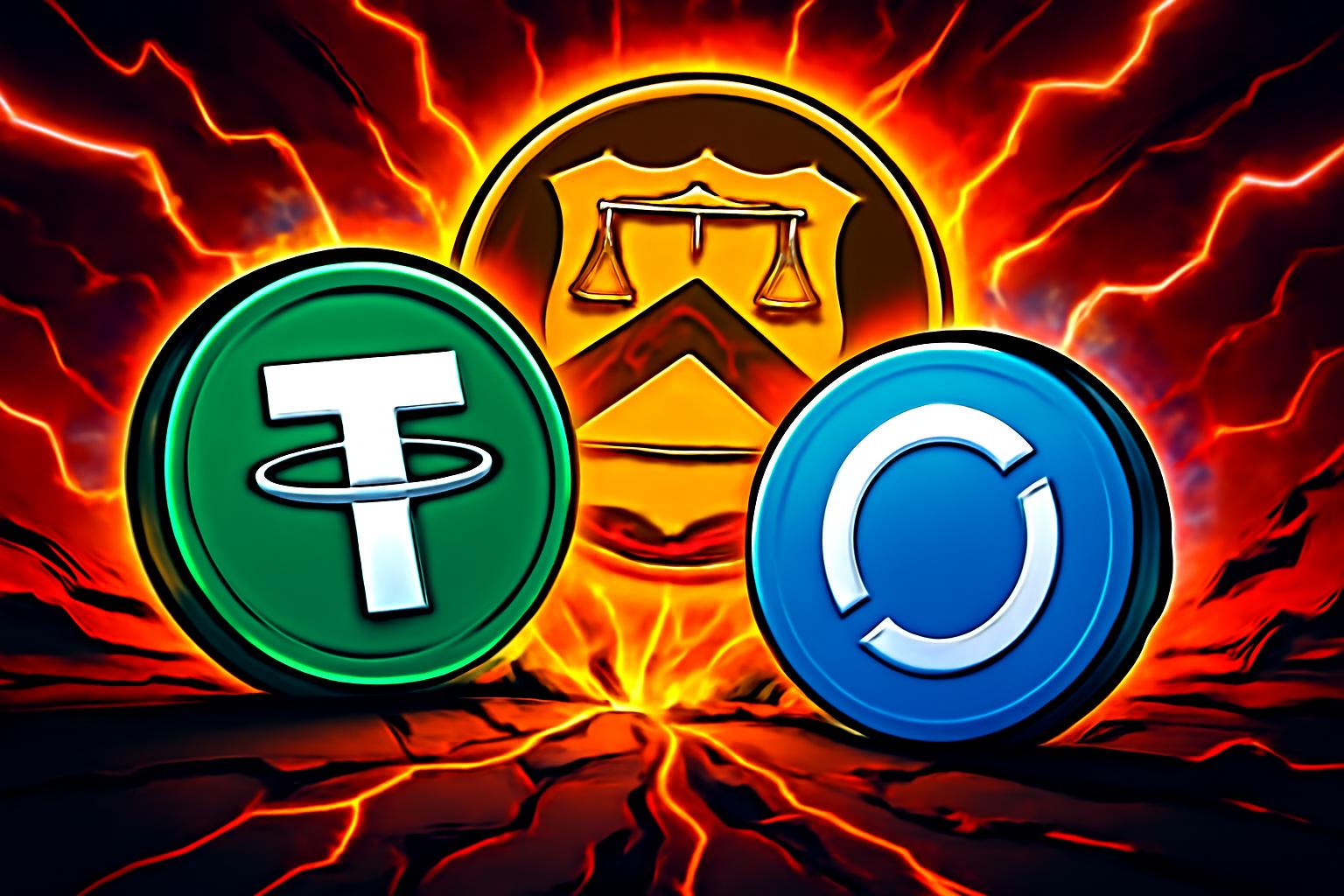

America’s most powerful monetary actors now include Tether and Circle. This signals a private, parallel dollar-liquidity layer that intersects with the U.S. Treasury market. Tether has accumulated $122 billion in U.S. Treasury holdings, making it one of the world’s significant buyers of short-term U.S. government debt. Circle backs its reserves through the BlackRock Circle Reserve Fund, with Circle’s USDC circulation surpassing $75 billion and reserve income resembling bank seigniorage.
The Financial Stability Oversight Council has explicitly flagged stablecoin issuers due to the concentration of Treasury demand, which could force large-scale asset liquidations and affect broader asset pricing. The New York Fed has noted flight-to-safety dynamics and break-the-buck-style acceleration under stress, similar to money market fund runs. The Silicon Valley Bank collapse in March 2023 demonstrated how SVB’s failure transmitted into USDC markets, briefly pushing the stablecoin to 87 cents. Today, stablecoin reserves are embedded even deeper in the U.S. Treasury market, and a similar run could entail tens of billions of dollars in forced transactions in a compressed time frame.
Stablecoins remain redeemable liabilities backed by finite pools of assets that must be sold if confidence falters, a potential glitch in the system. The IMF’s modeling of systemic stablecoin redemptions describes the mechanism: redemption pressure compels reserve liquidation, which transmits stress into bond market liquidity and widens spreads. A sufficiently large redemption would cross from a crypto-market event into a liquidity signal in the Treasury market itself, and while redemptions may remain orderly, the open question is how the system would behave under disorder. This isn’t a call to abandon stablecoin strategies, but it does require awareness of the bigger picture to keep those strategies—and your capital—safe.










Leave a Reply