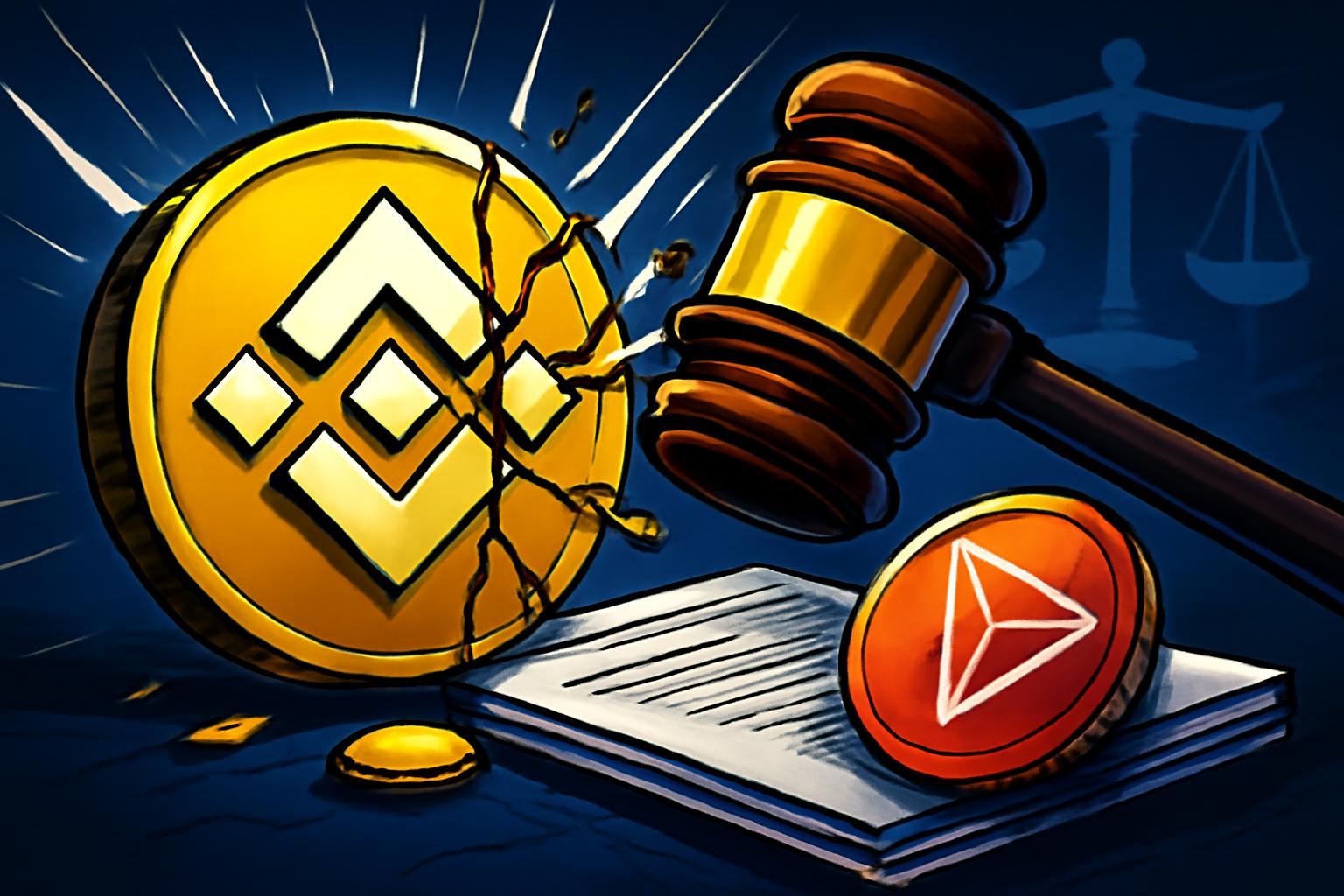

A federal judge in Manhattan on Thursday rejected Binance’s request to force arbitration on claims by customers who accused the world’s largest cryptocurrency exchange of illegally selling unregistered tokens that later lost much of their value. U.S. District Judge Andrew Carter ruled that Binance failed to adequately notify users of changes to its terms of use that included an arbitration clause and class-action waiver, allowing affected customers to proceed with litigation for claims arising before February 20, 2019. In his decision, Carter found no evidence that Binance “announced” the arbitration provision or clearly directed customers to where they could find it in the 2019 terms of use. He also deemed the alleged class-action waiver ambiguous and unenforceable.
The lawsuit centers on seven tokens — ELF, EOS, FUN, ICX, OMG, QSP, and TRX — that customers allege Binance sold without proper disclosures of “significant risks” required under federal and state securities laws. Plaintiffs seek to recover their investments after the tokens’ value declined sharply. Carter initially dismissed the case in 2022, but a federal appeals court revived it in 2024. Binance then moved to compel arbitration based on updated terms of use it claimed users had accepted.
Judge Carter rejected that motion, ruling the exchange did not sufficiently communicate the changes or ensure users had reasonable notice. The current lawsuit is one of several ongoing cases alleging that Binance facilitated unregistered securities sales. The survival of pre-February 2019 claims means plaintiffs can continue seeking damages for losses on the seven tokens during a period when Binance was rapidly expanding its token offerings. Binance’s U.S. affiliate, Binance.US, has seen limited impact from the ruling so far, as it operates under stricter domestic compliance rules.
The decision could influence other crypto platforms relying on similar arbitration clauses in user agreements. The case remains ongoing, with discovery and potential class certification now likely to proceed in federal court. A final resolution — potentially years away — could set an important precedent for how crypto exchanges notify users of material changes to terms of service and whether arbitration clauses can be enforced retroactively in consumer-facing digital asset platforms. Judge Carter’s ruling ensures that Binance must defend the early-period claims in open court — a venue far less favorable to defendants than private arbitration.










Leave a Reply