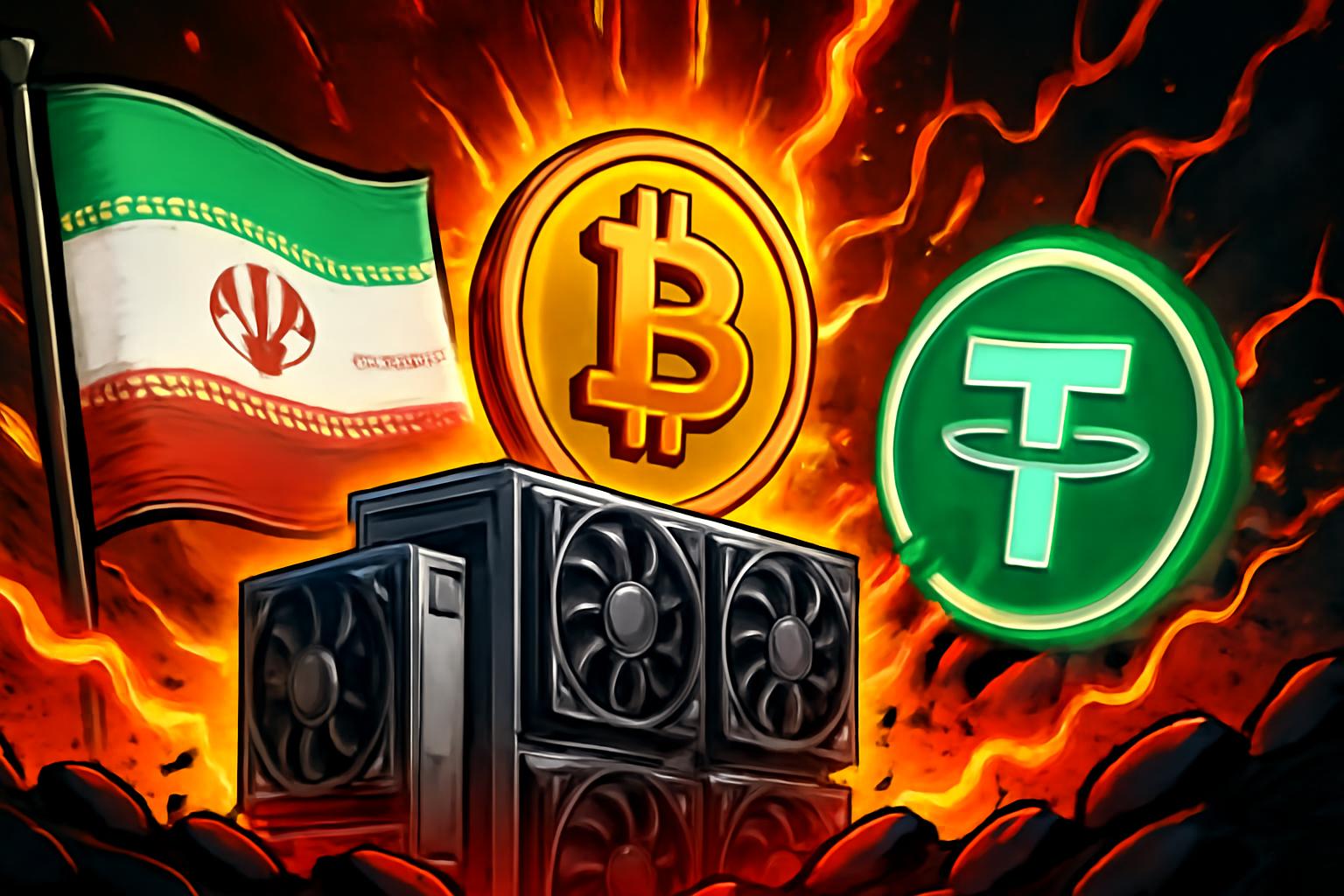

Geopolitical tensions have sharpened focus on Iran’s parallel financial system built around bitcoin mining and stablecoins. The system aims to bypass sanctions and reduce reliance on the dollar as fresh U.S. and Israeli strikes intensify scrutiny of Tehran’s crypto activity. Iran legalized bitcoin mining in 2019, granting licensed operators access to subsidized electricity in exchange for selling mined BTC to the central bank. This arrangement converts cheap domestic energy into digital assets that can be moved across borders to pay for imports, settle trade, and finance overseas transactions without dependence on U.S.-controlled financial institutions.
Industry estimates place Iran at roughly 2% to 5% of global bitcoin mining hash rate, though the full scale remains opaque. Chainalysis data show Iran’s crypto ecosystem reached $7.78 billion in 2025, with inflows to wallets linked to the IRGC surpassing $3 billion in the fourth quarter. These figures reflect only publicly sanctioned addresses, indicating the real scale could be significantly larger. Stablecoins, particularly USDT, play a critical role.
Elliptic estimates the central bank amassed at least $507 million in USDT in 2025, likely in an effort to stabilize the rial and facilitate trade. However, the rial has lost over 96% of its value against the U.S. dollar, pushing ordinary Iranians toward bitcoin as a hedge during protests and internet shutdowns. While blockchain transactions are transparent, counterparties can remain hidden, complicating enforcement. Exchanges such as Binance have faced scrutiny over alleged exposure to sanctioned Iranian entities, prompting calls for investigation by U.S. lawmakers.
Ongoing military conflict poses risks to Iran’s crypto mining infrastructure, which depends on stable electricity supplies. Seasonal mining bans have previously been imposed to protect the power grid. Any sustained damage could temporarily reduce Iran’s mining output, though the global bitcoin network would likely rebalance as miners elsewhere increase capacity. As geopolitical tensions intensify, Iran’s expanding crypto economy underscores how bitcoin mining and stablecoins are reshaping financial resilience in sanctioned economies.










Leave a Reply