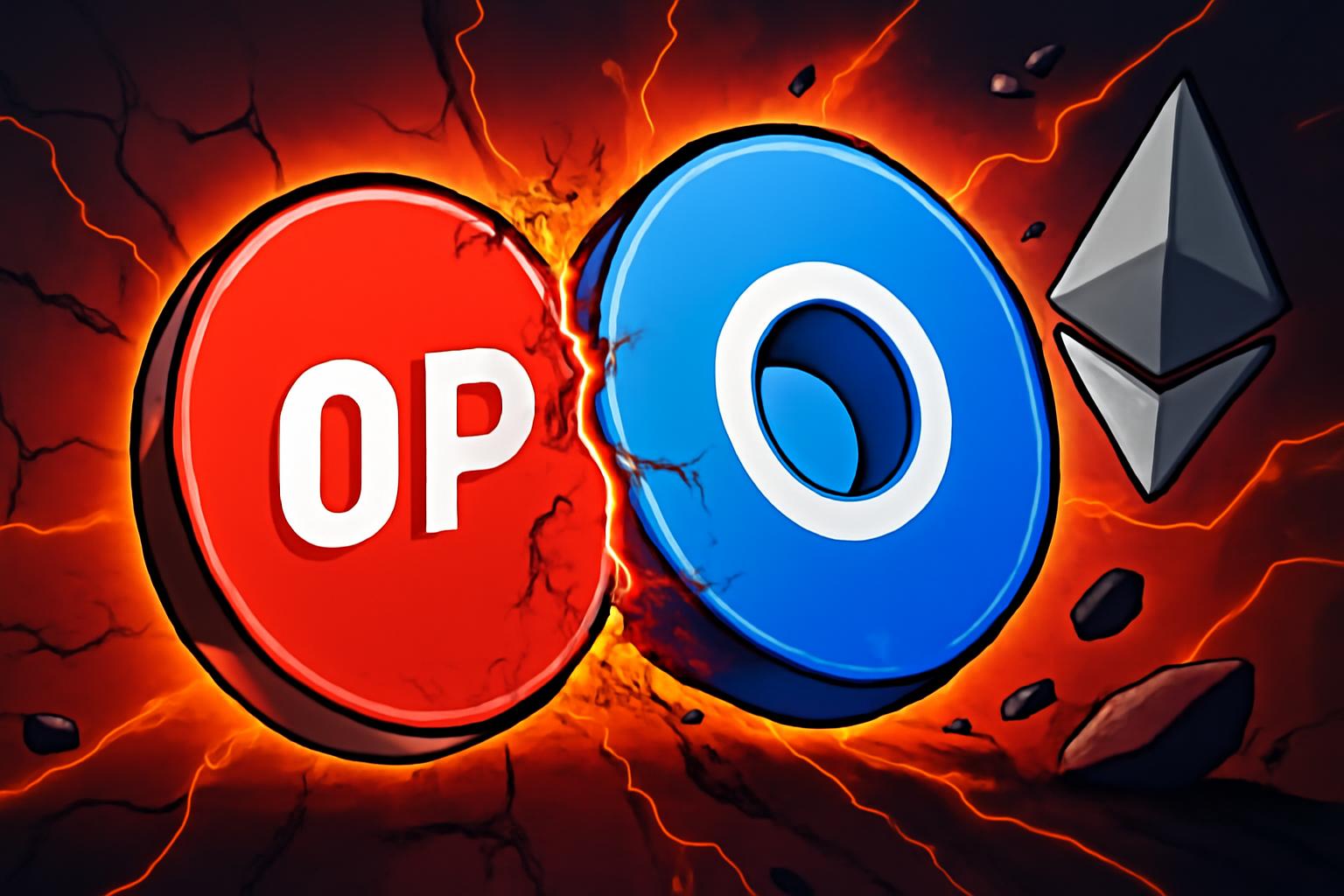

Optimism won the standards battle, but its victory did not secure those gains. The OP Stack’s MIT open-source license was a deliberate choice: a permissive license that allows anyone to copy, modify, commercialize, or fork the code with no royalties or revenue-sharing obligations, not even a “thank you” required. The logic was simple—eliminate adoption frictions to become the default framework. It worked: by mid-2025 the OP Stack accounted for about 70% of L2 transaction fees, with 34 chains on mainnet and major players like Coinbase, Uniswap, Kraken, Sony, and Worldcoin using it.
When people discuss Ethereum scaling, they usually mean something built atop Optimism’s codebase. Optimism won that standards war; however, the biggest chain it helped build announced it no longer needed the relationship. On February 18, 2026, Coinbase described Base’s goals to unify its codebase, accelerate development, and reduce coordination overhead. The market reacted quickly: the OP token fell about 28% in two days, volume surged, and within weeks it was down roughly 90% from a year prior.
To understand the strategy behind the Superchain, one must ask what it is truly selling: interoperability that would justify a revenue obligation to the Optimism Collective. Interoperability was meant to unlock shared liquidity across member chains and deliver a 1+1>2 effect in exchange for a 2.5% gross revenue or 15% net profit tax. Yet interoperability never launched. By early 2026, Base supplied the vast majority of gas fees to the Collective, while other members were economically insignificant. The alliance appeared to be a single-chain ecosystem in practice.







Leave a Reply