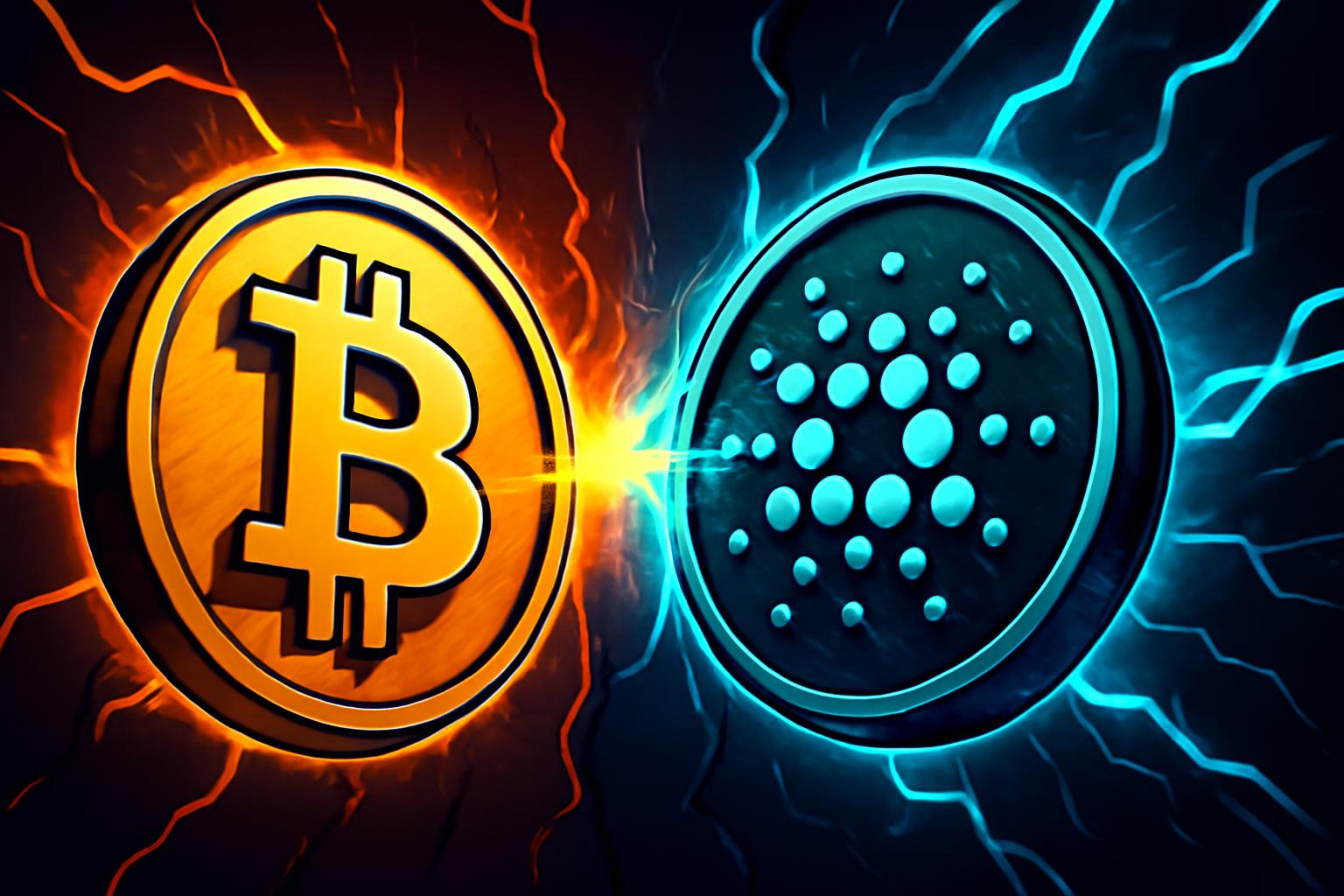

BITCOIN’S EDGE IS THAT IT CAN STAY MOSTLY THE SAME.
Bitcoin’s supply famously has a hard supply cap of just 21 million coins that can ever exist, and a schedule that slows new issuance from mining over time through events called halvings.
The scarcity implied by those supply dynamics are part of the reason why it’s considered to be a store of value, even if its price can’t be counted on to be the same across any given set of days.
More importantly, demand for the coin has a very big on-ramp that is likely to drive demand over time.
CARDANO STILL HAS TO PROVE THAT PEOPLE WILL WANT TO USE IT.
Cardano derives value from its potential use in smart contracts.
Unlike Bitcoin, Cardano is primarily a smart-contract platform, meaning it enables developers to create applications that exist and execute on its blockchain.
It has a handful of different features that support that core mission, and it’s still in active development.
The problem is that features aren’t the same as actual adoption, and in Cardano’s case, they aren’t driving much adoption at all.
Cardano’s decentralized finance (DeFi) capital footprint remains small: There’s only around $121 million in total value locked (TVL) on the network, and just $37 million in stablecoin value.
That’s not enough of a capital base to attract institutional finance, which needs far larger volumes of capital to transact, nor is it sufficient to stimulate a vibrant DeFi ecosystem, as there simply aren’t enough stablecoins parked to suggest that there are buyers for new services.
So if you’re looking to invest $1,000 in crypto, Bitcoin is by far the better buy, especially if you’re just starting to build a diversified crypto portfolio.








Leave a Reply