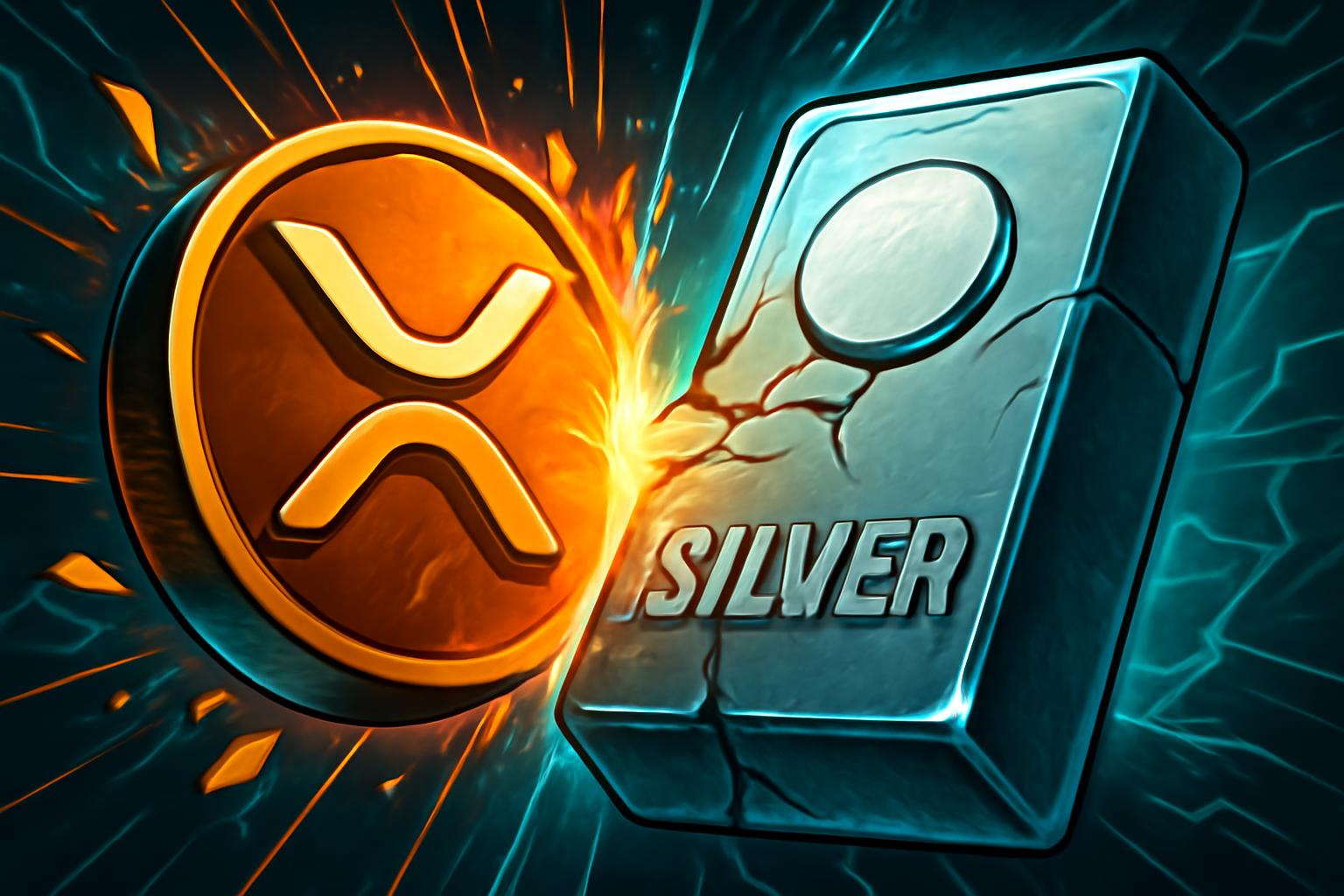

On one side is XRP, a digital asset whose value hinges on whether its issuer, Ripple, can turn the global banking system into a group of customers. On the other hand is silver, a centuries-old store of value that could be held as physical bars or in an exchange-traded fund like the iShares Silver Trust (SLV), and is also an industrially useful metal that solar panels, electric vehicles, and data centers can’t function without. Silver is scarce, and its supply situation might not improve much. Industrial fabrication now accounts for 59% of the total demand.
Solar cells, electric vehicles, and AI hardware all pull from the same shrinking stockpile of metal. What’s more, 70% of new silver arrives on the market as a byproduct of other metal mining, significantly limiting the responsiveness of its supply relative to higher-than-anticipated demand. If silver’s price rises too much, it’ll incentivize silver mining and refining businesses to find a cheaper substitute, and eventually, more supply coming online will ensure that abnormally high prices don’t persist forever.
XRP’s value proposition is that the coin’s issuer, Ripple, will continue to add value to and develop the XRP Ledger (XRPL) until it’s essential financial plumbing for tokenized asset management and other on-chain financial services. If that happens, users will be forced to buy and hold a lot of XRP and thereby boost its price over time. Spot XRP ETFs launched last November, attracting $1.3 billion in inflows from investors within the first 50 days. Ripple is already connected to over 300 banks and financial institutions, to which it now offers the XRPL’s decentralized exchange (DEX) for the purpose of trading of tokenized assets.
In February, the chain’s DEX marked just $276.5 million in trading volume. That doesn’t sound like much, until you recognize that in the same month a year prior, there was only around $3.33 million in activity. So that one feature of the XRPL — among many others that handle vastly larger sums of money — succeeded in bringing real economic activity to the XRPL, which was only possible because Ripple developed it and marketed it.
For most investors seeking growth over the next five years, buying XRP may make more sense, as silver simply can’t change itself to capture growth. However, XRP carries a higher risk, so for those without a diversified crypto portfolio already, or seeking something safer, silver is the only real choice.








Leave a Reply