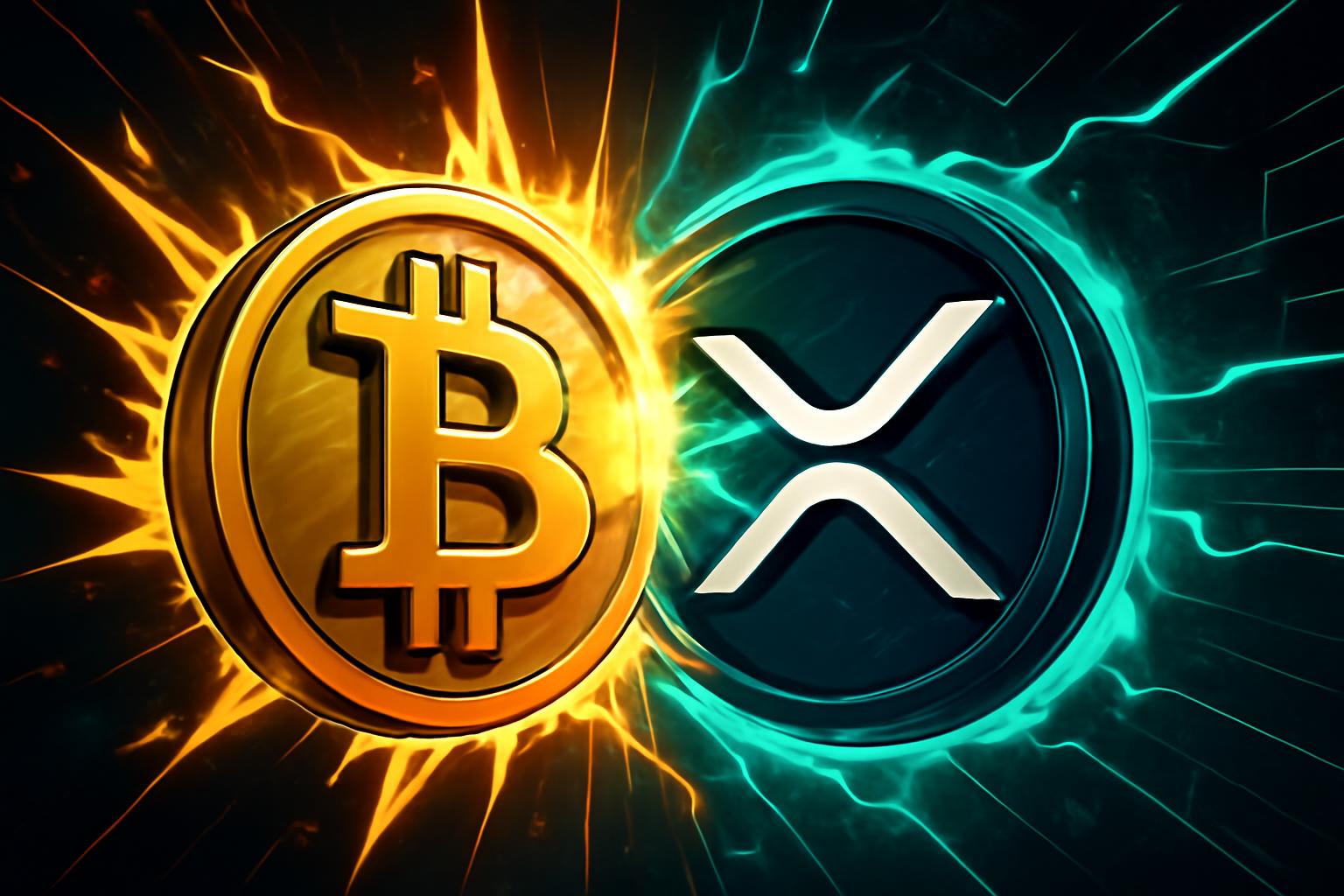

XRP was created as a bridge currency to help standardize instant cross-border transactions in the Ripple Payments network. Ripple created XRP to standardize transactions through Ripple Payments. A U.S. bank can send XRP to an Italian bank rather than sending U.S. dollars for conversion into euros, cutting out costly foreign exchange fees. Typically, a transfer using XRP costs just 0.00001 tokens, or a fraction of one U.S. cent.
In theory, demand for XRP should increase as more banks use Ripple Payments, thus increasing its value. Second, XRP leaves banks exposed to losses, even during brief holding periods, because of its high volatility. Ripple introduced a stablecoin called Ripple USD in late 2024 to solve this issue. As their name implies, stablecoins are designed to maintain a stable value, so they offer practically zero volatility.
This makes them far more suitable for many types of transactions. Banks don’t have to use XRP to benefit from instant cross-border transactions through Ripple Payments, because in addition to Ripple USD, the network also supports the use of fiat currencies. That is why the value of XRP hasn’t necessarily increased in line with the growing adoption of Ripple Payments.
Bitcoin is the world’s largest cryptocurrency. In fact, its market capitalization of $1.4 trillion accounts for more than half the total value of all coins and tokens in circulation across the crypto industry, which currently stands at $2.4 trillion. But unlike XRP, Bitcoin is rarely used in transactions. Only 6,773 businesses accept it as payment for goods and services, according to crypto directory Cryptwerk.
Bitcoin is the world’s largest cryptocurrency. In fact, its market capitalization of $1.4 trillion accounts for more than half the total value of all coins and tokens in circulation across the crypto industry, which currently stands at $2.4 trillion. But unlike XRP, Bitcoin is rarely used in transactions. Only 6,773 businesses accept it as payment for goods and services, according to crypto directory Cryptwerk.
That’s a drop in the bucket compared to the 360 million registered businesses worldwide.
Instead, Bitcoin draws most of its value from investors who consider it to be a legitimate store of value. The cryptocurrency has a capped supply of 21 million coins, which creates the perception of scarcity. It is fully decentralized, so it can’t be controlled by any single person, company, or government. Investors also feel confident parking their money in Bitcoin because it is built on a secure and transparent system of record called the blockchain.
Thanks to the broad availability of exchange-traded funds (ETFs) on stock exchanges, financial advisors and institutional investors can own Bitcoin in a safe and regulated manner. The U.S. Securities and Exchange Commission approved the first Bitcoin ETFs in 2024, and they have since accumulated 6% of all circulating supply, worth more than $89 billion.
Bitcoin’s status as a store of value was called into question in 2025. It ended the year with a loss of 5%, despite rising political and economic uncertainty that sent actual gold soaring by 64%. In crunch time, investors voted with their money, and they ditched Bitcoin for real gold.
Given some of the structural challenges facing XRP, its value is likely to be determined by speculative investors more so than by demand from the Ripple Payments network. That isn’t a recipe for sustainable long-term upside, and history suggests that the future could bring further declines from here.
Bitcoin is also a speculative asset, but its decentralized structure and its broader adoption in the investment community might increase its chances of delivering long-term gains compared to XRP. Its performance last year will certainly make some investors wary about its status as a store of value, though, which could affect its returns from here.
Truthfully, I wouldn’t buy XRP or Bitcoin over revenue-generating, hard assets like stocks or real estate. But it’s understandable why some investors want exposure to cryptocurrency, since it can add diversification to a traditional portfolio. In that case, I think Bitcoin is a better buy than XRP.








Leave a Reply