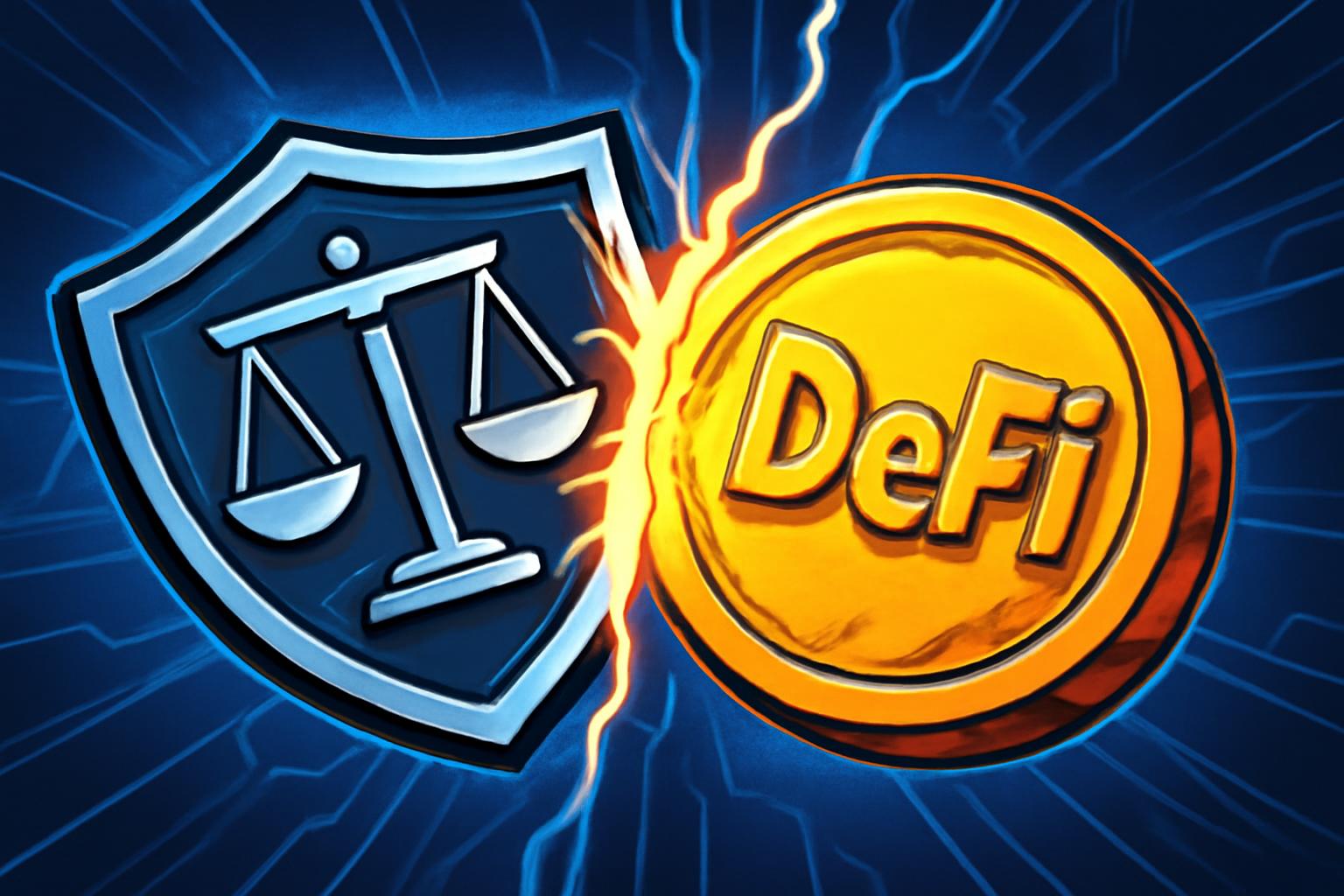

“Regulators don’t understand DeFi,” says 1inch CLO, highlighting a critical gap: regulators still struggle to understand how non-custodial systems actually work.”
“Regulators do not understand what non-custodial technologies are and how to wrap them into proper laws,” Gavryliak said.
“We live in stress all the time because we don’t have rules,” Gavryliak said.
“We want clear rules of the road. We don’t want a Wild West,” he said.
“Rules designed for custodial platforms like Coinbase cannot simply be applied to non-custodial protocols,” he argued.
Instead, regulators need to develop frameworks tailored to decentralized systems.
But until regulators fully understand how these systems work, uncertainty will remain.
“Education is key,” Gavryliak said. “Without understanding, you cannot regulate properly.”
Gavryliak believes the solution may lie in transparency rather than control.
By building on-chain reputation systems and sharing risk data among trusted participants, DeFi could create a self-regulating environment where bad actors are excluded organically.
Regulators continue to grapple with DeFi as non-custodial systems operate beyond traditional oversight. The lack of clear rules leaves many stakeholders uncertain about how to apply existing laws to decentralized protocols.
Experts emphasize that current regulatory approaches may not fit the architecture of non-custodial finance, creating ongoing uncertainty.
Rules designed for custodial platforms cannot simply be transplanted onto DeFi. Regulators need frameworks that reflect the decentralized nature of these networks and the incentives that drive their participants.
Until regulators fully understand how these systems work, the regulatory gap is likely to persist.
Education and transparency are cited as essential paths forward.
By promoting on-chain reputation mechanisms and sharing risk data among trusted participants, DeFi could cultivate a self-regulating environment that excludes bad actors while preserving innovation.










Leave a Reply