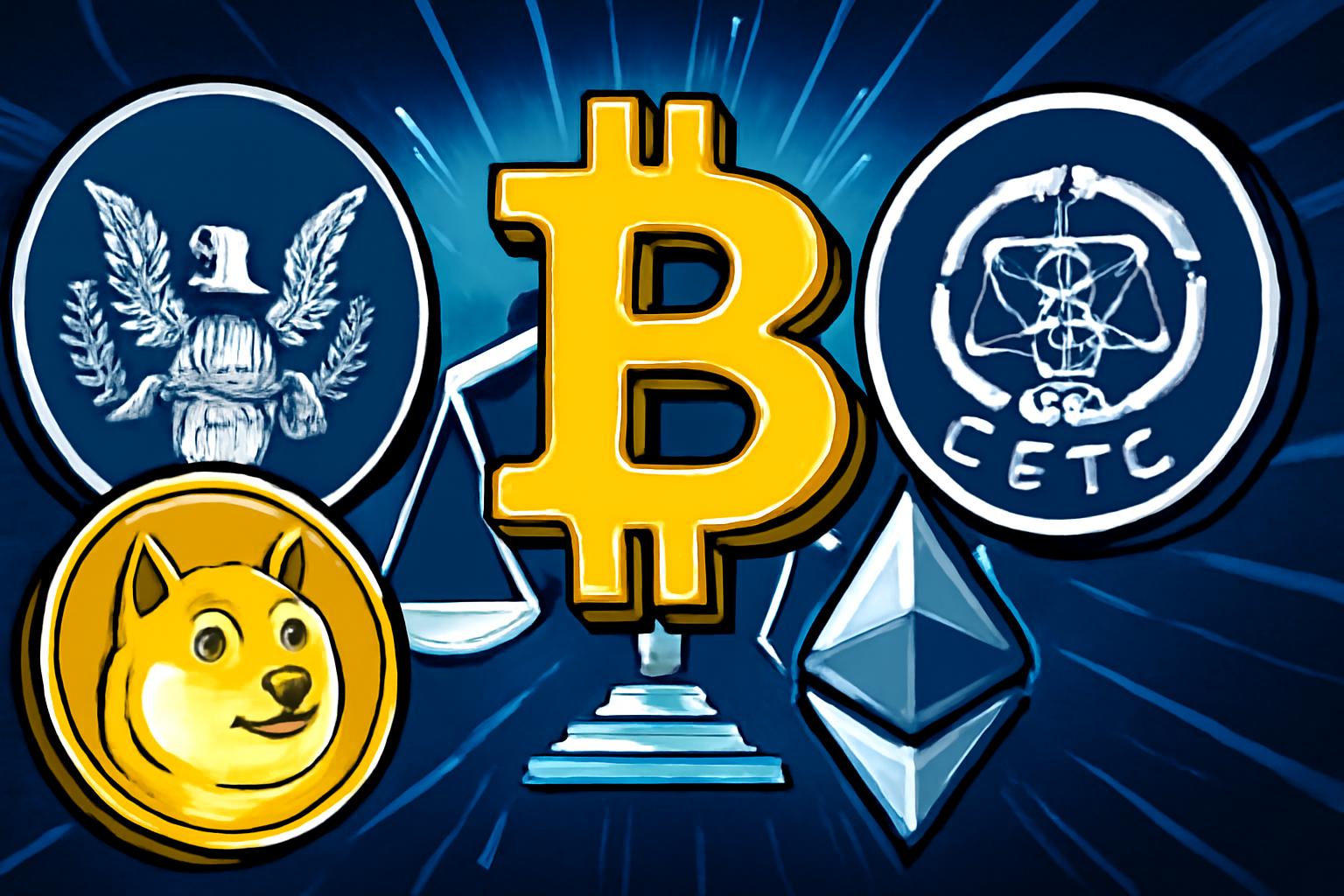

Regulators have published a new classification scheme for how they will regulate cryptocurrencies.
Most of the leading coins will be classified as digital commodities, and under the new framework, coins can transition between categories under certain conditions.
The 68-page document published by the SEC and CFTC addresses a wide array of core cryptocurrency topics, including staking, mining, airdrops, and the provenance of wrapped tokens, all of which are activities that have drawn regulatory scrutiny for years.
Although it isn’t the same as a new law governing crypto, it’s a set of guidelines where regulators explain how they will approach (and police) the sector from here on.
The joint guidance establishes five categories for cryptocurrencies: digital commodities, digital collectibles, digital tools, stablecoins, digital securities.
The first category is where most investor attention belongs, as the SEC and CFTC explicitly named 16 of the leading cryptos as digital commodities, including every asset mentioned above — yes, even Dogecoin.
But regulators also accounted for the possibility that a coin might begin its life in one category and then transition to another; although Dogecoin was specifically singled out as being a digital commodity, certain other dog-themed meme coins were specified as being digital collectibles.
Ethereum and Solana also benefit directly.
The red line is now whether a staking service is promising investors a return based on their own advantage or effort.
Self-directed and protocol-level staking are now on firm legal ground, but pooled staking products where a centralized platform controls the yield could still potentially be subject to legal consequences.
The guidance also softens the regulatory stance on airdrops, which are somewhat akin to special dividends in the traditional finance world in the sense that airdrops disburse capital to asset holders if they meet the qualifying criteria, which tend to vary significantly.
Now, when the intended recipients of an airdrop doesn’t provide money, goods, or services in exchange for tokens, the issuer of the airdrop probably won’t violate securities regulations.









Leave a Reply