

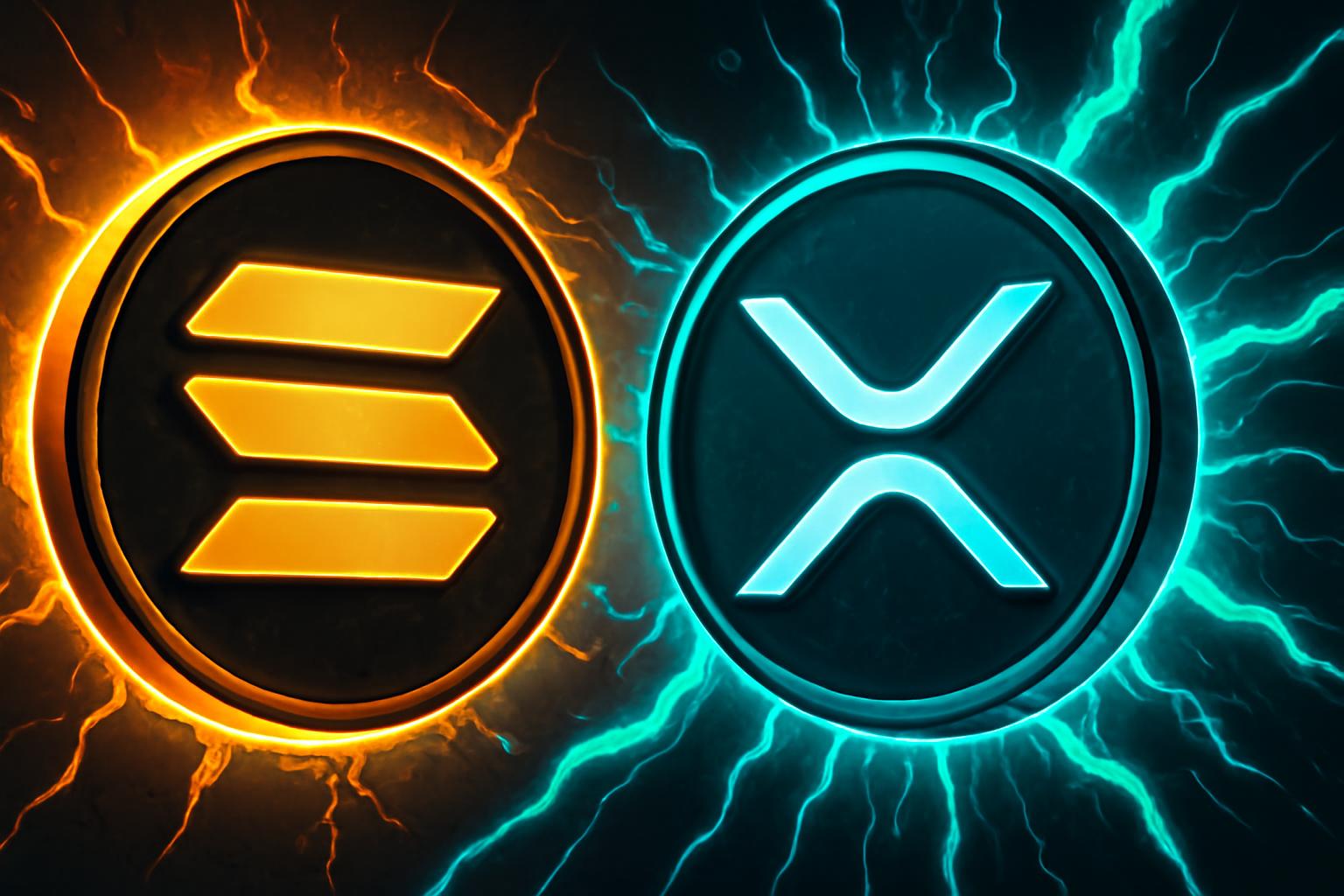
Ethereum and Solana are two major altcoins with extensive real-world utility. Ethereum benefits from wide developer support that is already generating strong network effects, while Solana is gaining momentum.
Solana may offer greater upside, but chasing upside in isolation isn’t always prudent. Understanding the difference between the two networks helps investors evaluate real-world factors that could influence their value.
Ether is the native token of the Ethereum blockchain. It has the most total value locked of any blockchain, approximately $56 billion, and is known for its widespread developer support. Ethereum also underpins many tokens that do not run on their own chain and remains a leader in smart contracts.
Solana’s blockchain has just $6.7 billion in total value locked, yet it processes far more transactions daily. While Ethereum has had to scale its network to handle more transactions, Solana is a natively fast blockchain that can handle thousands of transactions per second at almost zero cost.
That makes Solana ideal for high-frequency applications, such as processing payments. Ultimately, demand created by real-world usage is most likely to drive token prices higher over the long term.
There are exciting opportunities in tokenization, especially for stablecoins, and both blockchains are seeing adoption. Numerous researchers have estimated that on-chain tokenized assets will soar into the trillions of dollars over the next five to 10 years. Thus far, Ethereum’s wide-reaching network and developer ecosystem are creating a network effect, where leadership builds trust with institutions, which in turn attracts more development and investment to the blockchain.
The Ethereum ecosystem hosts over half of the world’s stablecoins and tokenized real-world assets. Solana is also gaining ground with institution-level applications. For instance, The Western Union Company is launching its U.S. dollar-denominated stablecoin on Solana.
However, Solana also hosts numerous meme tokens, which can be volatile at best and often fizzle out. Solana needs to continue to see institutions build on its blockchain in the coming years.
On the surface, it’s hard not to like Solana’s raw upside. At a market cap of just $52 billion, it’s much smaller than Ethereum’s $261 billion. When you factor in its lightning-fast network speed and low transaction fees, it’s easy to see how Solana could gain far more developer traction in the future. But it’s not wise to focus on raw upside without contemplating the potential downside.
Network effects are some of the most powerful competitive advantages and are difficult to unwind. Ethereum’s ecosystem already boasts strong support and adoption. It seems like a no-brainer that Ethereum has a higher investment floor than Solana.
Since cryptocurrencies are very speculative assets to begin with, it may not be a bad idea to go with one with a bit higher floor. Solana has more upside, and one could simply own both. That said, Ethereum looks like the better cryptocurrency to buy and hold right now, especially as tokenization gains steam.








Leave a Reply