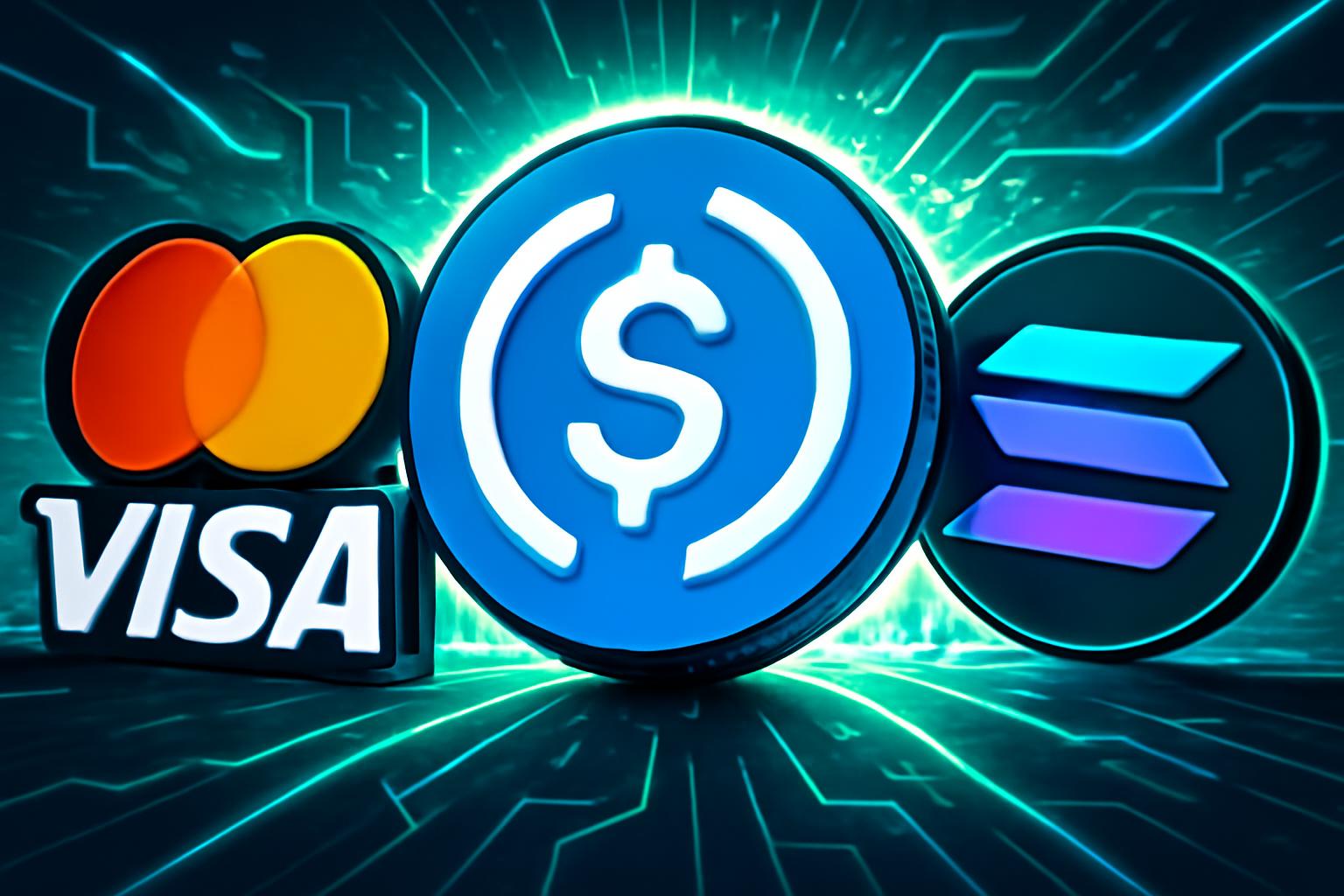

Visa has begun settling transactions in USDC on the Solana blockchain, with Mastercard soon following. This milestone signals progress for crypto payments, yet it reads less as a revolution and more as the absorption of decentralization by incumbents. The focus should be on who controls the settlement rails, not just the underlying technology.
In this setup, the settlement layer operates as a blockchain lane steered by card networks. The stablecoins connected to it—USDC, PYUSD, FIUSD—are centrally issued and regulator-approved, signaling a convergence of centralized oversight with crypto rails. For decentralization advocates, the front end remains constrained by the gatekeepers who decide which stablecoins gain global access.
This shift brings undeniable efficiency: 24/7 settlement, reduced risk, and instant cross-border clearing. Yet speed and convenience do not automatically rewrite power dynamics. History shows that rapid payments often coexist with entrenched control, as platforms capture new forms of influence even as technology evolves. Crypto’s disruption thus faces a critical test: can the ecosystem preserve a layer immune to centralized authority, or will integration into traditional rails dilute its revolutionary potential?









Leave a Reply