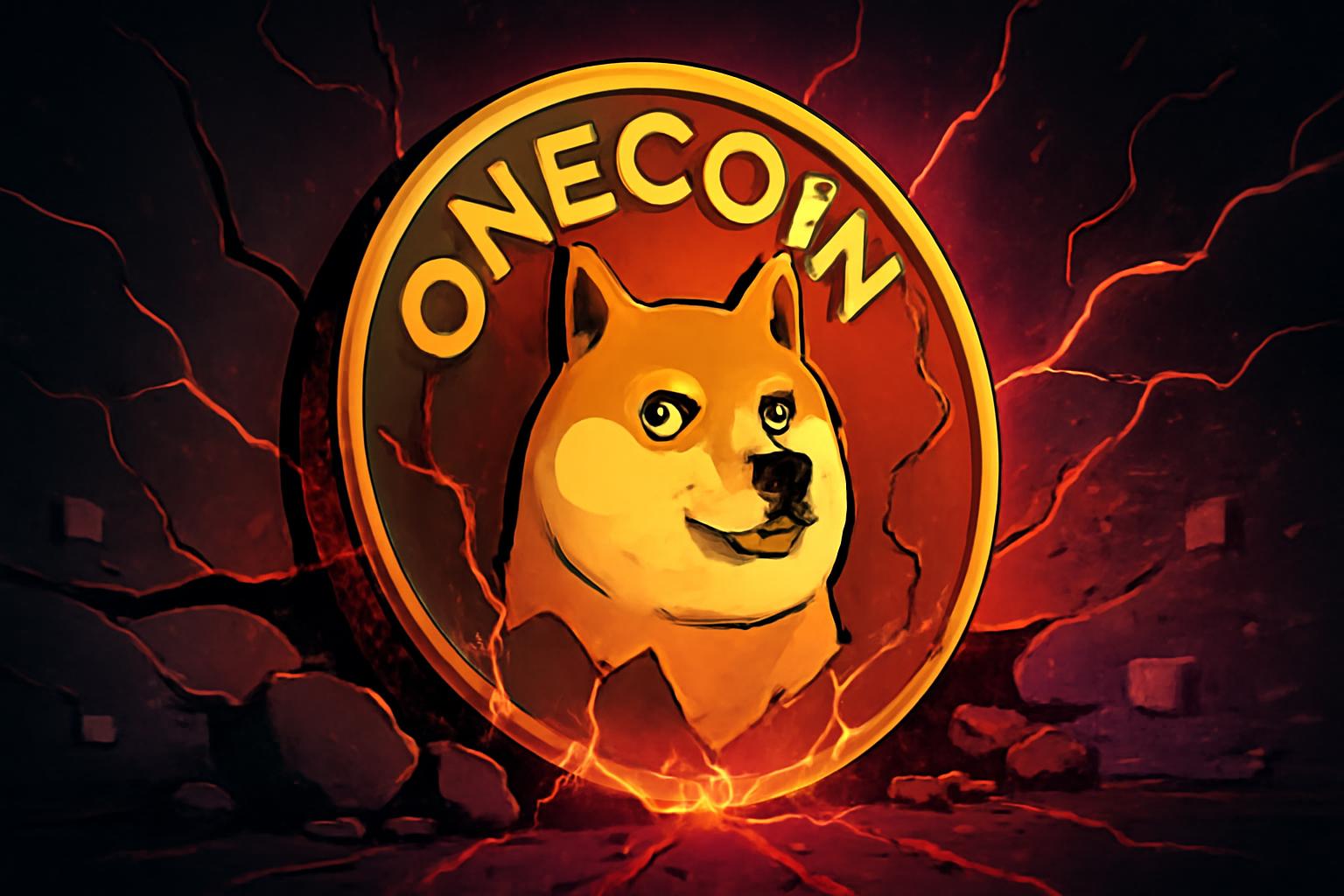

The ONECOIN token is a microcap meme coin that is unrelated to the original OneCoin Ponzi scheme. The original OneCoin, founded by Ruja Ignatova in 2014, was not a cryptocurrency; it had no blockchain, no mining, and no real token. Investors paid for cryptocurrency education packages, not a functional product. Ignatova disappeared in 2017 and remains a fugitive with a $5 million reward; legal actions included asset freezes.
The case involved asset freezes worldwide as of 2026. The current ONECOIN token is a microcap meme coin with a price around $0.00000205 and a market cap of about $2,000. It trades on DEX and appears to leverage the original scam’s name to attract traffic. The token’s price has reached a high of about $0.0000022 (March 17) and recently traded as low as near zero (March).
The pattern is characteristic of a pump-and-dump in microcap tokens, where early holders sell after a surge, draining liquidity. The name search term “ONECOIN PRICE” drives traffic because the original OneCoin is one of the most-searched scams in crypto history. Searches often surface meme tokens that imitate the name. Across markets this pattern has recurred, with examples like UGOR and VDOR highlighting name-collision risk.
The strategy is to pick a name with existing search volume, launch a zero-cost launchpad token, attract the original brand’s search traffic, and extract value through confusion. A clear warning-sign checklist includes market cap under $10,000 or under $100,000; a token with a market cap around $2,000 can be highly manipulable by a single trader. Tokens with no verified team or documentation pose high risk; legitimate projects typically publish a verifiable team, website, whitepaper, tokenomics, and active on-chain activity. MEME tokens relying on famous brands or scam-name appropriation can indicate an intent to harvest search traffic rather than develop real products.
To protect yourself, verify the project, not just the name; even if a token resembles a well-known brand, it may be unrelated. Names are easily copied, and trust must be earned through transparent teams, auditable on-chain activity, and credible exchange listings. Investors should examine market cap and liquidity: a $100,000 market cap and daily volume under $10,000 is extremely risky. Platforms with thorough review processes—such as Phemex—offer deep liquidity, audited reserves, and security features that lower microcap-related risk.
If the investment is speculative, keep exposure limited to 1-2% of the portfolio. The article’s FAQ notes that the original OneCoin was a Ponzi scheme with no blockchain, mining, or real token, while the current ONECOIN meme token is a $2,000-market-cap asset trading on DEX. The text advises against sending funds to promoters of the original scam and reminds readers that this content is informational and not investment advice. Users are urged to seek professional guidance and to be cautious about tokens that imitate famous brands or names.





Leave a Reply