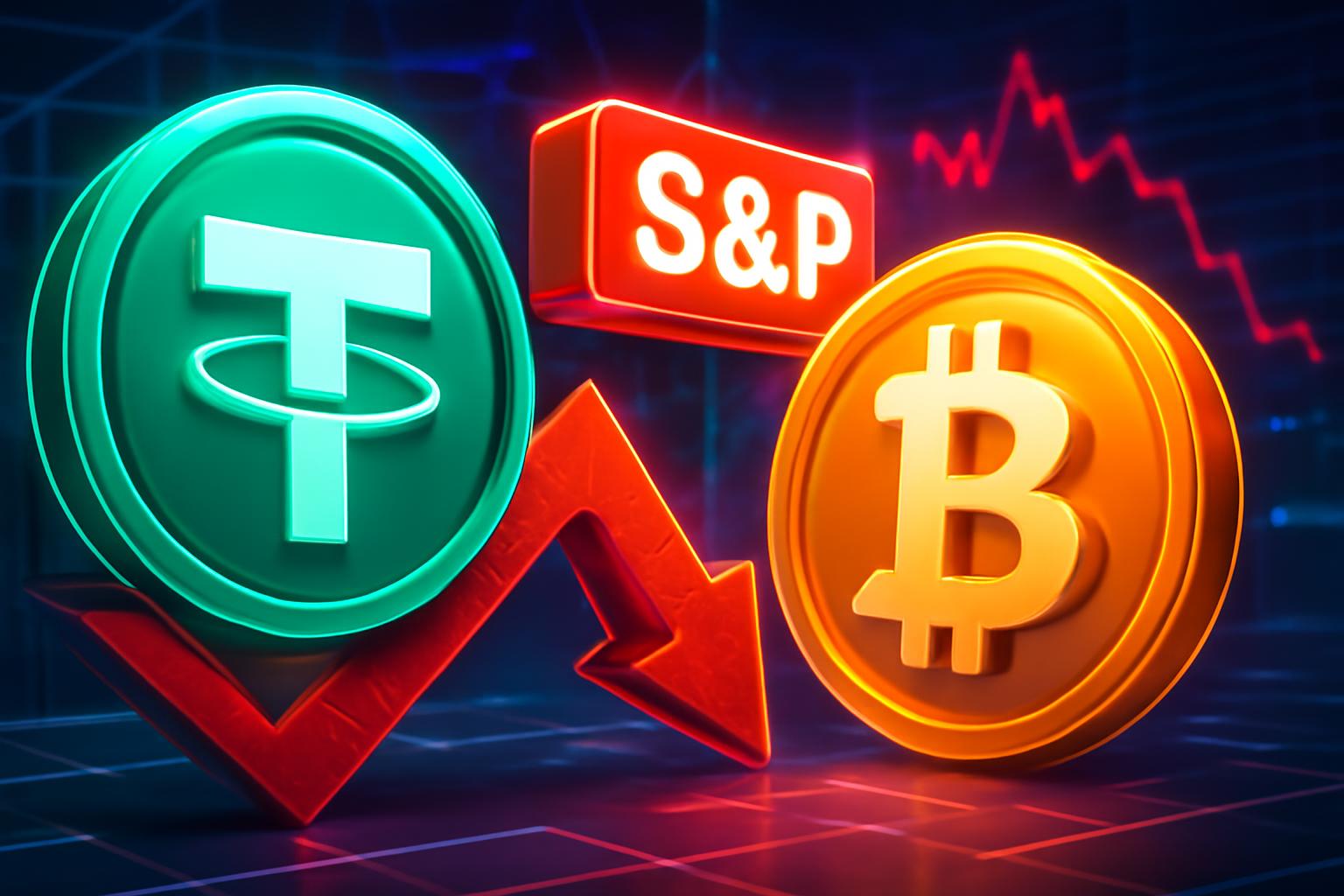

S&P Global Ratings has downgraded Tether’s USDT stablecoin to its lowest stability score, citing growing exposure to volatile assets like Bitcoin and a lack of reserve transparency. S&P Global Ratings lowered USDT’s stability score from 4 (“constrained”) to 5 (“weak”), the lowest possible rating. Bitcoin now makes up 5.6% of Tether’s reserves, exceeding the token’s 3.9% overcollateralization margin. S&P raised concerns about transparency, regulatory weaknesses, and reserve composition, including secured loans and corporate bonds.
Tether disputed the downgrade, saying it ignores USDT’s performance, utility, and transparency improvements. In its latest review, S&P analysts emphasized that USDT’s Bitcoin holdings have grown to 5.6% of its total reserves, surpassing the 3.9% margin used to overcollateralize the token. That raises a red flag: a sharp drop in Bitcoin’s price could put the stablecoin’s full dollar backing at risk. The report also highlighted several other assets in USDT’s reserves that carry market or credit risk, such as Gold, Secured loans, Corporate bonds, Other unspecified investments.
According to S&P, these high-risk assets made up 24% of USDT’s reserves as of September 30, 2025, a significant increase from 17% a year earlier. S&P also cited structural concerns including: Limited transparency on reserve management; No asset segregation to protect users if Tether becomes insolvent; Unclear credit quality of custodians and counterparties; Lack of a robust regulatory framework for stablecoins. Tether issued a strong rebuttal to S&P’s report, arguing that the agency’s methodology is outdated and fails to account for the digital nature of USDT. “Tether strongly disagrees with the characterization presented in the report, which applies a legacy framework that fails to capture the nature, scale, and macroeconomic importance of digitally native money.”
Tether claimed the report overlooks its ongoing transparency efforts, growing global adoption, and resilient performance, including the fact that USDT has maintained its 1:1 peg to the US dollar despite market volatility. Despite the downgrade, USDT’s market capitalization has grown, reaching over $184 billion in November. Tether remains the dominant stablecoin, controlling over 70% of the market, significantly ahead of Circle’s USDC, which holds around $75 billion in market cap. However, the downgrade comes as regulatory scrutiny intensifies.
The GENIUS Act, passed in the U.S. earlier this year, mandates that stablecoins be backed 1:1 by liquid, low-risk assets like U.S. Treasuries and money market funds. As of Tether’s latest attestation, U.S. Treasuries and cash-like assets make up 77% of its reserves, but secured loans still account for 8%, valued at over $14 billion, raising questions about compliance.











Leave a Reply