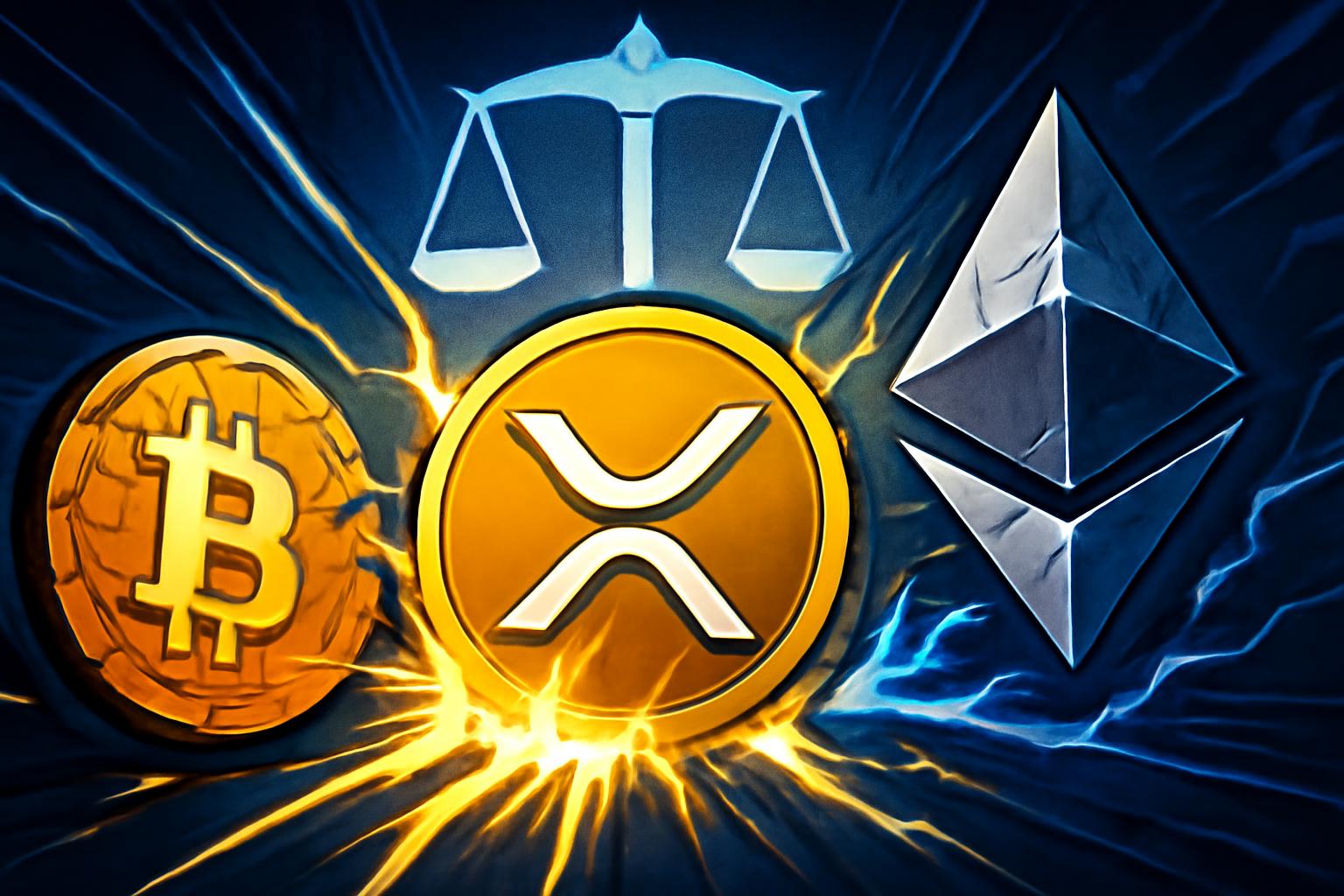

There has been a marked shift in institutional investors’ preferences favoring XRP over Bitcoin and Ethereum. This shift appears to be primarily influenced by XRP’s real-world utility, particularly in cross-border payments, and the regulatory clarity that comes with it. Unlike Bitcoin, which has been characterized as “digital gold”, and Ethereum, which concentrates on decentralized finance, XRP showcases practical applications that resonate with institutions seeking tangible benefits.
The advancements made to the XRP Ledger have enhanced its capacity for high-volume transactions, which is essential for effective payment systems. As institutional investors reevaluate their asset allocations, they are showing increased interest in XRP, which has welcomed inflows of over $1 billion in ETFs. This stands in sharp contrast to the outflows seen in Bitcoin and Ethereum products, signaling a significant shift in investor sentiment where assets with real-world applications are now prioritized over speculative options.
The XRP ETFs have exhibited robust performance, garnering consistent inflows totaling around $1.18 billion since their inception in November 2025. In stark contrast, Bitcoin and Ethereum ETFs have experienced substantial outflows, with Bitcoin losing $77 million and Ethereum facing outflows exceeding $533 million within a single week. Such disparities in fund flows indicate a shift in institutional investment strategies, where XRP is being viewed as a distinct asset, rather than part of a generalized crypto basket.
The sustained inflows into XRP-linked products suggest that institutions are making calculated allocation decisions, not merely responding to market trends, but focusing on the asset’s unique attributes and growth potential. Regulatory clarity has emerged as a crucial factor in bolstering the preference for XRP ETFs over traditional crypto assets. The conclusion of the SEC vs. Ripple lawsuit, with a ruling that programmatic XRP sales do not constitute securities, has lifted a significant burden that previously stifled investor confidence.
This favorable legal outcome, along with a more crypto-friendly approach from the SEC, has facilitated the approval of numerous XRP ETFs. The establishment of streamlined approval processes and regulated access for institutional investors has rendered XRP a more appealing option in comparison to other cryptocurrencies lacking such clarity. Consequently, XRP ETFs now provide traditional investors with exposure through familiar brokerage and retirement accounts, enhancing liquidity and minimizing volatility.
Indeed, the recent influx of funds into XRP ETFs suggests a broader trend towards utility-oriented investments in the crypto landscape. Investors are increasingly gravitating towards assets that promise real-world applications and regulatory alignment, as opposed to those that are merely speculative. The impressive performance of XRP ETFs, marked by over $1 billion in assets and consecutive days of net inflows, signals a growing appetite for regulated, utility-driven crypto exposures.
However, while these inflows hint at a shift in investor preferences, they do not conclusively indicate a sector-wide move away from speculation. A sustained trend would necessitate persistent inflows across various utility-focused projects, not solely XRP. As regulatory clarity and real-world utility become more critical, XRP is poised to play a vital role in the future of digital asset investments.
Institutions are recalibrating portfolios, increasingly favoring XRP due to its tangible use in cross-border payments and the regulatory clarity that accompanies it. The XRP Ledger’s capacity for high-volume settlement supports scalable payment workflows, aligning with institutional needs. The SEC Ripple ruling that programmatic XRP sales do not constitute securities has removed a key overhang, enabling broader ETF approvals.
XRP ETFs have garnered steady interest, with inflows surpassing the billion-dollar mark as institutional appetite grows, while Bitcoin and Ethereum products have faced notable outflows. This divergence highlights a shift toward assets with real-world applications and clearer regulatory paths, rather than speculative crypto bets. The trend underscores a broader move toward regulated, utility-focused crypto exposures within traditional investment frameworks.
However, analysts caution that a sustained transition requires persistent inflows across multiple utility-focused projects, not solely XRP. Regulatory clarity and real-world utility remain pivotal in shaping longer-term asset allocations, as institutions seek familiar, regulated access through conventional brokerage and retirement accounts.











Leave a Reply