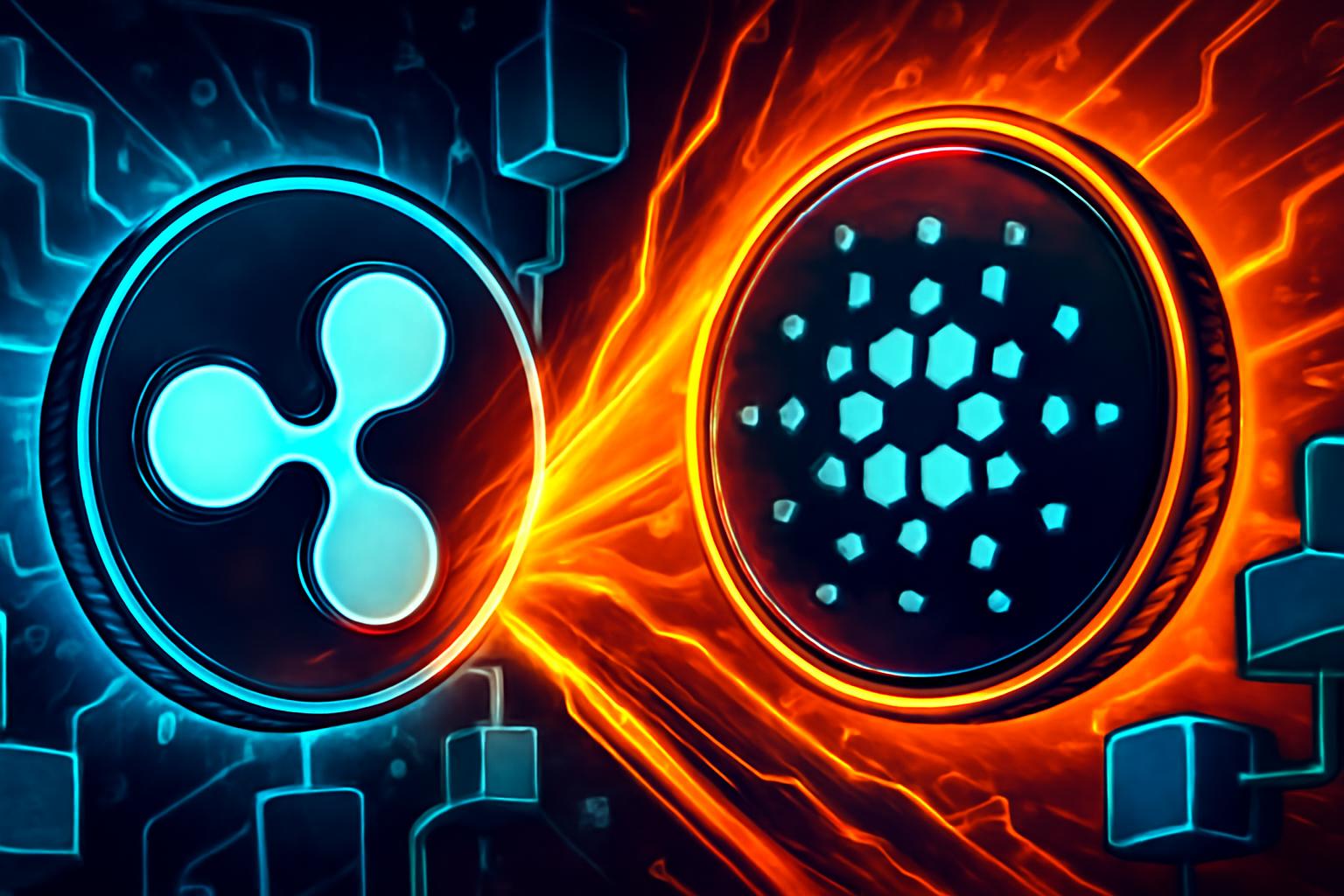

During the YouTube discussion, Mike Novogratz presented the utility debate through the lens of capital allocation. He explained that the real question is what an investor chooses when presented with many viable options. If capital can flow into something like SpaceX, then crypto assets must compete on similar grounds.
He acknowledged that XRP and Cardano both have deeply committed communities, but questioned whether that loyalty can be sustained if users do not see any real utility with those ecosystems. “Can Ripple hold it together? Can Cardano hold it together?” Novogratz referenced Charles Hoskinson, noting his success in maintaining Cardano’s community over time despite it being a “blockchain that people don’t really use a lot.” He made similar observations about XRP’s following, which has a strong community. However, he posed a direct question about sustainability: “Can you keep it together when there are more and more options?”
However, he posed a direct question about sustainability: “Can you keep it together when there are more and more options?” Recent crypto market dynamics have caused capital flows to become more selective. Developers and teams behind blockchain ecosystems all know this, and this is why there has been a race to demonstrate usage, revenue models, or clear value flows tied directly to their tokens. According to Novogratz, that doesn’t happen overnight; it’s probably a year-long process, not a one to three-month process.
Ripple has been expanding utility around Ripple USD (RLUSD), its US dollar-backed stablecoin, including broader deployment across multiple Layer-2 networks. Ripple has also been on a partnership spree this year in moves to strengthen the utility of the XRP ecosystem, with about $4 billion spent on major acquisitions in 2025. The company also recently partnered with Doppler Finance to explore collaboration in XRP-based yield infrastructure and real-world asset (RWA) tokenization on the XRP Ledger, which is another added utility.
Midnight is a privacy-focused Cardano sidechain network designed to support confidential smart contracts and selective data disclosure. Midnight is intended as a way to attract enterprise and institutional use cases that require compliance-friendly privacy, an area where public blockchains have traditionally struggled. XRP, on the other hand, is taking a different path through Ripple’s hard work to increase the utility of the XRP Ledger. Recent events have seen Cardano attempting to reinforce its practical relevance through initiatives like the Midnight sidechain.
Industry leaders are debating how real-world utility should influence where capital flows in crypto. The central question is which projects merit investment when numerous viable options compete for funds. While XRP and Cardano boast strong communities, their long-term viability hinges on demonstrable use cases beyond hype. Ripple has expanded utility around Ripple USD (RLUSD), the US dollar-backed stablecoin, with broader deployment across multiple Layer-2 networks. The company has also spent about $4 billion on major acquisitions in 2025 to strengthen the XRP ecosystem and recently partnered with Doppler Finance to explore XRP-based yield infrastructure and real-world asset tokenization on the XRP Ledger.







Leave a Reply