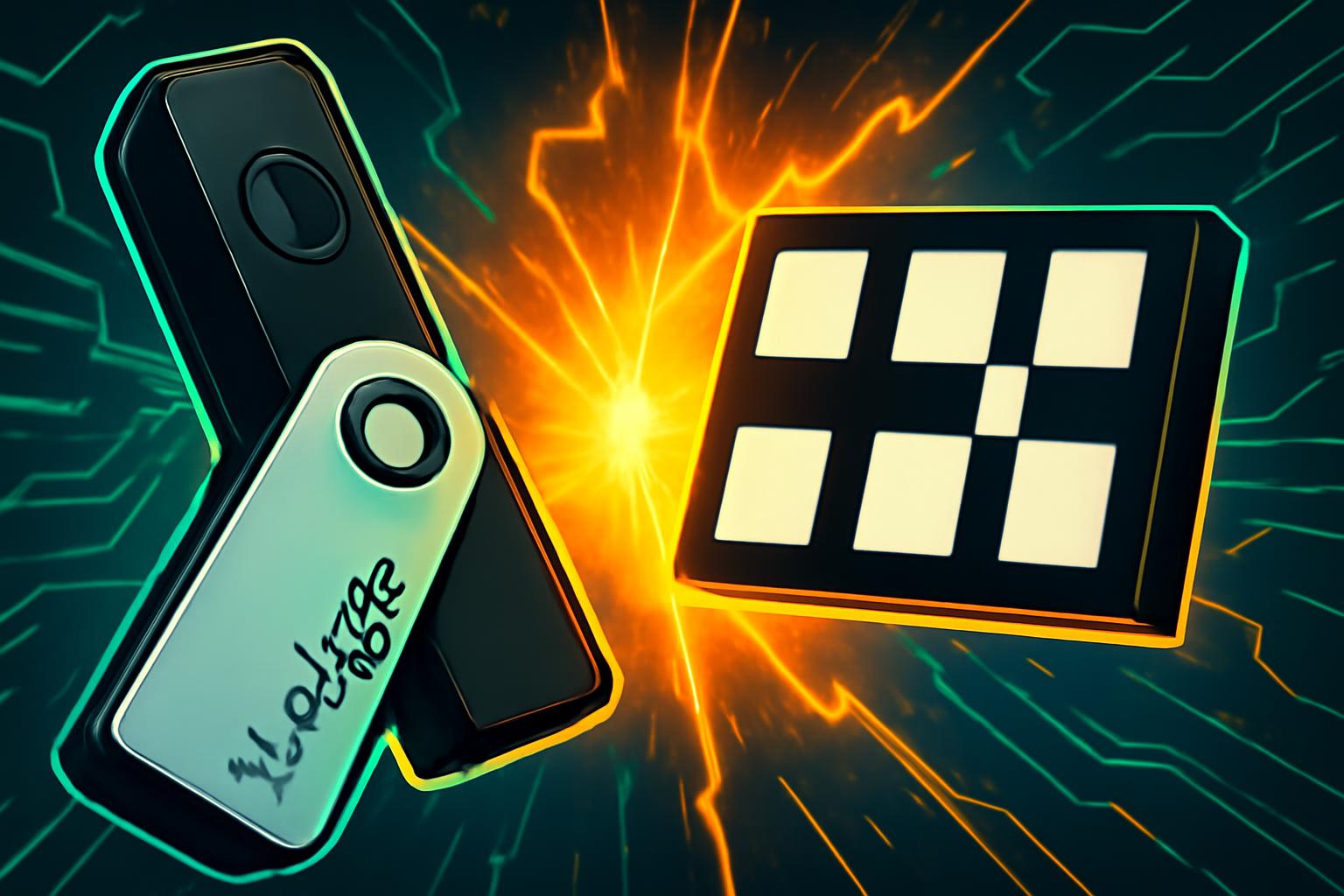

Ledger has announced an integration with OKX DEX. This partnership allows Ledger wallet users via the Ledger Live app to perform non-custodial, on-chain token swaps directly through OKX’s decentralized exchange aggregator, while keeping full self-custody of their assets. Every transaction is signed directly on the Ledger hardware device, ensuring private keys never leave the wallet and maintaining hardware-enforced protection. This aligns with Ledger’s emphasis on secure, self-custodial trading as an alternative to centralized exchanges.
Swaps are enabled across major chains, including Ethereum, Arbitrum, Optimism, Base, Polygon, and BNB Chain also referred to as BNB Smart Chain. Users can access aggregated liquidity from OKX DEX for better swap rates and execution, without transferring assets to hot wallets or intermediaries. This move is part of a broader push to bridge hardware wallet security with DeFi liquidity. This enhances options for secure, direct on-chain trading without compromising self-custody.
The feature is rolling out soon, integrated directly into the Ledger Live application. The integration of OKX DEX into Ledger Live represents a meaningful step in making secure, self-custodial DeFi trading more accessible and efficient. By embedding OKX’s advanced DEX aggregator directly into the Ledger ecosystem, users can execute on-chain token swaps without ever compromising their hardware-enforced security. Private keys remain offline on the Ledger device at all times—every swap requires physical approval on the hardware signer.
This eliminates risks associated with connecting to third-party hot wallets, browser extensions, or centralized platforms, which have historically been vectors for phishing, exploits, or key exposure. It’s positioned as a safer alternative to traditional CEX trading or less-secure DeFi interfaces. Swaps happen natively in Ledger Live, reducing friction: no need to bridge assets, manage multiple apps wallets, or transfer funds off the hardware wallet. OKX DEX aggregates liquidity from over 400 DEXs across 20+ blockchains with initial support for Ethereum, Arbitrum, Optimism, Base, Polygon, and BNB Chain, using proprietary X-Routing for optimal pricing, faster execution, and lower slippage.
This brings “institutional-grade” liquidity aggregation to Ledger’s 8+ million users, many of whom prioritize long-term holding but now have easier entry into active DeFi trading. Ledger secures a significant portion often cited as over 20% of global crypto assets. Enabling seamless on-chain swaps could redirect trading volume from centralized exchanges back to decentralized protocols, especially amid growing DEX volumes like $278B in January despite market conditions. It bridges the gap between cold storage holders and DeFi liquidity, potentially increasing on-chain activity without custodial trade-offs.
Ledger expands its wallet from a storage tool into a full DeFi gateway building on prior integrations like THORChain or others. OKX gains exposure to Ledger’s massive, security-focused user base, strengthening its position in the aggregator space. While custody stays with the user, swap routing relies on OKX’s infrastructure. Any issues with OKX DEX like routing errors, temporary downtime, or—though rare—past security concerns like the 2025 Lazarus Group-related suspension of services could affect availability or execution quality.
Users should always verify transaction details on-device. The rollout focuses on EVM-compatible chains; non-EVM ecosystems like Solana, Bitcoin aren’t mentioned yet, so coverage isn’t fully multichain from day one. Gas fees, network congestion, and impermanent loss risks in DeFi still apply as usual. No evidence suggests this introduces novel vulnerabilities beyond standard on-chain interactions.
Ledger’s hardware security model remains intact, and the integration avoids custodial elements. This partnership accelerates the trend toward “secure self-custodial trading” as a mainstream DeFi entry point. For Ledger holders, it lowers barriers to participating in decentralized markets while preserving the core promise of “not your keys, not your crypto.” This targets Ledger’s large user base, over 8 million devices sold, securing a significant portion of global crypto assets to make DeFi trading more accessible and secure.





Leave a Reply