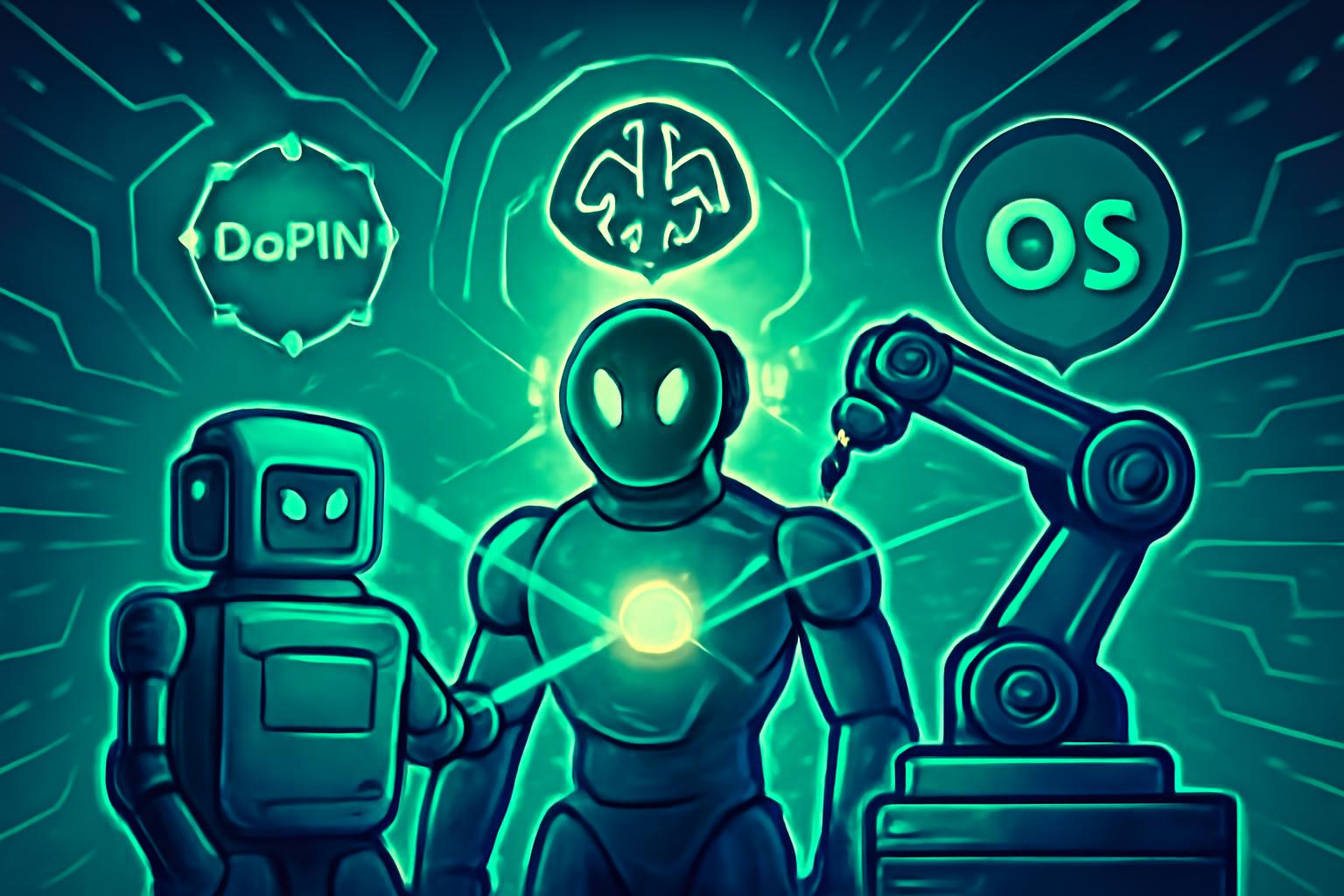

The 2026 robotics narrative centers on embodied AI, as decentralized infrastructure, data, and ecosystems converge. Three projects—peaq, PrismaX, and OpenMind—occupy distinct niches: network infrastructure, data layers, and a universal OS. In 2026, embodied AI has moved from hype to practical deployment, illustrating how decentralized technology can underpin robot ecosystems—from cash-flow models to data provisioning and cross-brand software. Together, these layers form a triad that could propel embodied AI from concept to scale in the coming years.
peaq focuses on network infrastructure and asset tokenization, with Real Yield as its differentiator distributing cash flows to NFT holders via an automated farm. As of February 15, 2026, peaq trades around $0.019, with a circulating market cap near $34 million and a fully diluted value around $78 million. The peaq ecosystem includes 50–60 DePIN apps and connects roughly 2–5.2 million devices across mobility, energy, telecom, agriculture, and smart city sectors, with PoC collaborations with Bosch, Mastercard, and Airbus signaling industrial-grade validation of its security standards. Risks include a large total supply (about 4.3 billion) that could press币价 if ecological apps do not explode, as the token is mainly used for gas and staking.
PrismaX centers on AI training data and human-robot collaboration, backed by a16z with an $11 million seed round and a Play-to-Train model that monetizes remote-control data via Points redeemable for tokens. A key mechanism is Teleoperation, where users remotely control real robotic arms via a web platform, recording actions and selling the data to robot companies for AI training, while users earn Points redeemable for tokens. The risk is the influx of data-collection studios trying to farm Points; if data quality is low, Points could lose value and the airdrop monetization could face selling pressure, with industry debate on whether such remotely gathered data can train commercial-grade robots. PrismaX’s appeal lies in a16z backing and a data flywheel approach that enables zero-cost participation to address the scarcity of physical-world interaction data.
OpenMind aims to standardize robot software through an Android-like OS and app store, positioning itself as a universal robotics software layer. It is backed by Pantera Capital and Sequoia China, with the latest funding and a prior round placing the FDV around $400 million and valuations near $200 million, and a Kaito Launchpad pre-sale at the same $400 million FDV. The ecosystem includes an App Store with 5+ live applications and over 10 international hardware partners, plus more than 1,000 developers joining the platform. Risks include high valuation and liquidity concerns, potential early VC unlock pressure, and competition from closed systems by large manufacturers; success depends on attracting mid-tier vendors and building a broad, cross-brand software layer. OpenMind’s potential lies in delivering a globally unified software layer for hardware while leveraging a decentralized data network to advance AI training across robots.









Leave a Reply