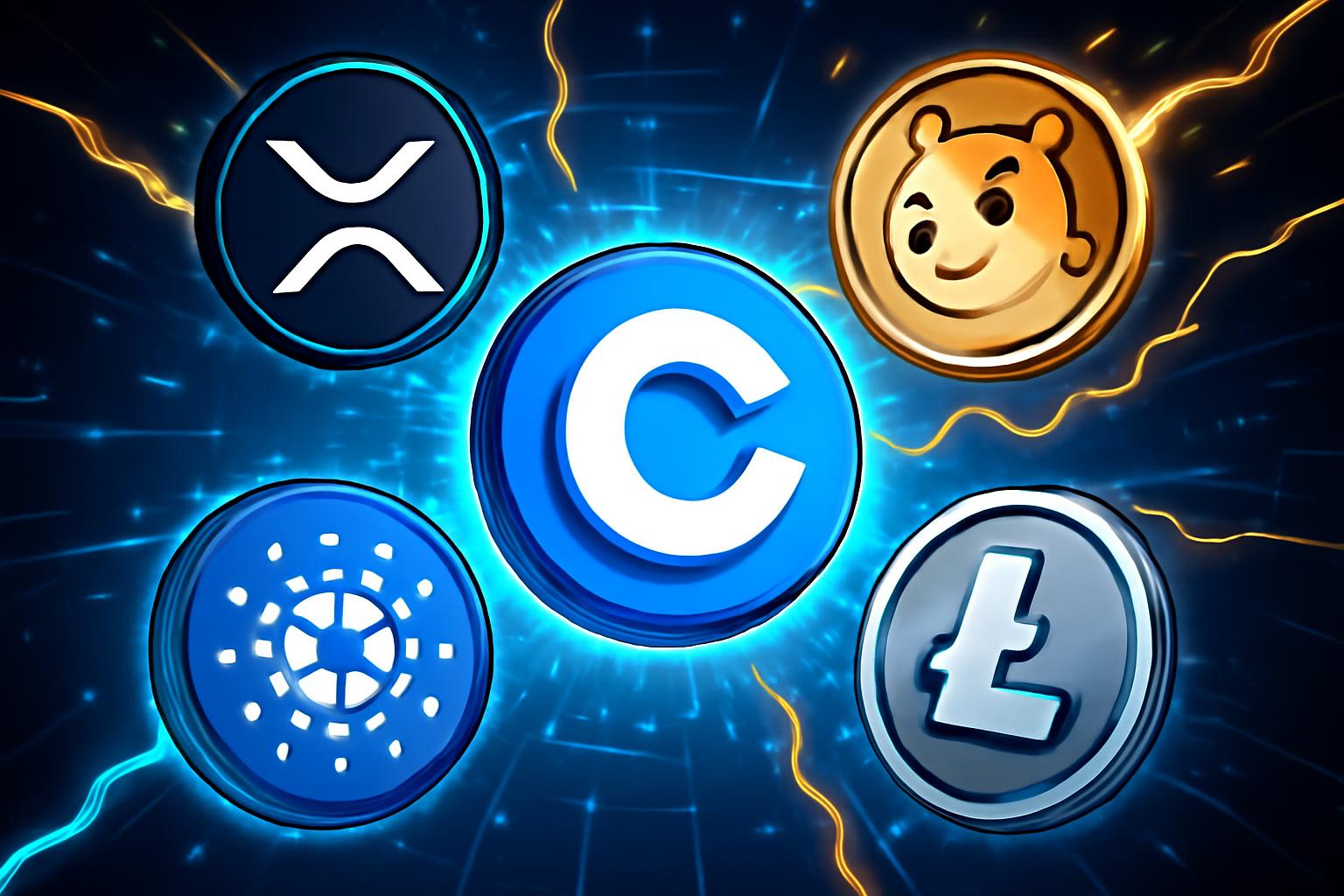

Coinbase expanded its loan collateral options to XRP, ADA, DOGE, and LTC, the exchange announced on Wednesday. U.S. customers can borrow up to $100,000 in USDC by posting these assets through Morpho, a decentralized finance protocol, with New York residents excluded due to local regulatory requirements. For anyone considering an XRP collateral loan or curious how an OGEcoin collateral loan compares, this product offers one of the few ways to access liquidity without selling the asset. The mechanism is straightforward: users deposit supported crypto into a vault, draw USDC against it based on a loan-to-value ratio, and repay the amount plus interest to reclaim the collateral.
Coinbase’s Morpho infrastructure handles the on-chain side, keeping collateralization ratios verifiable at all times. USDC borrowing on Coinbase has already approached $2 billion in originations, according to a Dune dashboard. Bitcoin was the first supported asset, and Ethereum followed in November 2024. XRP, DOGE, ADA, and LTC were the four new additions, with a combined market cap around $117 billion at the time of the announcement, per CoinGecko.
Coinbase also reported holding $17.2 billion in XRP on its platform as of December 31, according to an SEC filing, signaling potential demand for XRP collateral loans. Coinbase loan collateral products carry real liquidation risk. When a user’s collateral drops too far in value relative to what was borrowed, third parties can step in, repay the loan, and claim the collateral at a discount. A Coinbase spokesperson told Decrypt that Coinbase enforces an additional buffer when users take out a loan to reduce liquidation risk. They also noted that borrowers are notified when they reach that limit, up to every 30 minutes, and that the exchange is considering other hedging options for users.
There is also a tax angle that USDC borrowers on Coinbase can easily overlook. Greenspoon Marder LLP notes that since users wrap their assets before posting them on-chain, the U.S. treats that swap as a taxable event, and liquidations can create further tax obligations. Coinbase has stated it does not provide tax advice, and loan collateral users are responsible for their own reporting.
For Dogecoin and Litecoin holders, this product fills a real gap, since neither asset supports native staking. Right now, a Coinbase loan collateral setup offers one of the few productive ways to put those assets to work without selling. Holders considering an OGEcoin collateral loan model cite borrowing against an asset rather than selling as the core attraction.











Leave a Reply