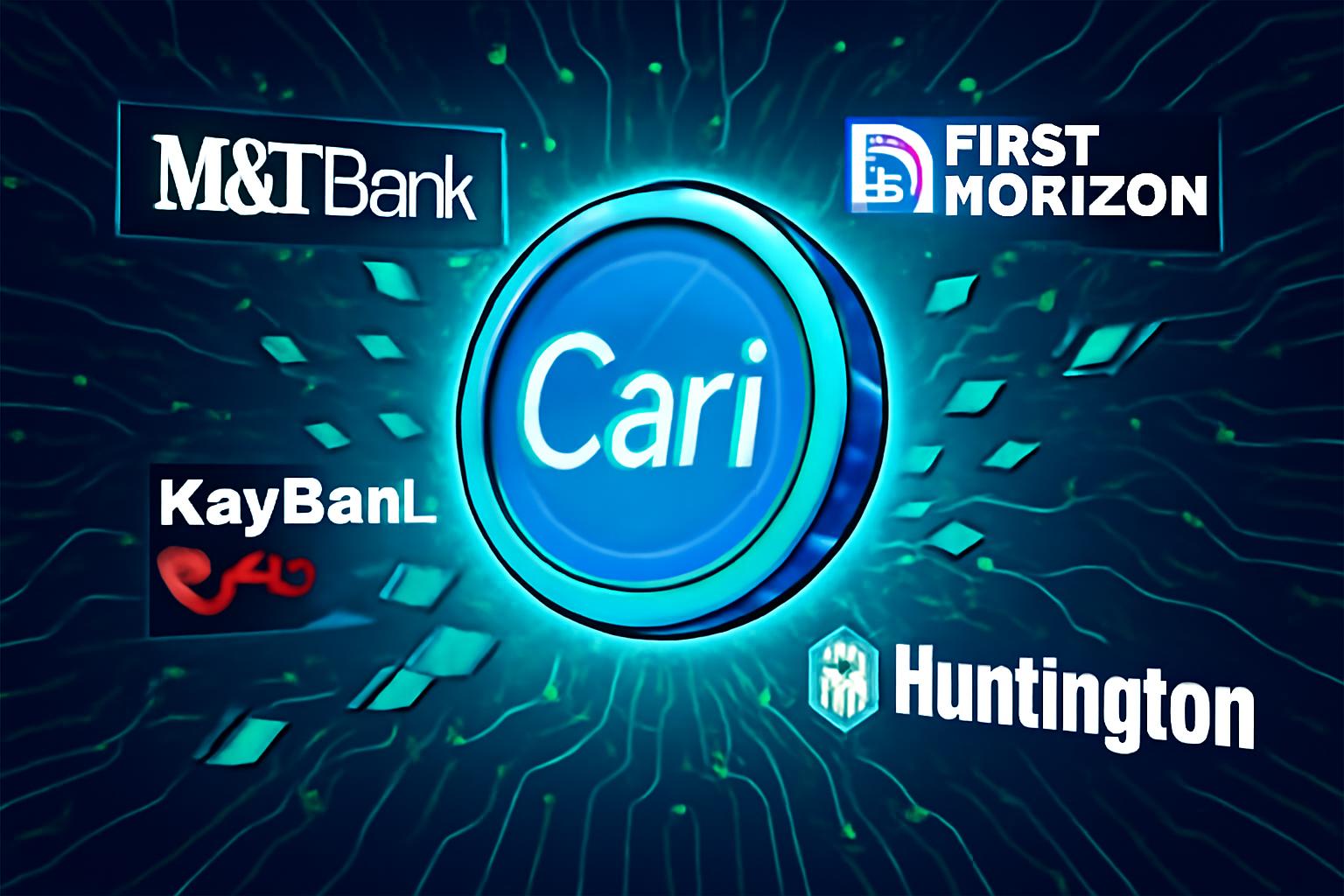

Ludwig is also founder of Cari, a startup that’s building a network to support tokenized deposits, which are similar to stablecoins, and have been dominated by rival fintechs thus far. Tokenized deposits, a digitized version of common and regulated bank functions such as clearing and settlement, are also becoming popular with banks. Ludwig, a former comptroller of the currency during the Clinton administration who also launched the Promontory Financial Group consultancy, founded the Cari Network, which is designed for regional and community banks. A deposit token is a digital asset that is a claim on a deposit at a licensed depository institution, such as a bank.
Deposit tokens, which are FDIC-insured, are issued on a distributed ledger, or the structure that underpins cryptocurrency. Cari plans to use the token to enable instant payments at all times, among other use cases. Cari’s five design partner banks are KeyCorp, Huntington Bancshares, Old National Bancorp, First Horizon and M&T Bank. “We believe this partnership will position us to support clients who will want a range of payment options, including faster cash settlement on instant programmable payments. FDIC insured tokenized deposits represent a logical avenue for banks to provide this service to their clients,” First Horizon’s public relations office said in an email to American Banker.
From initial design through implementation, we are prioritizing risk management, compliance and security standards that highly regulated institutions like banks are required to meet, Ludwig said. Cari has partnered with Matter Labs to build on ZKSync’s Prividium, a private, permissioned blockchain built to support compliance, security and control requirements of regulated banks. Cari at this point is not using a public blockchain. Cari’s goal is to attract banks to an interoperable network for tokenized deposits, but doing so will be a challenge.
Getting five banks to sign onto an MVP launch is one thing. Building a product that actually works is a challenge itself; selling it to the thousands of banks it would take to build up critical mass and network effects is something else. And then there are also others looking to do the same thing. JPMorganChase has made its JPM coin deposit token, or JPMD, available for the bank’s institutional clients on Base, a Coinbase-affiliated public blockchain. In an earlier interview IDC analyst Aaron Press said JPMorganChase expands the system, allowing other institutions to participate in the ecosystem, “although it’s unclear if any will.” Ludwig argues a network of banks can make it easier to scale tokenized deposits and address a wider market for payments. “If banks do this one by one, it will be more difficult,” Ludwig said. “The long-term success of tokenized deposits will depend on banks coming together to help design and build a scalable, bank-grade digital payments infrastructure and network. There will be other banks and solutions active in this space, and that’s great.”
Some of the other early forays into tokenized deposits are focused on transfers within a bank’s individual client network. Bank of New York Mellon, for example, has started its “digital cash” service by creating “on-chain” digital entries that represent clients’ existing demand deposit claims against the bank. Clients at launch include crypto-centric firms such as Circle, Anchorage Digital and Paxos; and investment firms including Invesco. “We have a large payments business and there are a lot of people in our network,” Ralf Roth, managing director for digital assets at BNY Mellon, told American Banker. “This is about clients of BNY being able to take advantage of the offering and being able to interact with other clients of the bank using tokens.”
Building a network is extremely important and is one of the primary issues with tokenized deposits, according to James Wester, director of cryptocurrency and co-head of payments for Javelin Strategy & Research. “The token itself is only useful as a mechanism for money movement if a counterparty recognizes it as valid and accepts it,” Wester told American Banker. “For large global banks with a massive presence, tokenizing their own deposits works for payments or liquidity because they can be on both sides of a transaction. They form their own ecosystem.” For smaller institutions, an effort similar to Cari is a way to create the necessary ecosystem to make tokenizing deposits worthwhile, Wester said. The emergence of tokenized deposits, exemplified by initiatives like the Cari Network, is likely to accelerate innovation in the bank-to-bank payments space, according to Radi El Haj, CEO of RS2. “As more banks explore these solutions, we can expect increased adoption, which will drive demand for interoperable platforms and scalable infrastructure capable of supporting tokenized assets at scale.” “At the same time, the market will face challenges around standardization, regulatory clarity and operational integration,” El Haj said. “Banks that invest in modern, cloud-native and modular payments systems will be best positioned to capitalize on this shift, while others may struggle to move beyond pilot programs.”
For smaller institutions, an effort similar to Cari is a way to create the necessary ecosystem to make tokenizing deposits worthwhile, Wester said. The emergence of tokenized deposits, exemplified by initiatives like the Cari Network, is likely to accelerate innovation in the bank-to-bank payments space, according to Radi El Haj, CEO of RS2. “As more banks explore these solutions, we can expect increased adoption, which will drive demand for interoperable platforms and scalable infrastructure capable of supporting tokenized assets at scale.” “At the same time, the market will face challenges around standardization, regulatory clarity and operational integration,” El Haj said. “Banks that invest in modern, cloud-native and modular payments systems will be best positioned to capitalize on this shift, while others may struggle to move beyond pilot programs.”
Cari, founded by Ludwig, is building a network to support tokenized deposits—digital claims on bank deposits. Deposit tokens are FDIC-insured and issued on a private ledger, enabling instant payments and other use cases. The Cari Network counts five design partner banks—KeyCorp, Huntington Bancshares, Old National Bancorp, First Horizon, and M&T Bank—and has partnered with Matter Labs to build on ZKSync’s Prividium, a private, permissioned blockchain designed for regulatory compliance and security; at this stage, Cari does not rely on a public blockchain.
Cari’s objective is to attract banks to an interoperable network for tokenized deposits, a goal that requires broad adoption across thousands of banks. The initiative follows industry moves like JPMorgan Chase’s JPM Coin deposit token for institutional clients on Base, underscoring the competition and the need for scalable, bank-grade infrastructure. Ludwig emphasizes that the long-term success of tokenized deposits hinges on banks collaborating to design and deploy a robust payments network, while maintaining strong risk management and compliance.
BNY Mellon has begun offering digital cash by creating on-chain entries representing clients’ demand deposits, with early clients including Circle, Anchorage Digital, Paxos, and Invesco. Industry observers say networks and ecosystem-building are crucial for tokenized deposits to gain traction, though standardization and operational integration remain major challenges. As more banks explore tokenized deposits, the potential for faster, interoperable bank-to-bank payments grows, provided regulators, standards bodies, and institutions align on a scalable, cloud-native architecture.











Leave a Reply