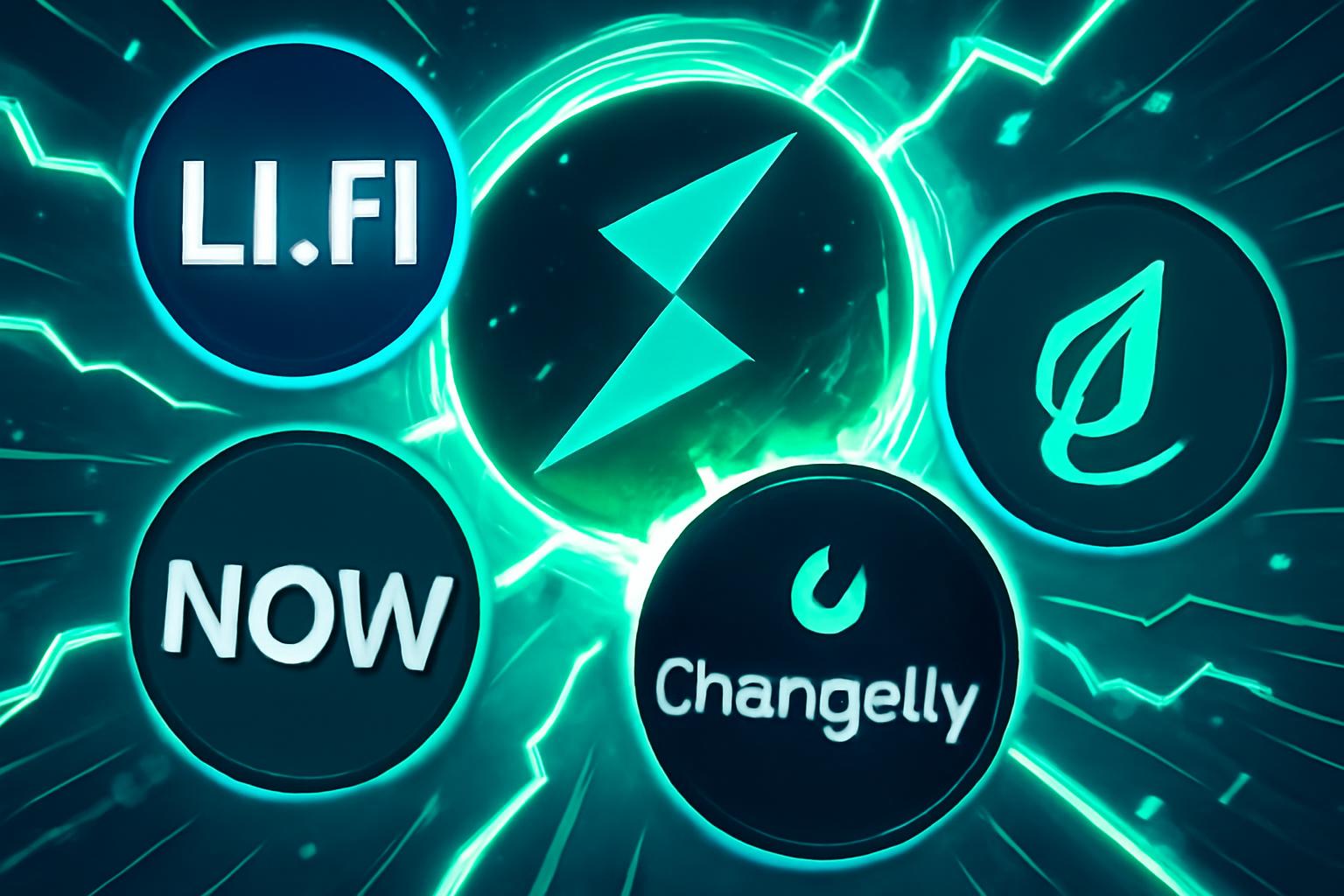

Cross-chain swaps are foundational to the Web3 ecosystem, enabling the exchange of assets across different blockchains without relying on centralized exchanges. SimpleSwap provides this capability among others, but a broad range of alternatives exists, each addressing liquidity, decentralization, and multi-chain support in distinct ways. This article examines leading SimpleSwap alternatives to highlight their core features and how they fit into the broader interoperability landscape. Different cross-chain swap platforms are optimized for different user needs, reflecting a spectrum of design choices from liquidity sourcing to on-chain vs. off-chain coordination.
ChangeNOW serves as a fast, non-custodial option for cross-chain swaps, mixing liquidity from multiple providers to support a wide range of assets. It is commonly used for straightforward exchanges where users prefer not to engage with DeFi protocols or bridge operations, and it supports swaps across major Layer 1s and select Layer 2s depending on asset availability.
THORChain operates as a decentralized liquidity protocol that enables native cross-chain swaps without wrapped assets. Its on-chain liquidity pools and validator network offer strong decentralization, though fees and slippage depend on pool depth and network conditions, making it more suitable for users with DeFi experience.
Rango Exchange functions as a cross-chain DEX aggregator, sourcing liquidity from multiple decentralized exchanges and bridges. Rather than executing swaps directly, it identifies optimal routes across supported networks, offering broad blockchain coverage for both EVM and non-EVM ecosystems, with route-dependent execution complexity.
LI.FI provides cross-chain liquidity infrastructure used by many Web3 applications, aggregating bridges and DEXs at the protocol level rather than focusing solely on consumer-facing interfaces. End users often interact with LI.FI indirectly through DeFi platforms that require seamless chain abstraction, particularly in multi-step or multi-chain workflows.
Changelly facilitates quick crypto exchanges and supports a long list of digital assets, including crypto-to-crypto swaps. However, Changelly operates on a centralized model, which differs from the fully decentralized protocols, and regulatory considerations can require additional verification in some cases.
Cross-chain swap platforms generally fall into three structural categories: aggregated non-custodial platforms that source liquidity from multiple providers, fully decentralized protocols that rely on on-chain liquidity and smart contracts, and hybrid services that combine centralized execution with non-custodial user flows. Each model presents trade-offs in transparency, speed, and technical complexity.
Compared to single-chain swaps, cross-chain transactions involve additional risk factors, including smart contract vulnerabilities, bridge or routing dependencies, liquidity fragmentation across chains, and network congestion and execution delays. Understanding these factors is essential before using any cross-chain swap solution.
As cross-chain activity grows, a variety of alternatives exist to serve different segments of the Web3 community. Platforms like ChangeNOW, THORChain, Rango, LI.FI, and Changelly illustrate the different technical and operational approaches to interoperability. None should be viewed as a direct substitute for another, as they form an ecosystem that together facilitates asset movement across blockchains.
As cross-chain activity grows, a variety of alternatives exist to serve different segments of the Web3 community. Platforms like ChangeNOW, THORChain, Rango, LI.FI, and Changelly illustrate the different technical and operational approaches to interoperability. None should be viewed as a direct substitute for another, as they form an ecosystem that together facilitates asset movement across blockchains.








Leave a Reply