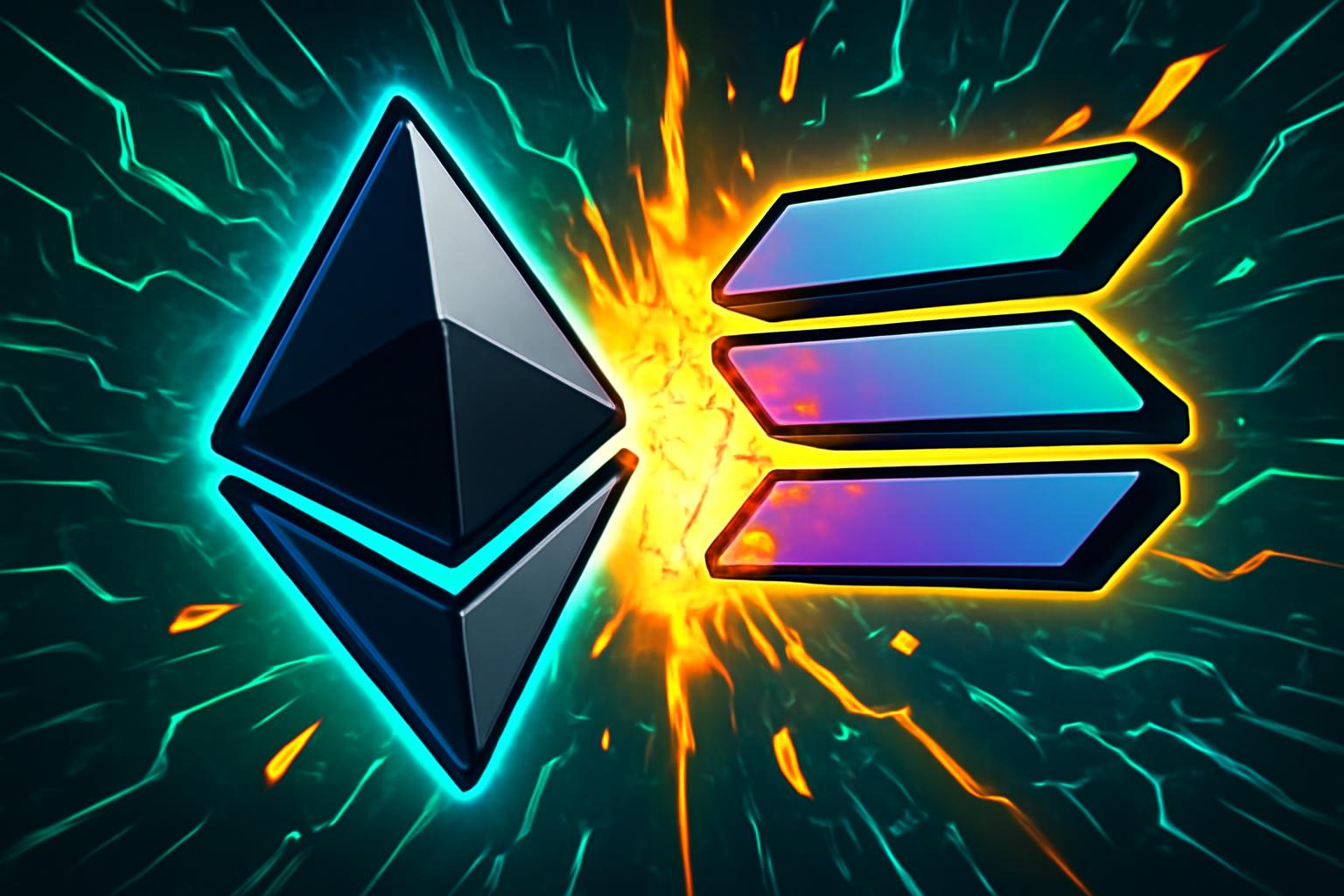

Ethereum is a blockchain powerhouse, but it can’t compete with Solana on speed or cost. Ethereum has declined about 60% since it reached almost $5,000 last August. It traded between $1,800 and $2,400 for much of February and March. Tokenization is a way to represent ownership of various assets, such as equities, real estate, and commodities, on the blockchain.
If traditional financial institutions continue to move transactions on-chain, it could be a game changer for Ethereum. Ethereum accounts for about 60% of all tokenized assets. Solana’s share has grown from less than 1% at the start of 2023 to about 7% today. With almost $7 billion in TVL, Solana ranks second.
Solana’s big appeal is its low cost and high processing speed. In a test last year, it handled more than 100,000 transactions per second (TPS). Outside test conditions, it processes about 3,500 TPS, with an average transaction fee of $0.013. For context, Ethereum’s TPS is 15-30, and fees this year ranged between $0.10 and $0.30.
Solana doesn’t need Layer 2s to scale, and it appeals to a wide spectrum of blockchain users. On one end, the controversial pump.fun meme coin development platform recently became the first Solana application to pass $1 billion in revenue. Western Union launched its U.S. dollar stablecoin on Solana. JPMorgan also used Solana when it issued tokenized commercial paper for digital trading platform Galaxy.
Financial institutions are exploring Solana’s stablecoin and tokenization capabilities. Solana has struggled with technical issues and outages in the past. It initially grew so quickly that the network could not keep up, resulting in several outages in 2022. Solana’s recent upgrades aim to make it more resilient, and it hasn’t had any downtime since February 2024.
However, any further problems would make banks and investment firms wary of building on its ecosystem. Excluding stablecoins, the tokenized assets market could grow from about $33 billion today to as much as $4 trillion by 2035. Both cryptos look set to capture a part of it. All cryptocurrencies are risky, but Solana’s relative youth and previous technical difficulties make it a riskier investment than Ethereum.
However, its market cap is about $50 billion compared to Ethereum’s $250 billion, meaning it could have more room to grow. I own both Solana and Ethereum and think they have tremendous growth potential. With $56 billion in funds on its blockchain, or total value locked (TVL), it accounts for almost 60% of all on-chain cash. Ethereum was the first cryptocurrency to introduce smart contracts.
Smart contracts power decentralized finance (DeFi) applications, stablecoins, and real-world asset tokenization. Ethereum’s potential










Leave a Reply