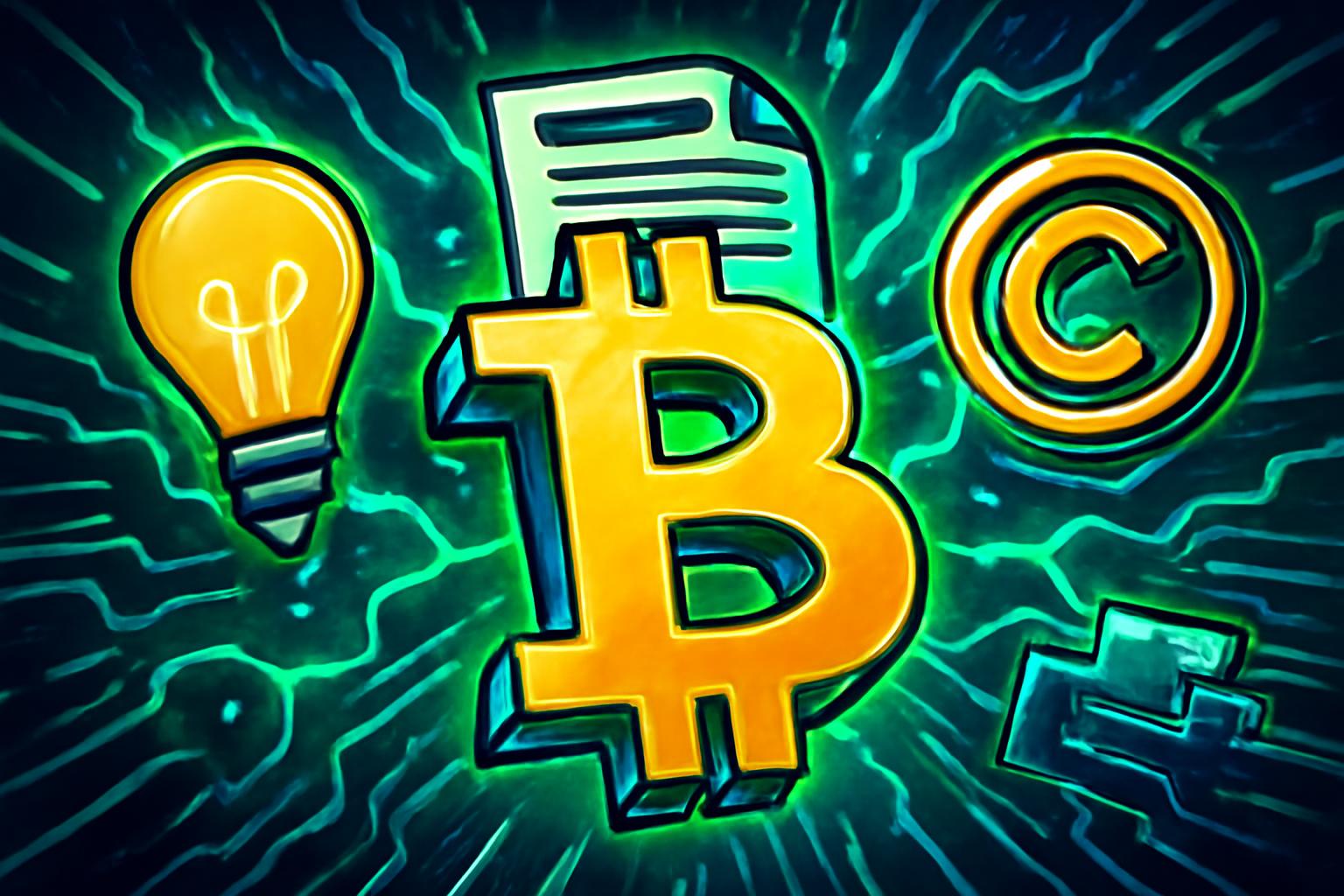

Blockchain in intellectual property is increasingly used to prove ownership, track provenance, and automate licensing in ways that traditional IP systems struggle to support at internet speed. As digital creation scales through generative AI and global distribution, organizations face recurring challenges: timestamp disputes, opaque rights chains, cross-border enforcement, and counterfeiting. Blockchain helps by providing an immutable, decentralized ledger where rights events (creation, transfer, license, royalty payment) can be recorded and verified. Intellectual property management depends on trustworthy records: who created an asset, when it was created, who owns it now, and what rights have been granted.
Immutability for evidence: once a rights event is recorded on-chain, altering it without detection becomes extremely difficult, supporting evidentiary integrity for audits and disputes. Shared source of truth: multiple parties (creators, publishers, manufacturers, distributors) can rely on a synchronized record of rights and provenance. Programmable licensing: smart contracts can encode licensing terms, usage scope, and royalty logic for automated execution. Anti-counterfeiting signals: product authenticity and supply chain provenance can be tied to a token or on-chain record, enabling verification by downstream partners or consumers.
Frameworks like MiCA, the GENIUS Act, and California’s Digital Financial Assets Law push crypto infrastructure toward stronger compliance expectations by 2026. While these policies do not target IP directly, they help build safer rails for tokenization, custody, proof-of-reserves practices, and on-chain monitoring. Those rails matter when IP rights are represented as tokens or when licensing and royalties flow through regulated digital asset infrastructure. TIMESTAMPING AND PROOF OF CREATION: A practical starting point for blockchain in intellectual property is timestamping.











Leave a Reply